
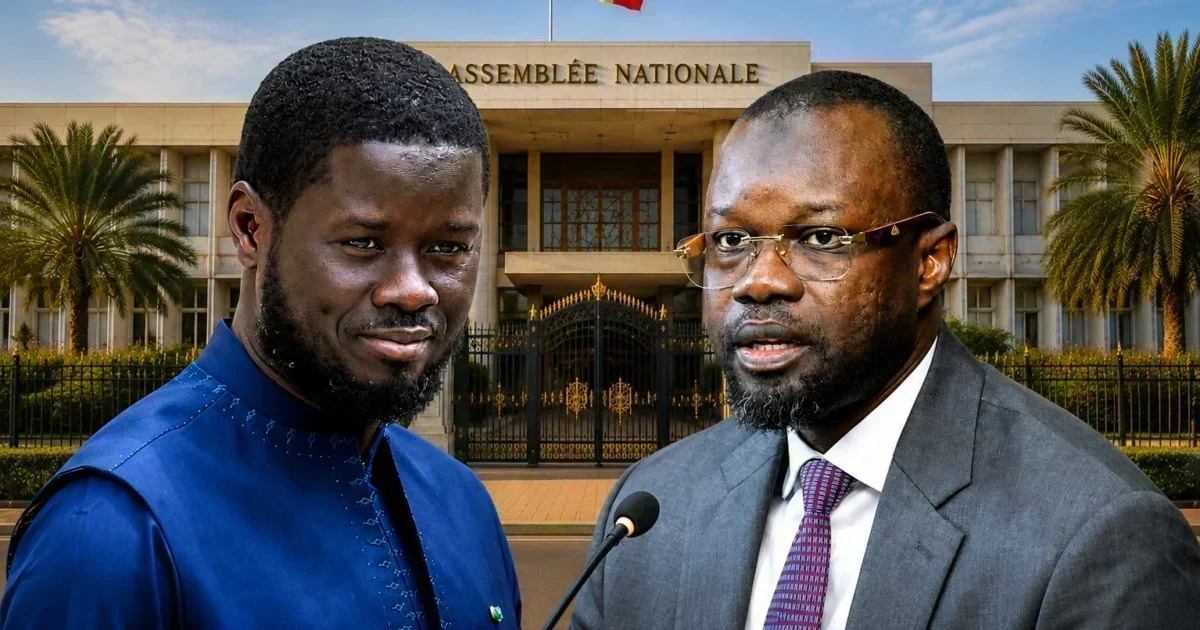
Senegal’s constitutional showdown: how Ousmane Sonko’s assembly power could reshape the 2026 budget
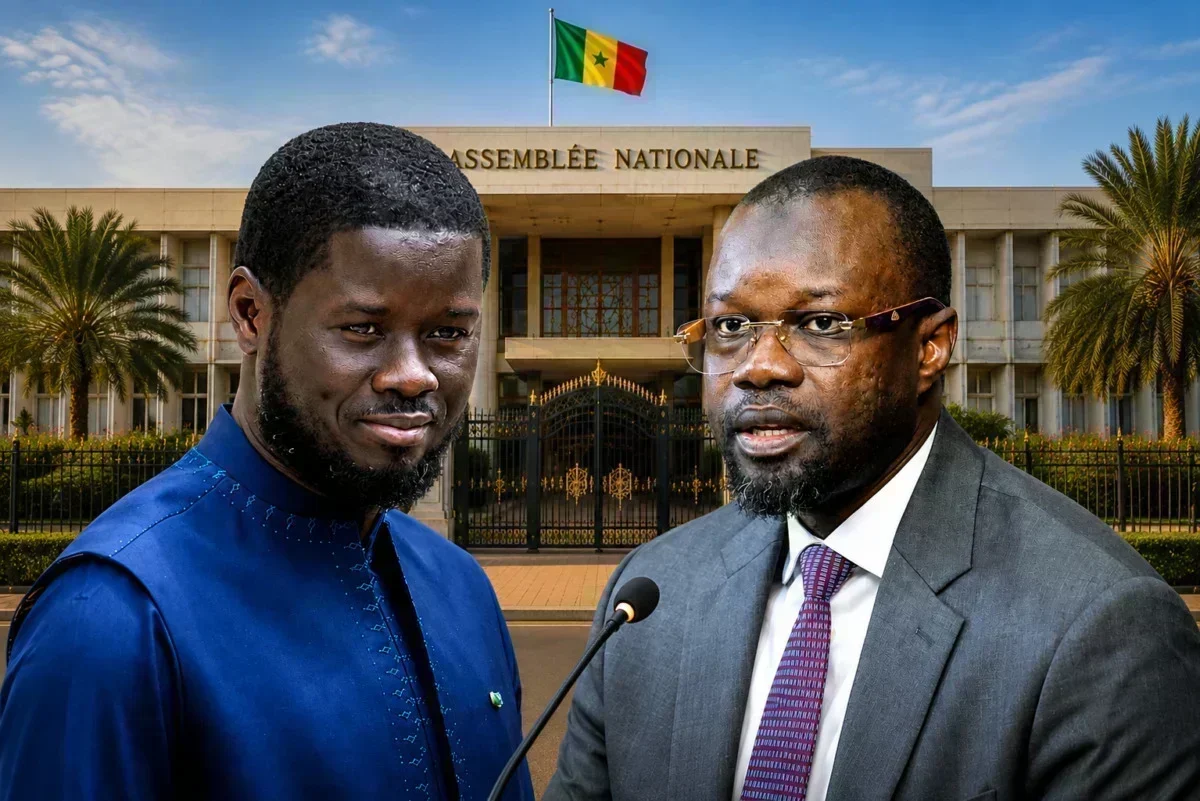
The 2026 budget faces a critical crossroads as Senegal’s Assembly President Ousmane Sonko wields unprecedented constitutional leverage to challenge President Bassirou Diomaye Faye’s financial blueprint. This pivotal moment will determine whether the country’s economic direction remains on track or faces a potential crisis.
While President Bassirou Diomaye Faye confidently expects his party’s majority to endorse the 2026 rectified budget, Senegal’s Assembly landscape has fundamentally shifted. Ousmane Sonko, now Speaker of the National Assembly, commands formidable constitutional tools that could reshape, delay, or even derail the government’s financial proposals—if deployed strategically.
After President Diomaye Faye removed Sonko from his Prime Minister role on May 22, 2026, placing Ahmadou Al Aminou Lô in the position, the balance of power between the executive and legislative branches entered uncharted territory. The Assembly’s approval of the rectified budget law now hangs in the balance, with Sonko’s new institution position granting him direct influence over the legislative process.
The 2026 Rectified Finance Law arrives amid contentious negotiations surrounding Senegal’s IMF agreement. Sonko has publicly demanded transparency about the agreement’s terms and debt treatment. After weeks of debate over document transmission, the Assembly confirmed on September 18, 2026, that the rectified budget proposal, presidential transmission letter, and presentation decree had been properly received.
Constitutional weapons: how Sonko can challenge the budget
The Assembly’s power to reject or amend financial legislation is constitutionally enshrined. With Pastef controlling 130 of 165 seats, Sonko’s party could theoretically block the budget through a straightforward rejection vote. However, such a move carries significant political risk, potentially placing responsibility for public finance disruptions on Sonko’s party during ongoing IMF negotiations.
The Constitution contains a critical safeguard: Article 60 prevents any deputy from switching parties without automatic mandate forfeiture. This provision ensures voting discipline within Pastef, eliminating the possibility of cross-party defections that could undermine the government’s majority.
Beyond outright rejection, Sonko’s deputies possess a more nuanced constitutional weapon: budget amendment rights under Article 82. While prohibited from expanding spending, legislators can propose amendments to reduce expenditures or increase revenue. This allows them to fundamentally rewrite the government’s financial priorities—particularly regarding IMF commitments—without triggering an immediate constitutional crisis through outright rejection.
The government maintains its own constitutional countermeasure: Article 82 empowers the executive to demand a single vote on the entire budget or specific sections, accepting only amendments it endorses. This forces deputies into an all-or-nothing choice: accept the budget as drafted or bear responsibility for its failure.
The ticking clock: deadlines and strategic delays
As Assembly President, Sonko controls legislative scheduling, but Article 84 introduces a critical constraint: if requested by either the President or Prime Minister, a financial bill must receive priority scheduling. This limits Sonko’s ability to indefinitely postpone budget deliberations.
Time itself works against obstruction strategies. Article 68 mandates a 60-day maximum for Assembly consideration of finance laws. Should the budget remain unapproved by mid-November 2026 (60 days after September 18 submission), the President may enact the budget by decree, incorporating any approved amendments. This creates a paradox: prolonged delay could force adoption through presidential decree, effectively stripping Sonko’s party of their most potent political weapon—the power to reject the budget entirely.
A constitutional gray area emerges in cases of explicit rejection versus non-voting. The Constitution specifies procedures for unapproved texts but remains silent on scenarios following outright legislative rejection. This ambiguity could trigger constitutional interpretation through the Council, accessible via a one-tenths deputy petition under Article 74.
The executive branch retains a powerful fallback option first deployed in December 2024 when Sonko himself led the government: Article 86 permits the Prime Minister—after cabinet deliberation—to stake the government’s survival on the budget vote. Under this procedure, the budget becomes law unless an absolute majority (83 votes) approves a censure motion within 24 hours.
This presents Pastef with both opportunity and risk: while they could theoretically defeat the budget and trigger a government crisis, such a move would occur just weeks before President Diomaye Faye regains dissolution power on December 2, 2026—a full two years after the Assembly’s installation.
The December 2 pivotal moment: dissolution as ultimate leverage
Article 87’s dissolution prohibition during an Assembly’s initial two years creates a strategic deadline. With the current legislature installed on December 2, 2024, dissolution remains off-limits until December 2, 2026.
This timeline creates a high-stakes calculation: the budget must pass or fail by mid-November 2026, just before the President gains dissolution authority. A prolonged budget impasse would provide Diomaye Faye with compelling justification for dissolution, while smooth passage would deprive him of this political weapon.
Ultimately, Ousmane Sonko possesses constitutional tools to block, amend, or reshape Senegal’s 2026 budget through rejection, spending cuts, or censure motions. However, each option carries substantial political consequences in a climate where the executive retains constitutional fallbacks: decree powers, government responsibility gambits, and eventual dissolution leverage. The rectified budget process has become more than a financial exercise—it represents a defining test of cohabitation between Senegal’s presidency and Assembly.