
Senegal’s December 2 showdown: how the Assembly dissolution could reshape power dynamics
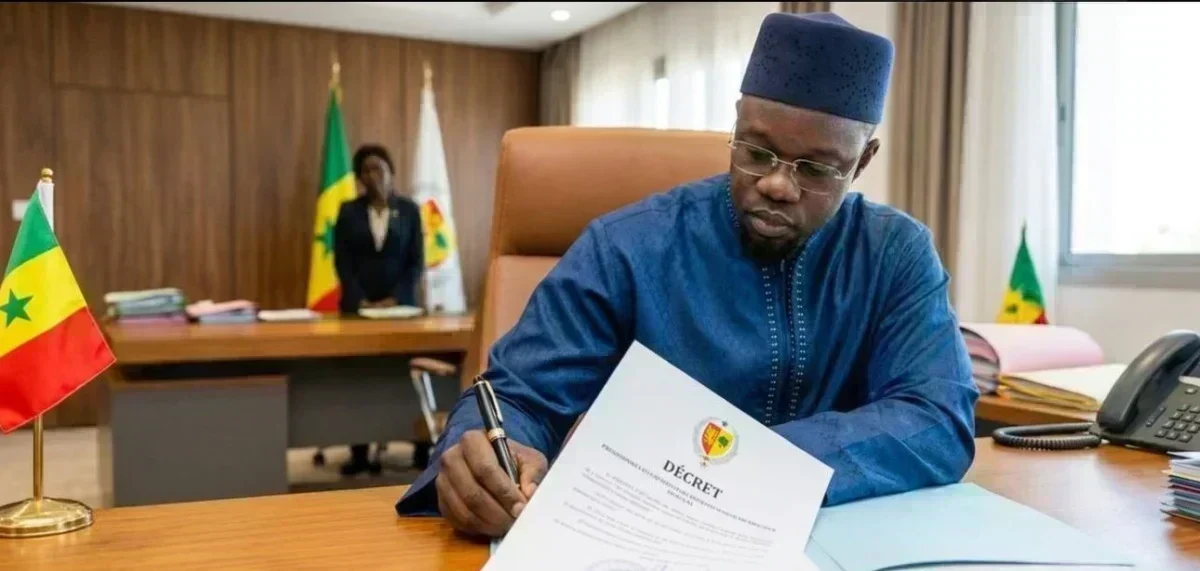
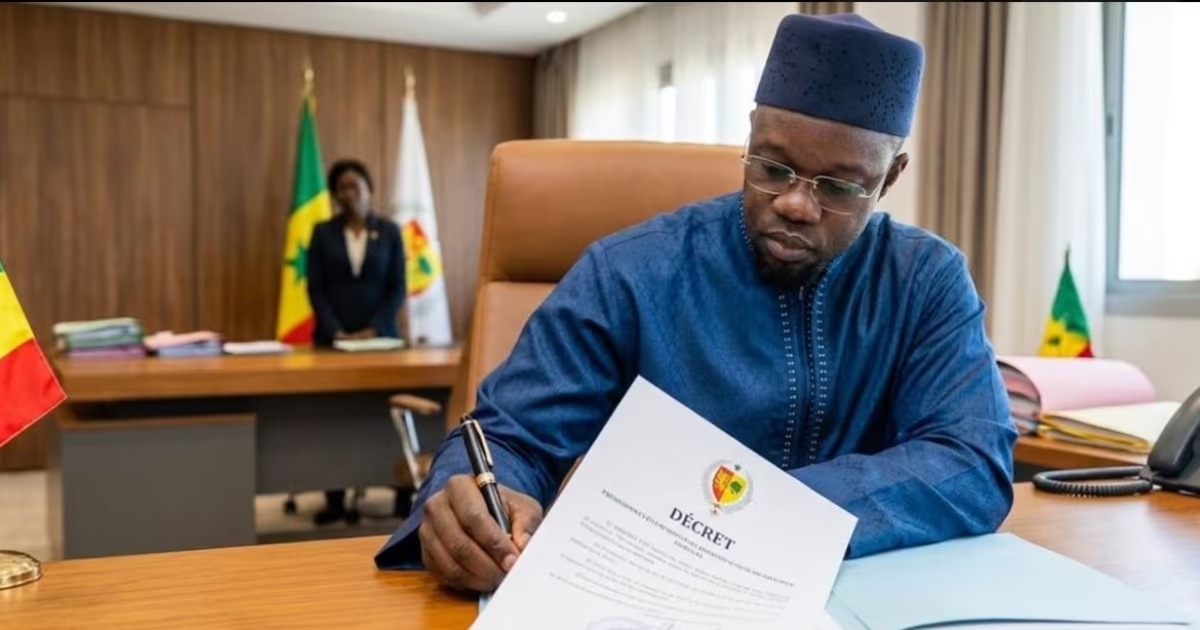
On December 2, 2026, Senegal’s political landscape could face a seismic shift as President Bassirou Diomaye Faye gains the constitutional power to dissolve the National Assembly—a move that would trigger a high-stakes battle for control of the country’s future.
Senegal stands at a critical crossroads as the December 2 deadline approaches, when President Diomaye Faye could exercise a constitutional power long denied to him: dissolving the National Assembly. With Parliament now under the control of the opposition PASTEF and the executive aligned with his own party, Kiiraay, the stage is set for a dramatic political showdown. The clock is ticking, and the stakes couldn’t be higher.
The timing is no coincidence. Article 87 of Senegal’s Constitution allows the president to dissolve the National Assembly only after the first two years of a legislative term have passed. The current Assembly, dominated by PASTEF, was elected in November 2024 and convened on December 2, 2024. December 2, 2026, marks the first day this dissolution power becomes legally available.
Since the Assembly’s formation, the political landscape has transformed dramatically. The president’s break with PASTEF on May 22, 2026, stripped him of his parliamentary majority. While the opposition now controls the Assembly, the president has consolidated his power by forming a new government and launching his own party, Kiiraay. Senegal is experiencing an unprecedented form of cohabitation, where the head of state and the parliamentary majority share the same movement but no longer the same vision.
What the president says—and what his allies hint
Officially, no decision has been made. Speaking from New York, President Diomaye Faye downplayed speculation, stating that “we are not yet at December 2” and that no date has been set for dissolution or elections. Yet he has never ruled out the option entirely.
Behind the scenes, the tone is far less cautious. By mid-August, Senegal’s Minister of Trade, Serigne Guèye Diop, openly declared that the country was heading toward new legislative elections, accusing PASTEF lawmakers of “sabotaging” the president’s agenda. He specifically criticized PASTEF deputies for systematically rejecting initiatives from the presidential palace. Between the president’s measured public stance and his ministers’ urgency, suspense is deliberately maintained—a strategy that keeps parliamentary debates under pressure long before any decree is signed.
If the president signs the dissolution decree in early December, Senegal would embark on a rapid legislative campaign. The Constitution mandates elections within 60 to 90 days, pushing the vote to between late January and early March 2027. The 2024 precedent offers a glimpse of the pace: dissolved on September 12, the Assembly was renewed by November 17.
Yet this timeline collides with another critical deadline. Prime Minister Ahmadou Al Aminou Lo has announced that local elections will take place on January 17, 2027. Holding two national votes within weeks would strain both logistics and political stability. Proposals to “couple” the two elections face legal hurdles, meaning dissolution could force a reshuffle of the local election calendar—a prospect already drawing close scrutiny from civil society.
Playing the waiting game: a tense cohabitation
The alternative is to do nothing—at least for now. Dissolution is a right, not an obligation, and the president could choose to let the legislature run its course. But this status quo comes at a cost: governing with a Parliament no longer under his control. The first test is already underway. The revised finance bill, tied to Senegal’s IMF agreement, was submitted to the National Assembly on September 18, and PASTEF leader Ousmane Sonko has publicly demanded clarifications on the IMF deal and debt management. The 2027 budget will follow.
Under this scenario, every major bill becomes a battleground. The president has framed the debate in stark terms, reminding all parties that the people will ultimately judge their actions. The status quo would not be a truce but a prolonged standoff, with the January local elections serving as the first verdict.
The financial stakes are far from trivial for a country negotiating with lenders and seeking to curb its debt. The 2024 precedent provides a useful benchmark. That year, the Finance Minister estimated the cost of the November 17, 2024, legislative elections at 20 billion FCFA. Electoral materials alone weighed heavily: with 41 competing lists, the Interior Ministry spent over 11 billion FCFA on ballot papers and campaign materials. For comparison, the March 2024 presidential election cost around 14 billion FCFA.
A new dissolution would add at least 20 billion FCFA to the budget, on top of the local election expenses. The debate has already surfaced within Kiiraay, with a party official in Kaolack arguing against holding local elections immediately, citing the strain on public finances amid pressing social needs.
What’s at stake for Diomaye Faye and Kiiraay
For the president, a successful dissolution would be the only way to regain a working majority and govern without obstruction until the end of his term. This is the core mission of Kiiraay, launched in July to build a durable majority and prepare for upcoming elections, including the 2027 local polls.
The risks are substantial. Kiiraay is barely two months old and has never contested an election. A defeat in legislative elections would leave the president facing a newly legitimized Assembly—one even more hostile for the remainder of his mandate. This makes the January local elections a crucial barometer: they could either justify a dissolution or expose its potential futility.
PASTEF, meanwhile, starts from a position of strength, holding 130 of the 165 seats won in 2024. In an early election, the party has little to gain in seats but much to lose. Yet the real prize is political legitimacy. A decisive victory after the rupture would validate PASTEF’s claim that the president betrayed their shared project, positioning Ousmane Sonko as the country’s true political center of gravity.
PASTEF is not sitting idle. As President Diomaye Faye launched Kiiraay, the Assembly president was touring the country to promote PASTEF membership drives. Both camps are preparing for an electoral battle, whether the vote comes in January or later.
For smaller parties crushed in 2024, a reshuffle could be an opportunity. The split in the former majority opens new space, and early elections could restore their parliamentary representation. Yet they must navigate a landscape dominated by two blocs claiming the legacy of the 2024 rupture. Tactical alliances with either side could determine the next parliament’s composition.
Ultimately, December 2 is not the day of a decision but the moment when all options become possible. The president could dissolve the Assembly immediately, wait for the local election outcome, or keep the threat as leverage over lawmakers. Before then, the passage of the revised finance bill and the 2027 budget will reveal the true state of relations between the two former allies. One thing is certain: 2027 will open under the shadow of the ballot box, and it may be there that the real arbitration between Diomaye Faye and Ousmane Sonko is decided.