
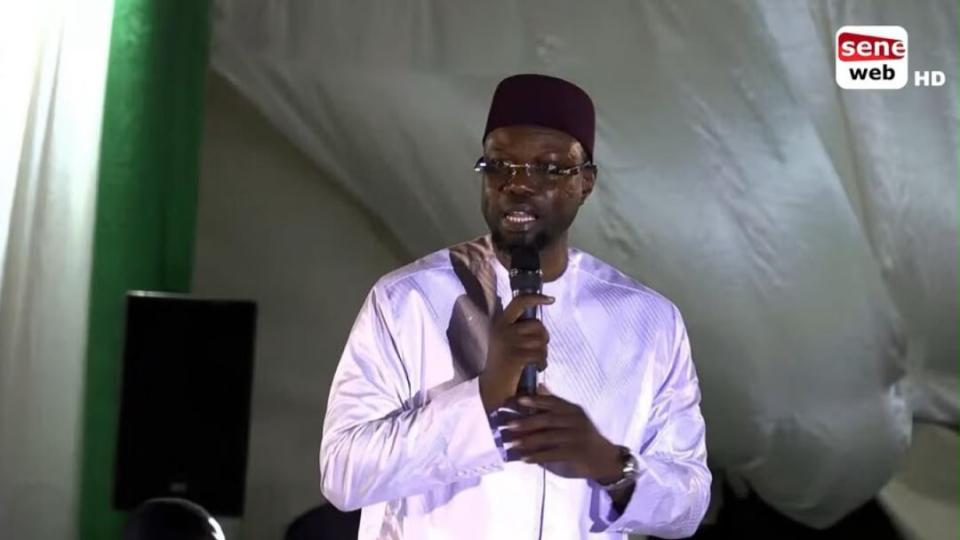
Tensions between Senegal’s National Assembly President Ousmane Sonko and President Bassirou Diomaye Faye have reached a critical juncture. During a July 12 rally in Touba celebrating the inauguration of Pastef’s new headquarters, Sonko issued a stark warning: he will bring down Prime Minister Ahmadou Al Aminou Lô’s government as many times as necessary to protect national interests. This unprecedented declaration, made public the following day, signals an escalating power struggle between two key figures in Senegal’s political landscape.
Sonko’s frustration stems from what he describes as the government’s willingness to compromise on the management of Senegal’s natural resources—oil, gas, and phosphate—to favor foreign investors. He accused the executive branch of undermining national sovereignty, pledging that the Pastef parliamentary majority would not hesitate to file a no-confidence motion if these policies persisted. Additionally, Sonko announced an upcoming bill, spearheaded by Guy Marius Sagna, to subject future resource exploitation contracts to parliamentary approval.
Parliament as a weapon against resource exploitation deals
The National Assembly, where Pastef holds a strong majority, has become Sonko’s primary tool in this confrontation. By leveraging this numerical advantage, he aims to tighten legislative oversight over government actions and block what he views as reckless concessions to foreign entities. His stance marks a sharp departure from his June 3 remarks, when he had distanced himself from the idea of censuring the government despite his disagreements with the President.
This public feud deepens the rift between two former allies, arriving just days after a constitutional reform—backed by the parliamentary majority—was struck down on July 9 in a move that aligned with President Faye’s stance. By wielding the threat of a no-confidence motion, Sonko is effectively transforming the legislature into a battleground for institutional dominance. The outcome of this standoff could plunge Senegal into prolonged political turbulence, jeopardizing the government’s ability to govern effectively.