
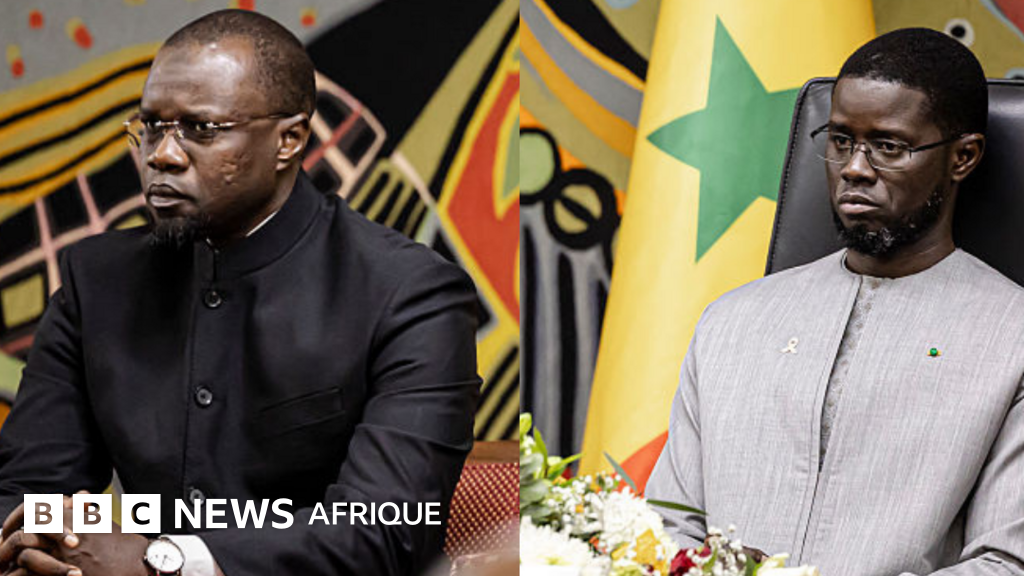
After the political split: Senegal’s leadership faces an uncertain future
Senegal’s political landscape has shifted dramatically following the dismissal of Prime Minister Ousmane Sonko, marking the end of the influential duo that propelled Bassirou Diomaye Faye to power in 2024 under the campaign slogan « Diomaye mooy Sonko ».
What was once a powerful political alliance has now fractured. The decree issued on May 22, 2026, removing Sonko from his post as Prime Minister has shattered the perception of unity that had defined Senegal’s political scene for years.
The slogan « Diomaye mooy Sonko » had served as a rallying cry, symbolizing a near-total fusion of two political trajectories and a shared vision for the PASTEF party. Yet, the recent dismissal has exposed deep-seated contradictions within this dynamic.
Tensions between the two leaders had been growing for months, particularly over governance, economic policy, and control of the party. The removal of Sonko now signals a fundamental challenge to the dual-leadership model that had seemed so effective just two years ago.
A duality at the heart of the State
Political analyst Maurice Soudieck Dione had long anticipated this rupture. He points to the unique circumstances surrounding the 2024 presidential election, where Bassirou Diomaye Faye was elected after Ousmane Sonko was barred from running due to legal challenges. This created an immediate duality in leadership, one that was never fully resolved.
« The Senegalese Constitution grants significant institutional power to the President, who remains the hierarchical superior of the Prime Minister, » explains Dione. Yet, Sonko’s popularity and influence within the PASTEF party meant he was far more than a conventional Prime Minister. His dual role as both mentor and political figurehead created an inherently unstable system.
Dione suggests that a more sustainable arrangement might have been for Sonko to assume the presidency of the National Assembly, leaving the Prime Minister’s role to a technocrat. This would have clarified roles and reduced the risk of conflict. However, this option was never pursued, leaving the stage set for the current crisis.
Ambitions and rivalries driving the crisis
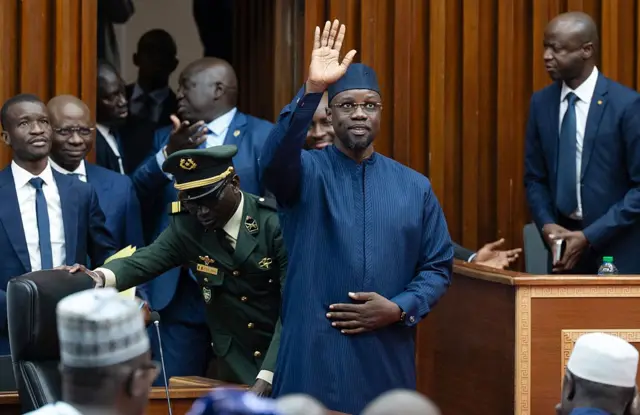
As the months passed, their differences became more apparent, with conflicting positions on political, economic, and diplomatic issues. President Faye had already warned against the « personalization » of the party, a subtle critique of Sonko’s dominant influence.
« The conflict was almost inevitable, » says Dione. « While Diomaye Faye held institutional legitimacy as the elected President, Sonko retained the popular and militant legitimacy of the PASTEF project. This dual source of power created an unsustainable contradiction that ultimately led to the rupture. »
Dione also highlights the long-term political calculations at play. « Both leaders were positioning themselves for the 2029 presidential election, and this internal competition within the executive branch fueled the crisis. »
A rupture with wide-reaching consequences
According to Babacar Ndiaye, director of research at think tank WATHI, both leaders will emerge weakened from this split. « The campaign slogan ‘Diomaye is Sonko and Sonko is Diomaye’ promised a unified leadership. Now, those who believed in this vision will feel disappointed, » he notes.
The dismissal of Sonko represents a strategic choice by Faye to regain full control of the executive branch and distance himself from his former mentor. Yet, this move carries significant risks.
While Faye holds the institutional levers of power, Sonko retains a critical asset: control of the PASTEF party apparatus. « Politically, Sonko’s position is stronger, » observes Ndiaye. « He leads the party and guided PASTEF to a landslide victory in the legislative elections, securing 130 of the 165 seats. »
This majority in the National Assembly could become a major obstacle for Faye. « The President risks facing a hostile, vengeful parliamentary majority aligned with Sonko, » warns Ndiaye. In this scenario, Faye could become institutionally powerful but politically isolated.
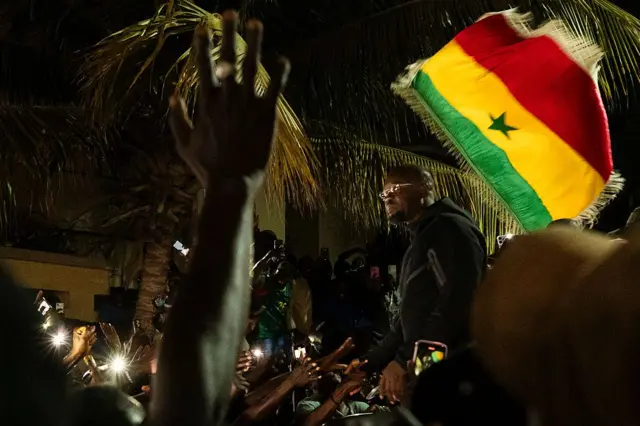
Institutional confrontation on the horizon
Ndiaye warns that the first political test could come quickly, with pending bills in the National Assembly. « The dismissal of Sonko will be a major issue in Parliament. If PASTEF’s majority turns against the President, it could lead to a showdown. »
The appointment of a new Prime Minister will be closely watched as a signal of Faye’s political direction after months of disagreements with Sonko. « The immediate priority for the President is to appoint a new Prime Minister, form a new government, and clarify the political line, » says Dione.
Dione warns of an unprecedented situation: « internal opposition within PASTEF itself. » With Sonko leading the party’s legislative list to victory, he holds significant influence over the parliamentary majority. If this cohesion breaks down, it could lead to institutional gridlock, blocking government bills and triggering a political crisis.
Faye facing the solitude of power
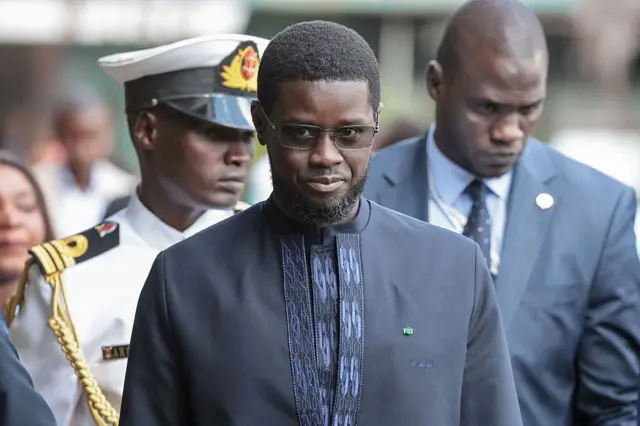
Since taking office, Bassirou Diomaye Faye has benefited from a unique political balance: institutional legitimacy as President, while Sonko retained strong militant and popular support. By removing Sonko, Faye risks losing a key pillar of his political base.
« The main danger for Faye is now political solitude, » explains Ndiaye. « As long as Sonko was Prime Minister, he absorbed much of the criticism and served as a militant shield for the PASTEF’s core supporters. Now, all expectations will focus directly on the President. »
Moreover, Faye loses the political argument that defined his initial legitimacy: being Sonko’s political extension. He must now forge his own identity. While he can rely on the coalition that supported him, Ndiaye notes that this coalition remains insufficiently structured.
« If the political separation is finalized, Faye can draw on his revived coalition. However, it is not well structured, » he warns. The political calendar adds urgency to this challenge, with local elections approaching and speculation about a potential dissolution of the National Assembly.
Dione warns that if Faye dissolves Parliament before November, the political landscape could become particularly perilous. « A dissolution would lead to new elections and a moment of clarification. A defeat could weaken the rest of his term. »
Sonko’s path forward
For Ousmane Sonko, leaving the government paradoxically offers new political freedom. Several scenarios are emerging. One would position him as an internal opponent within the power structure while retaining control of the PASTEF apparatus. This is risky, as it could permanently fracture the party.
A second scenario would involve a methodical preparation for the 2029 presidential election, a goal many observers believe Sonko has been quietly pursuing for months.
The third scenario suggests a complete reshaping of Senegal’s political landscape, with two blocs emerging from the same camp: an institutional current led by Faye and a populist-sovereignist movement championed by Sonko.
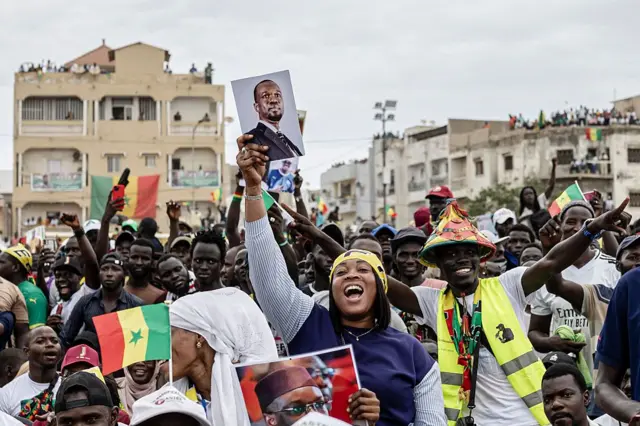
The dismissal of Ousmane Sonko may only be the beginning of a deeper political realignment. The central question now is whether Bassirou Diomaye Faye can govern independently without the shadow of his former mentor. Failure could have serious consequences for the remainder of his term, particularly if he faces electoral setbacks in the coming months.