
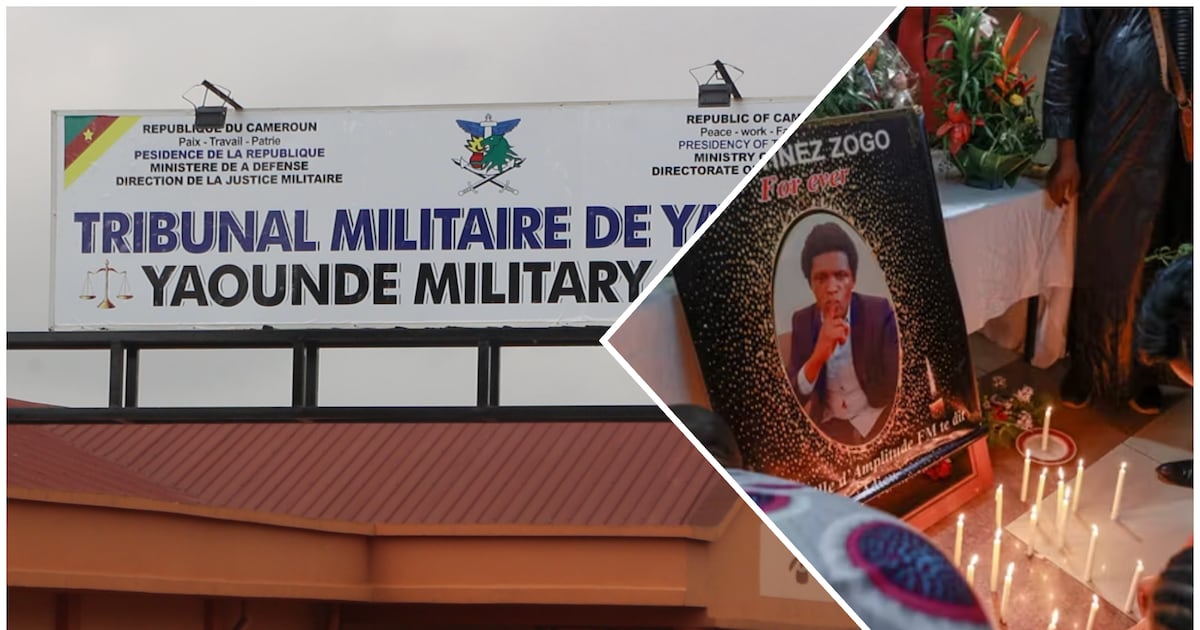
The landmark hearings unfolded on June 1 and 2, 2026, at the Military Tribunal in Yaoundé, delivering a seismic jolt to the ongoing investigation into the murder of investigative journalist Martinez Zogo. The proceedings pivoted dramatically around forensic digital evidence, meticulously dissected by Professor Georges Bell Bitjoka, a court-appointed cybersecurity expert and the 32nd witness for the prosecution.
Unseen footage exposes brutal reality
Professor Bitjoka’s exhaustive analysis of the accused’s phones and digital accounts unearthed chilling material—including a video of Zogo’s torture and murder, concealed within an accused’s Google Cloud account. On June 1, the tribunal attempted to screen three videos during public proceedings, but the emotional toll forced an immediate suspension after the first harrowing clip.
The footage and accompanying images laid bare the journalist’s final moments: bound, bloodied, his left ear partially severed, his desperate pleas for mercy echoing through the courtroom. These visuals, now part of the permanent record, underscore the brutality of his killing and the meticulous planning behind it.
Digital trail implicates key figures
According to the expert’s findings, the files were definitively traced to the cloud account of Maréchal des Logis Godje Oumarou Vincent, a former operative with the Directorate General of External Research (DGRE), now a fugitive. The professor’s report also exposed a web of communications linking Justin Danwe, the former DGRE operations director, to the operation’s execution. Additionally, financial records surfaced, including a 35 million FCFA transaction discussed in court.
While the analysis established clear technological links for some defendants—30% for one, 18% for another—no direct digital evidence has yet been confirmed in the phones of Léopold Maxime Eko Eko, the former DGRE chief, or businessman Jean-Pierre Amougou Belinga. Their conversations with Danwe had been systematically deleted prior to seizure.
Cross-examination intensifies scrutiny
On June 2, proceedings resumed under a palpable tension, with the entire day dedicated to a rigorous cross-examination of Professor Bitjoka by both the prosecution and defense teams. Defense attorneys challenged the technical validity and scope of the data extraction, while the journalist’s legal representatives underscored the report’s groundbreaking contributions.
The expert maintained his role was strictly technical: analyzing digital surfaces without personal interpretation or legal judgment. Despite reservations over methodology, the defense’s line of questioning failed to discredit the core findings, which have reshaped the trajectory of the trial.
The tribunal adjourned late into the night, scheduling the next critical hearings for June 22 and 23, 2026, to advance substantive arguments in the case.