
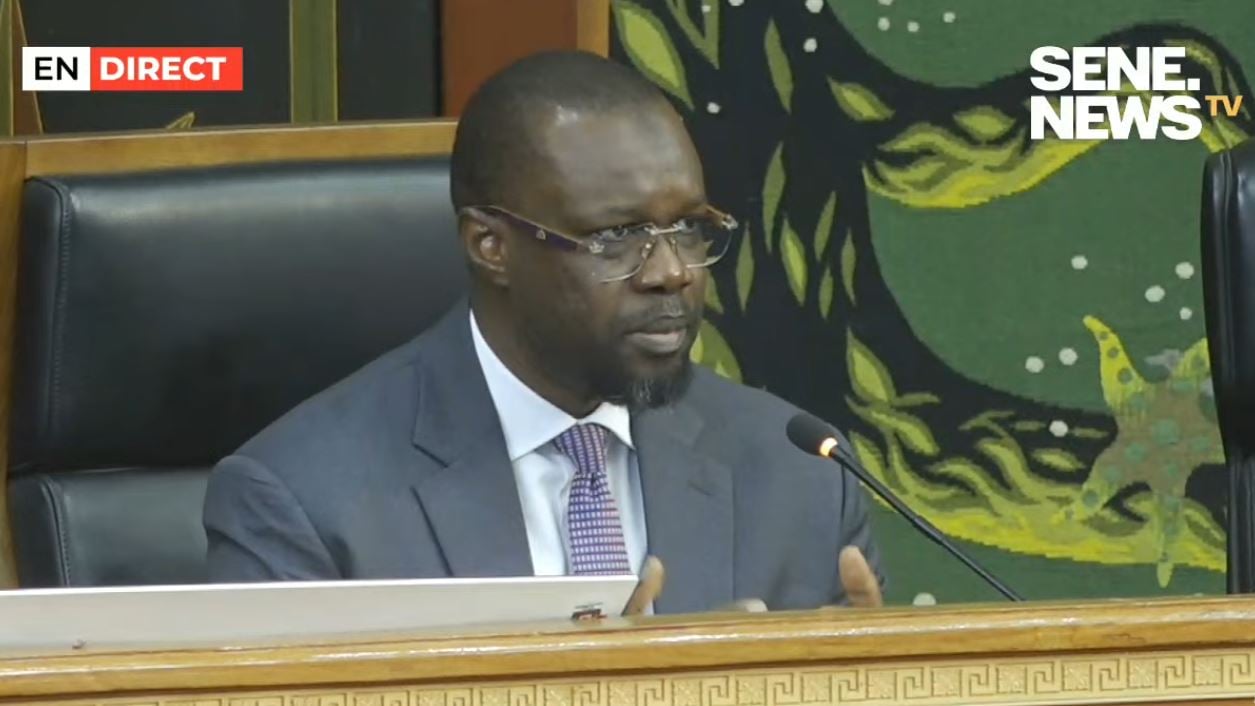
Following his recent appointment as President of the National Assembly, Ousmane Sonko has shed light on the underlying reasons behind his political break with President Bassirou Diomaye Faye. In a speech blending philosophy and public ethics, he framed the separation not as a personal feud but as a fundamental clash over the very essence of governance.
In a carefully crafted address, Sonko rejected the notion that their differences stemmed from mere political rivalry. Instead, he positioned the debate at the intersection of morality and statecraft, insisting that the survival of any nation hinges on the virtue of its leaders. « The stakes here transcend individuals. What’s at stake is the very relationship between ethics and politics, » he declared, grounding his argument in the wisdom of Aristotle, who viewed politics as the highest art when practiced for the common good.
Drawing parallels with Senegal’s political heritage, Sonko invoked the legacy of Mamadou Dia, the country’s first Prime Minister after independence. He recalled Dia’s warnings against conflating state authority with private interests, emphasizing that sovereignty must extend beyond political institutions to encompass moral, economic, and social integrity. « A nation may boast a flag, an anthem, and functioning institutions yet remain enslaved by practices that strip the Republic of its meaning, » he remarked, highlighting the fragility of governance when ethical standards erode.
The newly elected Assembly leader also framed the split within a broader critique of modern political crises. He argued that nations do not merely collapse under economic strain but also under the weight of « moral exhaustion. » When institutions cease serving the people and instead become tools for personal aggrandizement, the very soul of the Republic is imperiled. While avoiding direct accusations, Sonko implied that his divergence with the President stemmed from irreconcilable views on governance and the ethical obligations of leadership.