
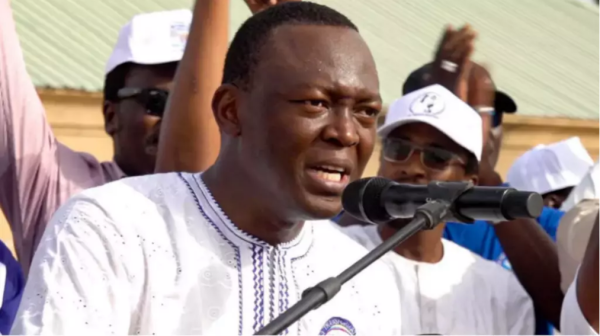
For a full year, Chadian opposition leader Succès Masra has remained behind bars in N’Djaména, despite mounting calls for his release. His sister, Chancelle Masra, who resides in France, has spoken out about his deteriorating health and the harsh conditions of his detention.
What is Succès Masra’s current situation?
In August 2025, the former Prime Minister and leader of the Transformateurs party was sentenced to 20 years in prison. The verdict stemmed from a 2023 message he allegedly broadcast, which authorities claimed provoked deadly intercommunal violence in southern Chad. However, his family and supporters vehemently deny these accusations, arguing that the case lacks any credible evidence.
Conditions of detention raise concerns
Chancelle Masra describes her brother’s imprisonment as inhumane. He is held in a cramped, windowless room measuring less than 15 square meters, confined since May 16, 2025, within a military facility in N’Djaména. His detention conditions are dire: no bed, no sunlight, no access to outdoor activities, and no proper medical care.
The family has struggled to secure his right to see doctors and lawyers, though they have eventually succeeded. His mother has been granted occasional visits, but Succès Masra remains cut off from all communication. His electronic devices—phone and computer—were confiscated, leaving him entirely isolated from the outside world.
Medical emergency amid legal battle
Doctors have confirmed that Succès Masra suffers from severe respiratory issues and requires urgent medical attention that cannot be provided in Chad. His sister emphasizes that these health concerns are not speculative; they have been officially documented. Yet, despite the gravity of the situation, no progress has been made toward his release or transfer for proper treatment.
Legally, his case is considered baseless. Over the years, Succès Masra has consistently advocated for dialogue and peaceful solutions, even serving as Prime Minister without accepting a salary to support national development. His commitment to non-violence is well-documented, making his imprisonment all the more unjust.
Appeal pending without clarity
Though an appeal has been filed, no date has been set for the hearing. The silence surrounding the judicial process has left the family in limbo. Chancelle Masra points to this delay as a clear violation of justice and human rights, underscoring the need for international pressure to ensure a fair resolution.
The European Union, among others, has publicly called for respect of Chad’s legal framework, highlighting the urgency of the matter. Meanwhile, Succès Masra’s supporters continue to demand accountability, emphasizing that his detention reflects a broader crackdown on peaceful opposition in the country.
Political climate fuels concerns
Recent months have seen increased repression against opposition figures in Chad. Eight members of the GCAP coalition were sentenced to eight years in prison for organizing peaceful protests, further stoking fears of democratic backsliding. Chancelle Masra warns that silencing dissent only deepens societal divisions and undermines the nation’s progress.
She rejects claims that opposition voices are adequately represented in Chad’s institutions, arguing that true democracy requires the freedom to challenge authority without fear of imprisonment. Her brother’s case, she insists, exemplifies the risks faced by those who dare to speak out.
International support offers hope
Despite the bleak circumstances, Chancelle Masra expresses gratitude for the global solidarity her brother has received. Influential figures, human rights organizations like Amnesty International and Human Rights Watch, and diaspora communities worldwide have rallied in his defense. She credits this mobilization with keeping him alive under such dire conditions.
Yet, she laments that while she enjoys freedom of expression in France, millions in Chad and across Africa remain silenced. The fight for Succès Masra’s release is not just about one man—it symbolizes the broader struggle for justice, human rights, and democratic values in the region.
As the international community watches, the question remains: Will Chad’s leadership act to correct this injustice, or will silence prevail?