
Mali’s commercial lifelines under siege from terror blockade
The strategic trade corridors connecting landlocked Sahel nations to West African coastal states are facing unprecedented disruption following a coordinated terror campaign in Mali. Recent large-scale attacks by the Jama’at Nusrat al-Islam wal Muslimin (JNIM) and the Front de libération de l’Azawad (FLA) have crippled critical supply routes, threatening regional economic stability.
Escalation in militant operations
On April 25th, simultaneous assaults struck multiple Malian cities including Kati, Mopti, Sévaré, Gao and the capital Bamako. The coordinated offensive resulted in significant casualties and claimed the life of Defense Minister Sadio Camara. In response, Malian security forces launched counter-operations targeting militant positions, leading to the arrest of numerous suspects including active-duty soldiers and former military personnel.
Strategic blockade paralyzes key economic arteries
Within days, the JNIM imposed a comprehensive blockade on Bamako, particularly targeting western access routes. The complete closure of the Kita-Bamako highway trapped hundreds of civilians while severing vital food and water supplies. Commercial traffic along the Kayes-Bamako axis ground to a halt, with the blockade extending its reach to previously secure routes like Conakry-Bamako.
Regional economic arteries under threat
Since September 2025, JNIM militants have systematically targeted fuel convoys along western and southern Mali’s supply arteries. These attacks have progressively destabilized regional commerce, with potential to ripple across West African economies. The situation has become particularly acute as coastal nations’ ports serve as the primary gateways for Sahelian states, with critical highways functioning as umbilical cords sustaining regional trade.
Senegal-Mali corridor bears brunt of economic impact
The Dakar-Bamako route, representing Mali’s primary commercial artery with Senegal, has suffered severe disruptions. In 2024, Mali accounted for 26.5% of Senegal’s total exports (802.8 billion FCFA/$1.42 billion). However, between September-November 2025, Dakar’s port experienced daily blockages of approximately 120 containers bound for Mali, resulting in monthly losses of 15 billion FCFA ($26.54 million). By November 2025, over 2,000 containers were immobilized in Dakar, while February 2026 saw 4,000 empty containers stranded in Bamako as drivers refused the dangerous return journey.
This paralysis has critically reduced Mali’s access to petroleum products, refined goods, hydraulic cement and foodstuffs. The crisis has devastated livelihoods of thousands of truck drivers, merchants and freight forwarders. Other corridors connecting Côte d’Ivoire, Ghana, Togo and Bénin ports to the Sahel face similar vulnerabilities.
Côte d’Ivoire’s supply role threatened by militant expansion
Mali remained Côte d’Ivoire’s top client within the West African Economic and Monetary Union (UEMOA) in 2025. The Abidjan-Bamako corridor, vital for petroleum and food supplies, saw approximately 1.47 million tons of goods transported in 2025 before JNIM attacks intensified in the Sikasso region. Côte d’Ivoire also serves as Burkina Faso’s primary African supplier of petroleum, electricity and fertilizers, with imports transiting through Côte d’Ivoire, Ghana and Senegal. The February 14th attack in northern Burkina Faso that killed seven Ghanaian tomato traders underscores the growing insecurity along this critical route.
Government responds with emergency measures
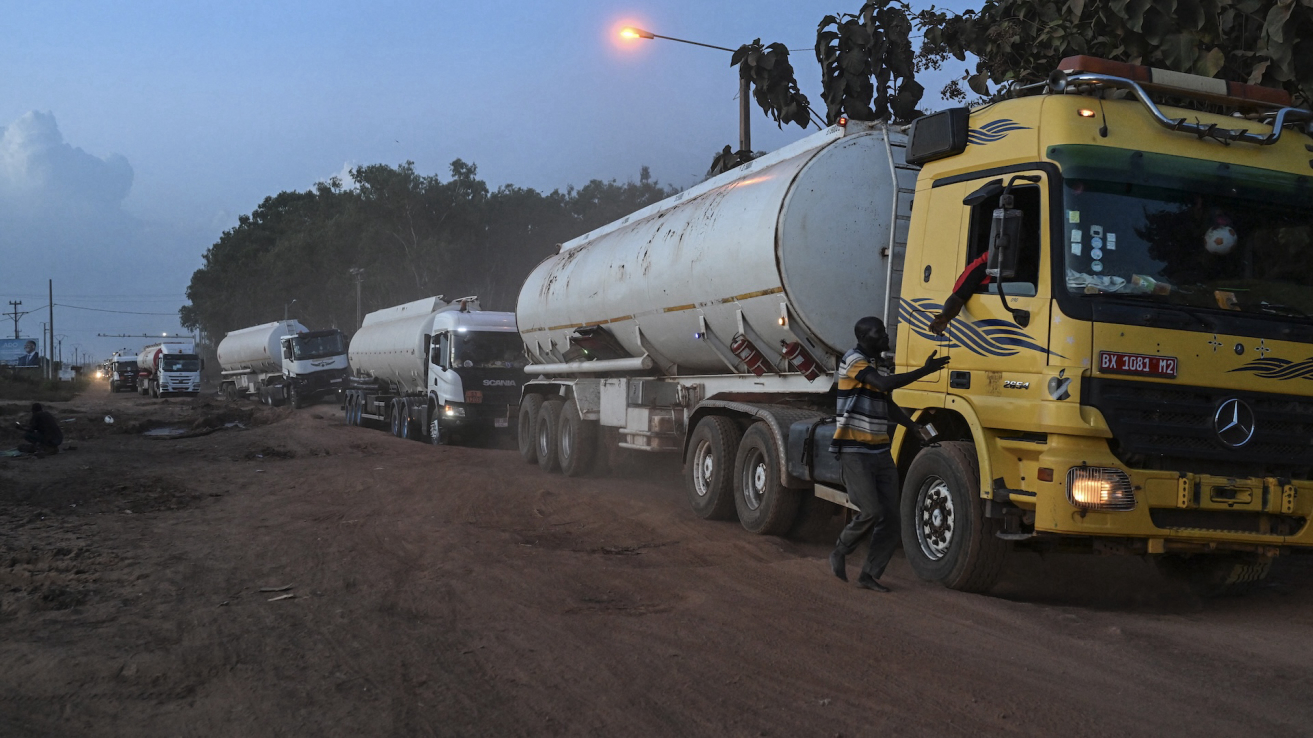
Facing this commercial paralysis, Malian authorities implemented several countermeasures including military escorts for fuel convoys. Since November 2025, weekly escorted convoys have brought 200-300 tanker trucks into the country, down from nearly 1,200 before the attacks. A customs facilitation agreement with national petroleum groups was signed to streamline procedures, while fuel rationing systems were established to combat black market activities. Efforts are also underway to redirect commercial flows from Dakar and Abidjan ports to alternative facilities.
Reports of a potential truce between Bamako and jihadist groups during Eid al-Adha have been officially denied by Malian authorities, as attacks continued unabated.
Call for strengthened regional cooperation
The current crisis highlights the urgent need for joint protection of transborder commercial corridors. Regional organizations including the Economic Community of West African States (ECOWAS), the Alliance of Sahel States (AES), the Entente Council, the Mano River Union and UEMOA must coordinate to prevent further expansion of this militant strategy across additional trade routes. Combating terrorism may prove to be the catalyst needed for revitalizing essential regional cooperation between Sahelian and coastal West African states.