
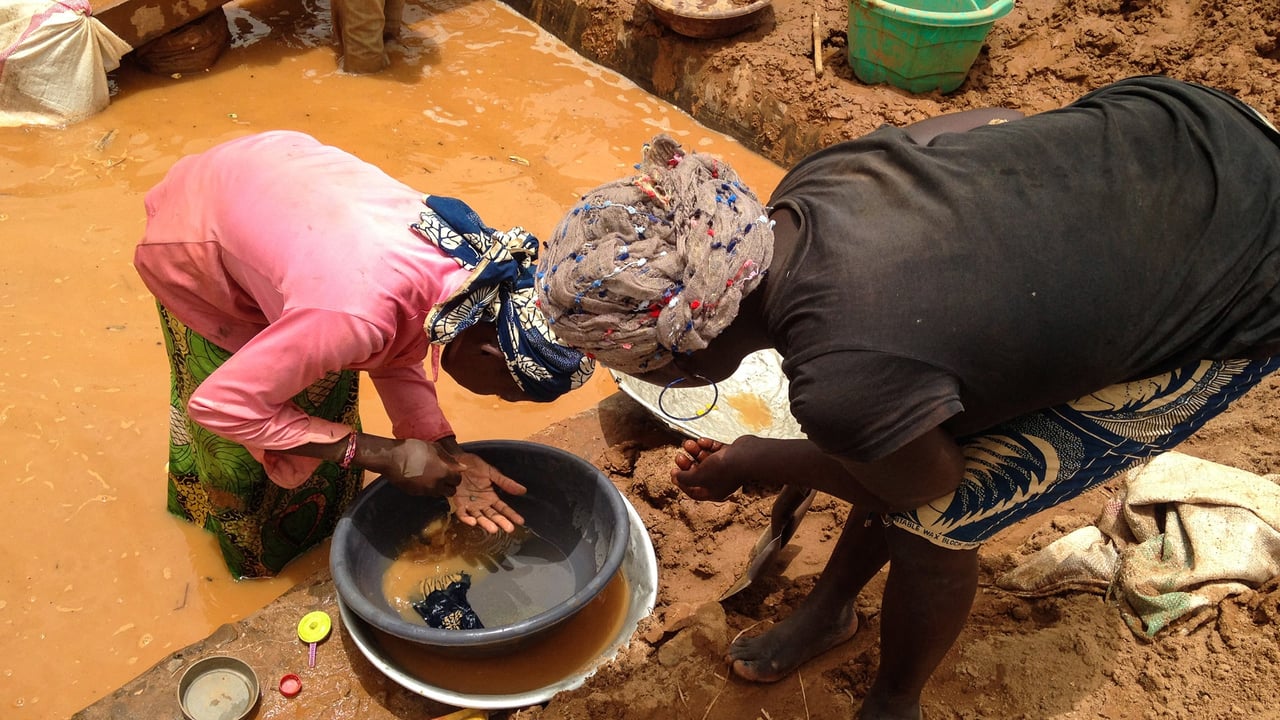
In the dense forests of the East and Adamaoua regions, a silent gold rush is underway. While local communities scrape a living from the earth, a parallel economy thrives—one that drains the country’s wealth without leaving a trace in state coffers. The treasure flees toward Dubai, carried by smuggling networks that operate with chilling efficiency, often shielded by powerful local allies.
This is not a distant rumor. From Betare-Oya to the remote mining pits, entire villages have transformed into gold hubs where fortunes change hands daily. Yet, despite the scale of this activity, the Cameroonian government struggles to assert control. The result? Billions in potential revenue vanish into the shadows, leaving public infrastructure underfunded and communities in poverty.
Where gold flows, the state loses
The East and Adamaoua regions are Cameroon’s gold belt, but their riches are being plundered systematically. Small-scale miners, often working with rudimentary tools, extract tonnes of gold annually. Yet, the formal market captures only a fraction of this output. The rest disappears through illicit channels, moving swiftly across borders before being laundered in international markets.
Investigations reveal a pattern: gold leaves Cameroon in suitcases, hidden in cargo, or smuggled via informal networks that span West and Central Africa. Dubai, a global hub for precious metals trading, serves as the primary destination. The journey is simple: from artisanal pits to smugglers, then to regional dealers, and finally to Middle Eastern markets—all while Cameroonian authorities remain sidelined.
The human cost of unregulated mining
Behind the glittering facade of this underground economy lies human suffering. Miners, including children, work in hazardous conditions for meager pay. Mercury, used to separate gold from ore, contaminates rivers and poisons communities. Local leaders often turn a blind eye, benefiting from kickbacks or informal taxes imposed on miners.
Meanwhile, the Cameroonian state misses out on critical revenue that could fund schools, hospitals, and roads. Tax evasion and smuggling are rampant, with middlemen and foreign buyers exploiting loopholes. The economic drain is staggering: while gold prices soar globally, Cameroon’s treasury sees little of the profits.
Why the state fails to rein in the trade
Several factors contribute to the government’s inability to curb gold smuggling. Weak governance, corruption, and limited law enforcement capacity all play a role. Border controls are porous, and smuggling routes are well-established. Even when seizures occur, they are often symbolic, failing to dismantle the networks at play.
Moreover, the artisanal mining sector operates in legal gray areas. While the government has attempted to formalize small-scale mining, bureaucratic hurdles and lack of resources hinder progress. Many miners prefer to stay in the shadows, avoiding taxes and regulations that would legitimize their operations.
A call for systemic change
Experts argue that Cameroon must overhaul its approach to gold mining. Strengthening border security, cracking down on corruption, and investing in formalization programs are critical steps. Transparency initiatives, such as tracking gold from pit to market, could help stem the flow of illicit wealth.
Without decisive action, the shadow economy will continue to thrive. The billions slipping through Cameroon’s fingers today could transform the nation tomorrow—if only the state could seize control of its own resources.