
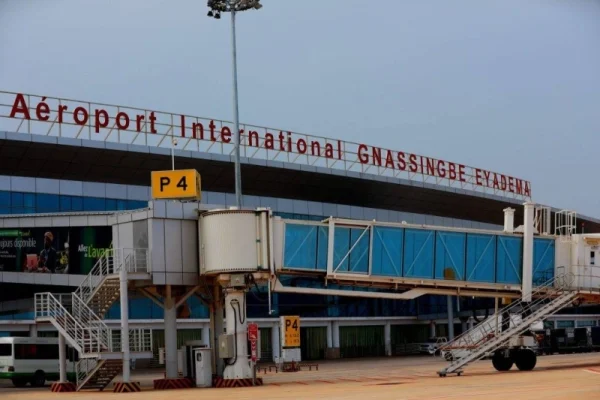
Lomé hosted a striking paradox during the third edition of the Biashara Afrika forum, where high-level panafrican ambitions collided with ground-level bureaucratic hurdles. On opening day, May 18, 2026, the arrival of African investors at Gnassingbé Eyadéma International Airport became a stark reminder of the continent’s integration gaps.
While delegates gathered to celebrate the African Continental Free Trade Area (AfCFTA) and its promise of a unified market spanning 1.4 billion consumers, two foreign investors found themselves locked in an administrative maze simply to enter Togo. Their offense? Presenting valid West African passports from neighboring CEDEAO nations. The irony was glaring: within Africa, a European passport proved more valuable than a regional one.
The incident unfolded when two high-profile business figures—a Nigerian and a Ghanaian—landed in Lomé after long-haul flights from Europe. Despite possessing CEDEAO passports, which should guarantee free movement across member states since the 1970s, they were denied entry. The only pathway to admission? Securing a 24-hour emergency visa using their European passports.
Dr. Jumoke Oduwole, Nigeria’s Minister of Industry, Trade and Investment, shared their ordeal with forum attendees. One investor, a financial services executive, reportedly declared on the spot that the experience had shattered his confidence in investing in Togo. « If a similar situation occurred in the European Union—where an African investor was forced to use a non-African passport to enter—it would never be tolerated, » she noted. The message was clear: bureaucratic barriers at borders are eroding investor trust faster than they can be rebuilt.
When borders undermine business: the cost of overzealous policies
For a nation positioning itself as a regional logistics and financial hub, such an episode was nothing short of self-sabotage. Visa restrictions on neighboring Africans don’t just inconvenience travelers—they repel investment. The incident at Lomé Airport didn’t just make headlines; it broadcast a damaging message to global investors: Africa’s integration promises remain largely on paper.
Togo’s aspirations to be a gateway for trade and finance in West Africa now face a credibility crisis. The airport debacle exposed a harsh truth: in practice, an African passport is often less useful than a European one within the continent. This contradiction threatens to overshadow the very purpose of the Biashara Afrika forum—where leaders had convened to dismantle non-tariff trade barriers.
Faure Gnassingbé’s ultimatum: 48 hours to fix a continental embarrassment
The timing of the incident could not have been worse. With global investors, policymakers, and media scrutinizing every word at the forum, Togo’s handling of the situation became a live case study in how not to implement integration policies. In a rare display of urgency, President Faure Gnassingbé bypassed traditional diplomatic channels and issued a direct order to his Minister of Security.
« I expect this anomaly to be resolved within 48 hours, » he declared, framing the issue not as a minor glitch, but as a national embarrassment. The clock started ticking immediately. With the forum’s closing ceremony set for Wednesday, the Minister was left with little room for delay or half-measures. The message was unequivocal: Togo would not tolerate policies that undermine its own economic ambitions.
AfCFTA’s fragile promise: free movement or empty rhetoric?
The airport incident crystallizes a broader challenge facing the AfCFTA. While the agreement envisions a seamless market with a combined GDP of $3.4 trillion, its success hinges on more than tariff reductions—it requires real-world implementation of free movement for people and goods. As one Ivorian economist remarked, « Without free circulation, the AfCFTA is just a hollow shell. » A Ghanaian entrepreneur echoed the sentiment: « If African investors must brandish European passports to do business here, then integration is nothing but a slogan. »
The fallout from Lomé raises critical questions: How can African nations reconcile their commitments to regional unity with entrenched bureaucratic resistance? Will digitalizing border procedures and standardizing visa rules become a priority, or will old habits persist? One thing is certain—the continent cannot afford another airport-level scandal to steal the spotlight from its economic potential.