
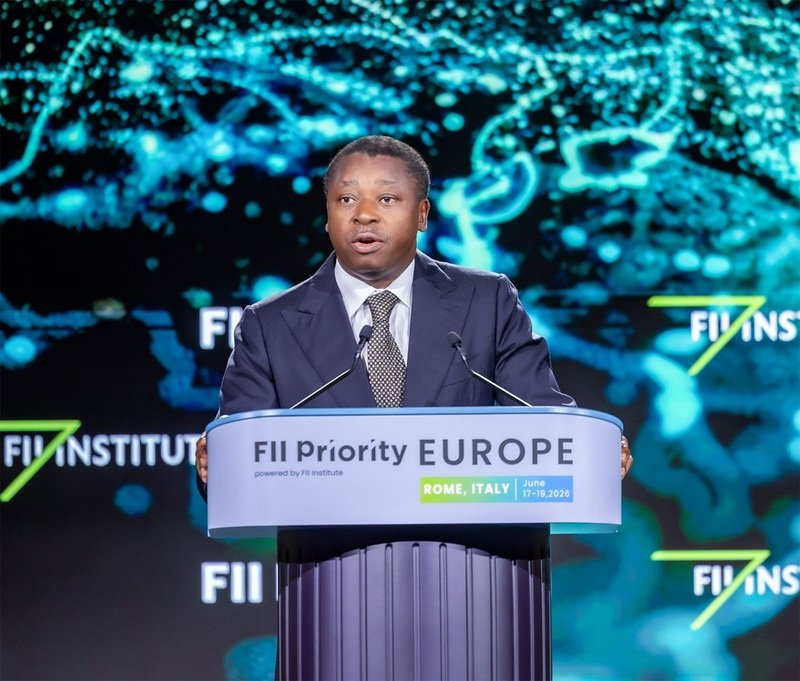
President Faure Essozimna Gnassingbé of the Togo Council delivered a compelling address at the FII PRIORITY Europe summit, which opened on June 18, 2026. The high-level gathering focuses on critical themes such as reindustrialization financing, resilient supply chains, and the evolving nature of work in the age of artificial intelligence.
In his keynote speech, the Togolese leader urged both continents to transcend conventional cooperation models. He argued that the shifting global landscape—marked by geopolitical tensions and fierce economic competition—demands a rethinking of how Europe and Africa engage with one another.
Beyond aid: building a balanced and productive partnership
Gnassingbé emphasized that traditional frameworks centered on aid or one-sided cooperation no longer align with today’s realities. “We must stop framing our relationship as donor and recipient,” he stated. “It’s time to forge a strategic, mutually beneficial alliance anchored in shared interests and productive investment.”
For the Togolese president, the path forward requires addressing modern challenges such as economic sovereignty, energy security, and technological advancement. These issues, he noted, are equally pressing for both Europe and Africa, making collaboration not just desirable but necessary.
Strategic autonomy through interdependence
The Togolese head of state framed strategic autonomy not as isolationism but as a smarter, more organized approach to economic relations. Recent global crises, he observed, have underscored the fragility of asymmetrical dependencies. A robust partnership, he contended, must prioritize balanced and predictable interconnections that benefit all parties.
Gnassingbé highlighted the natural synergies between the two continents. Europe seeks reliable partners to secure supply chains and enhance competitiveness, while Africa needs capital, technology, and infrastructure to accelerate its economic transformation. “These needs are not in conflict,” he asserted. “They complement and reinforce each other.”
A shared vision for mutual growth
The summit provided a platform for Gnassingbé to outline Togo’s national ambitions. The country is positioning itself as a key logistics, industrial, and commercial hub in West Africa. Key pillars of this strategy include:
- Upgrading the Port of Lomé to global standards;
- Expanding regional trade corridors;
- Streamlining cross-border commerce;
- Digitalizing trade procedures to boost efficiency.
These initiatives, he stressed, are designed to strengthen not only Togo but the entire West African region, enhancing economic resilience and integration.
From raw materials to high-value production
The Togolese leader underscored Africa’s aspiration to move beyond its traditional role as a mere supplier of raw materials. The continent, he said, is determined to become a hub for production, transformation, and innovation—creating greater local value.
An industrialized and integrated Africa, he argued, would offer significant opportunities for Europe and global investors alike. By fostering a dynamic ecosystem of manufacturing and technological advancement, the continent could become a more attractive partner in the global value chain.
Togo’s growing appeal to international investors
Beyond the strategic discussions, Togo’s participation in the summit serves as a platform to showcase the country’s evolving economic strengths. The delegation seized the opportunity to highlight Lomé’s logistical, industrial, and financial advantages to global decision-makers.
This engagement reflects Togo’s broader ambition: to attract more foreign investment, forge long-term partnerships, and solidify its status as a leading economic gateway in West Africa. The presence of influential figures such as Yasir ben Othman Al-Rumayyan, Chairman of the Future Investment Initiative Institute, and Richard Attias, Executive Chairman of the institution, alongside global leaders and investors, underscored the event’s significance.