
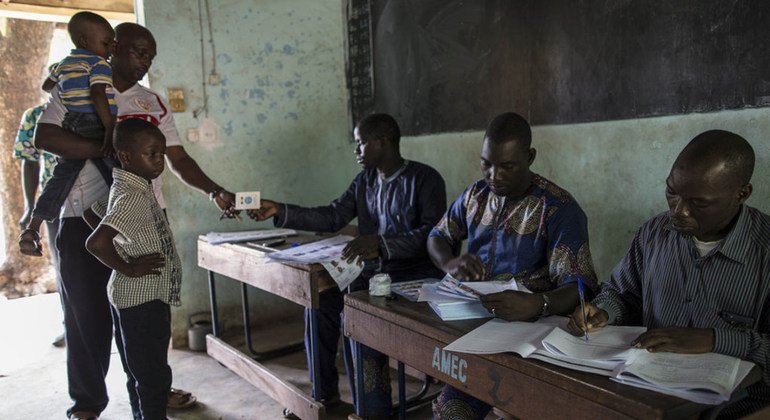
The United Nations’ lead advocate for human rights has issued a stern warning regarding the deteriorating political climate in Mali. He noted that the country’s democratic foundations are being systematically dismantled in favor of an increasingly restrictive regime.
Indefinite suspension of the democratic process
The current situation stems from a series of legislative maneuvers by the military junta that seized power in 2020. These actions have consolidated authority under the current head of state, General Assimi Goïta. According to Volker Türk, these legal revisions have effectively blocked the path toward democratic elections for the foreseeable future. He has called for an immediate restoration of the fundamental liberties of the people of Mali.
It has been nearly five years since the military coup that removed President Ibrahim Boubacar Keïta—an event previously denounced by the UN Security Council. Since then, the promised transition to civilian leadership has largely been abandoned. In fact, Mali has not held a presidential vote since 2018.
In July, a new law granted Assimi Goïta the power to extend his leadership indefinitely, citing the need for national stabilization. This followed a decree that banned all political parties and organizations. The High Commissioner for Human Rights emphasized that such measures strip citizens of their right to engage in public affairs and participate in the electoral process.
A broad crackdown on political dissent
The institutional shift has been accompanied by a surge in security-related crackdowns. Moussa Mara, a former Prime Minister and prominent opposition figure, was detained in August. His arrest followed a social media post where he expressed support for political prisoners, leading to charges of undermining state credibility.
Volker Türk criticized the “weaponization of the law” to stifle those who disagree with the government. He expressed deep concern over the rising number of arrests affecting individuals from various sectors of Malian society, many of whom face similar charges for simply voicing their opinions.
Civilian casualties and human rights violations
Mali continues to grapple with violent insurgencies from groups like the Group for the Support of Islam and Muslims (GSIM), which is linked to Al-Qaeda, and Daech. These terrorist organizations operate across the borders of Mali, Burkina Faso, and Niger. The Malian military, supported by the Russian paramilitary organization Africa Corps (formerly the Wagner Group), has launched operations to counter these threats.
However, these military responses have frequently resulted in tragedies for the civilian population. Since April, the UN has documented hundreds of instances of extrajudicial killings, arbitrary detentions, and forced disappearances attributed to various parties involved in the conflict.
The United Nations concludes that the combination of suspended elections and widespread repression risks trapping Mali in a permanent state of political deadlock and escalating violence.