
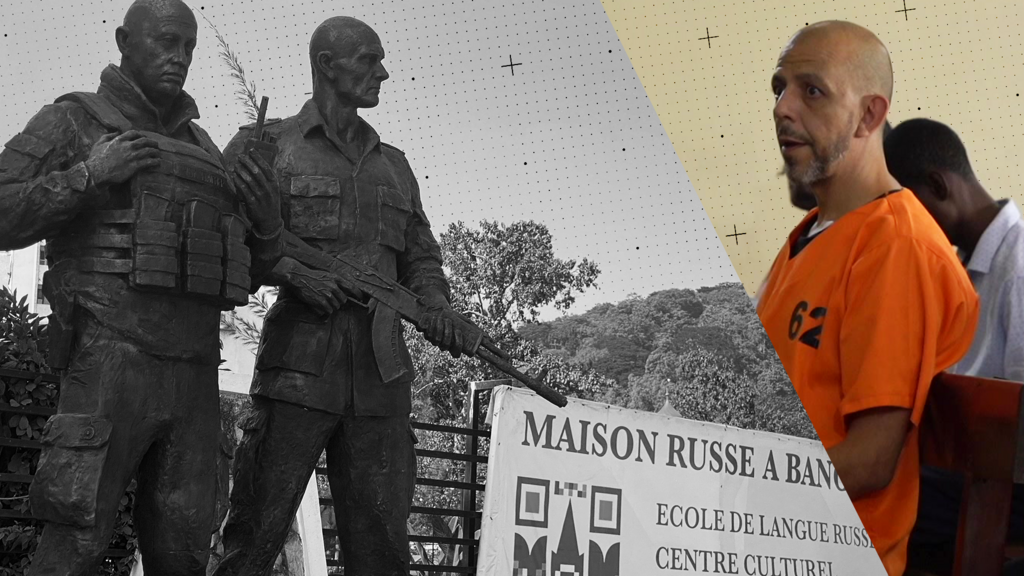
Zemio — As dusk settled over Zemio on May 26, 2024, the air in the courtyard of a local bar-restaurant in the Haut-Mbomou region carried an unusual tension. The gathering was meant to celebrate the departure of two visitors: Joseph Figueira, a Belgian-Portuguese researcher commissioned by the American NGO FHI 360 for a USAID-funded conflict-prevention project, and his Ivorian colleague based in the neighboring Democratic Republic of the Congo.
The event drew around fifty attendees. Among them were local partners and community leaders with whom Figueira had spent two days discussing strategies to ease recurring ethnic tensions in the area. Just as the group raised their drinks, three members of the Wagner Group—a Russian-backed security force operating in the Central African Republic since 2018—along with a Central African gendarme, interrupted the gathering. Their arrival was abrupt, their demeanor unmistakably aggressive.
Without a word of explanation, they seized Figueira. The researcher, who had spent nine days in the country securing official meetings in Bangui and provincial hubs to finalize the project, was denied even the chance to retrieve his documents from the NGO’s office. Handcuffed and hooded, he was violently dragged toward an awaiting aircraft. Witnesses described the scene as a brutal abduction, with Figueira sustaining visible injuries during the ordeal.
The incident unfolded against a backdrop of escalating tensions in the Central African Republic, where Wagner’s influence has increasingly extended beyond military operations into political and humanitarian spheres. Internal documents from what was once known as Africa Politology—a consultancy firm linked to Yevgeny Prigozhin and later absorbed by Russian state structures—reveal a deliberate strategy to target foreign aid workers. These operatives have been accused of undermining local stability under the guise of stabilizing the region.
The Haut-Mbomou region, already volatile due to long-standing communal clashes, now finds itself at the center of this shadowy campaign. Wagner’s actions suggest a pattern of intimidation, aimed at disrupting independent assessments and undermining trust in international humanitarian efforts. For Figueira, a specialist in Fulani communities, the abduction was not just a personal violation but a calculated move to silence critical voices in conflict-sensitive research.
The following day, Figueira was transported out of the region, leaving behind a community stunned by the brazen display of force. His ordeal underscores the growing risks faced by aid workers in areas where Wagner’s tentacles stretch deep into governance and security apparatuses. As the sun rose over Zemio the next morning, the question remained: how many more will fall victim to this expanding web of control?