
Published today at 2:51 PM, updated at 3:01 PM Reading time: 4 minutes.
File generated on
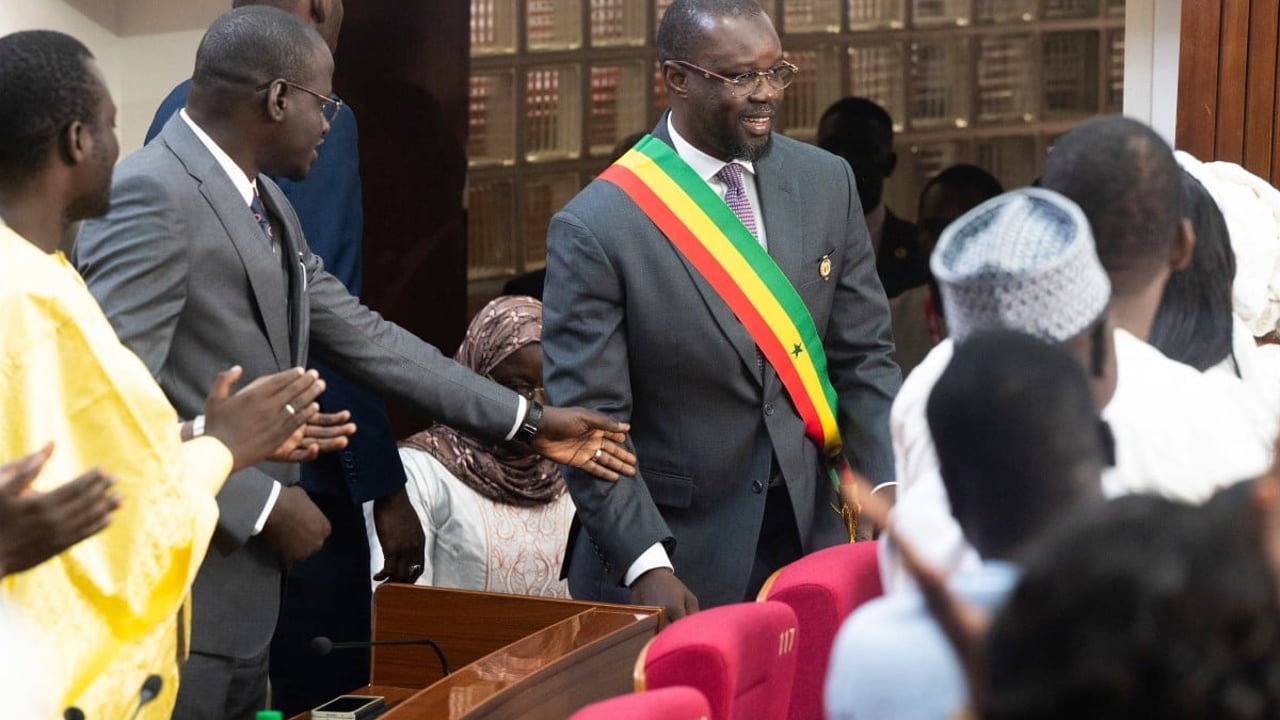
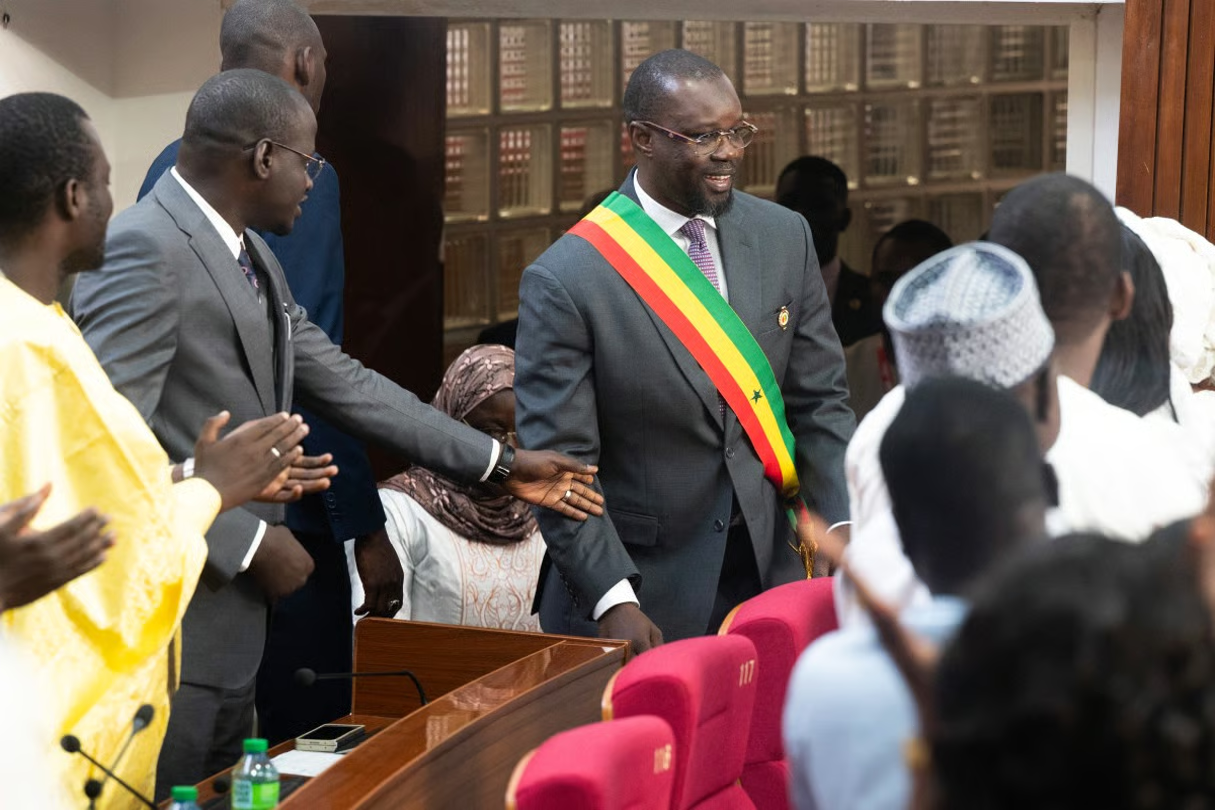
In a swift political maneuver, Ousmane Sonko, who was dismissed on May 22 from his role as Prime Minister by President Bassirou Diomaye Faye, secured a decisive victory on May 26 by being elected President of Senegal’s National Assembly. The parliamentary session, which began at 9:00 AM, was notably brief. Addressing his colleagues for the first time in his new capacity, Sonko—often dubbed the “guardian of the revolution” by his supporters—delivered a keynote address.
The opposition has vehemently criticized the election process, labeling it as a “sham.” Critics argue that the proceedings lacked transparency and fairness, raising concerns about the integrity of Senegal’s democratic institutions. Meanwhile, Sonko’s supporters celebrated the outcome as a triumph for change and reform.
Rapid political shift in Senegal’s capital
The election of Sonko marks a significant shift in Dakar’s political landscape. Just days after his removal from the prime ministerial position, his ascent to the Assembly’s presidency underscores the fluid and unpredictable nature of Senegalese politics. The speed of these developments has left many observers questioning the motivations behind President Faye’s decision and the potential implications for the country’s governance.
Opposition voices claim electoral irregularities
Opposition leaders have been vocal in their condemnation, alleging that the election was orchestrated to consolidate power rather than reflect the will of the people. Sonko’s rapid rise has further fueled tensions, with critics accusing the ruling party of manipulating parliamentary procedures to ensure his victory.
As the political drama unfolds, the international community is closely monitoring the situation in Senegal. Analysts suggest that the outcome could have far-reaching consequences for the country’s stability, economic policies, and diplomatic relations in West Africa.
What’s next for Senegal’s political future?
The election of Ousmane Sonko as President of the National Assembly is more than a mere personnel change—it signals a potential turning point in Senegal’s political trajectory. With his strong grassroots support and a reputation for challenging the status quo, Sonko’s leadership could reshape the nation’s policies in areas such as governance, economic development, and social justice.
However, the controversy surrounding his election raises critical questions about the health of Senegal’s democratic processes. Will the opposition’s concerns be addressed, or will this episode further erode public trust in the country’s institutions? The coming weeks will be pivotal in determining the direction of Senegal’s political future.
- Key players: Ousmane Sonko (new Assembly President), Bassirou Diomaye Faye (President of Senegal)
- Major events: Sonko’s dismissal as Prime Minister (May 22), election as Assembly President (May 26)
- Public reaction: Celebrations among supporters, protests and accusations of fraud from the opposition
As Senegal navigates this turbulent political phase, the world watches to see whether this transition will lead to progress or further division.