
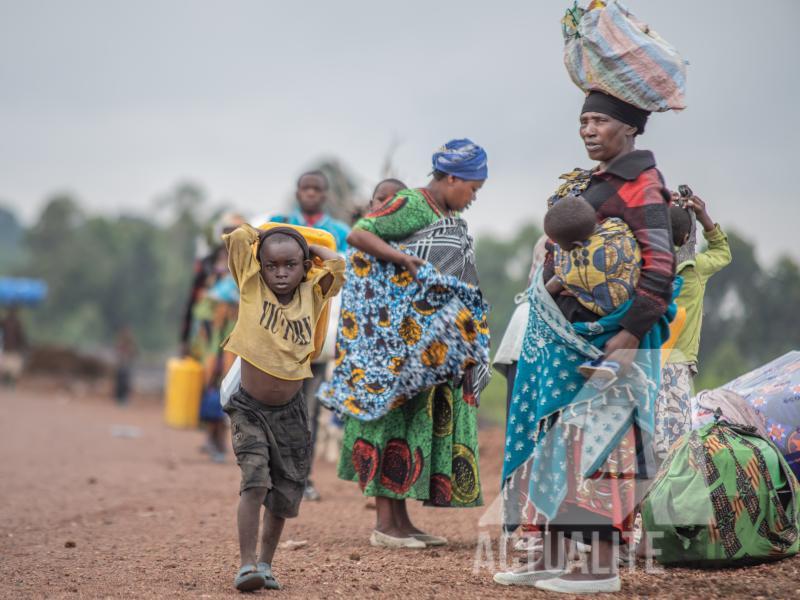
During the 10,182nd session of the United Nations Security Council, the United States issued a stern warning regarding the catastrophic levels of violence targeting children in the République démocratique du Congo (RDC). The discussion, which focused on the impact of armed conflicts on minors globally, served as a platform for Washington to demand immediate improvements in protection mechanisms.
Ambassador Jennifer Locetta, representing the États-Unis, reminded the council that the youngest members of society continue to suffer the most brutal consequences of war. She emphasized that ensuring the security of every child is a fundamental necessity that cannot be overlooked by the international community.
“No child should be deprived of safety,” the diplomat stated, echoing a message previously highlighted by the États-Unis leadership during earlier high-level security meetings.
The dire situation in eastern RDC
The RDC was identified as a primary area of concern due to the persistent and grave violations of human rights. In the eastern part of the country, millions of children live under the constant shadow of displacement, sexual violence, and targeted attacks by various armed factions. The American delegation condemned these acts, noting that children are often the first victims of the ongoing instability.
The conflict does more than cause immediate physical harm; it destroys the future of an entire generation. By targeting schools and disrupting access to quality education, these wars fuel a repetitive cycle of poverty and volatility that undermines both regional stability and global economic prosperity.
Six grave violations identified
The crisis in the République démocratique du Congo is defined by six specific and severe violations against minors that have seen a sharp increase in recent years:
- The recruitment and use of child soldiers by militias.
- Intentional killings and physical mutilation.
- Systemic rape and other forms of conflict-related sexual violence.
- Abductions and kidnappings.
- Deliberate attacks on hospitals and educational institutions.
- The intentional blocking of vital humanitarian assistance.
This humanitarian deterioration has been significantly accelerated by the AFC/M23 rebellion. Supported by Rwanda, this group currently occupies large territories within the Nord-Kivu and Sud-Kivu provinces, despite multiple diplomatic attempts by the États-Unis, Qatar, and the Union africaine to broker peace.
Critique of international reporting
While calling for action, the États-Unis also voiced strong criticism of the latest ONU report on children and armed conflict. Jennifer Locetta argued that the document presents a flawed perspective on civilian harm and fails to distinguish between the malicious intent of groups like the Houthis and the unintended consequences of state military actions.
The American mission suggested that such reports are often politicized and do not align with the sovereignty of member states. They maintained that accurate, non-partisan reporting is essential to actually preventing children from being drawn into armed struggles. Beyond the RDC, Washington also pointed to critical situations in Soudan, Ukraine, and Haïti, urging all parties involved in these conflicts to prioritize the preservation of young lives.