
Yacouba Camara’s international comeback took center stage at the African Nations Cup Zone B in Bamako. The former French rugby flanker, who once wore the blue jersey of Les Bleus, stepped onto the field with Mali’s national team, the Aigles.


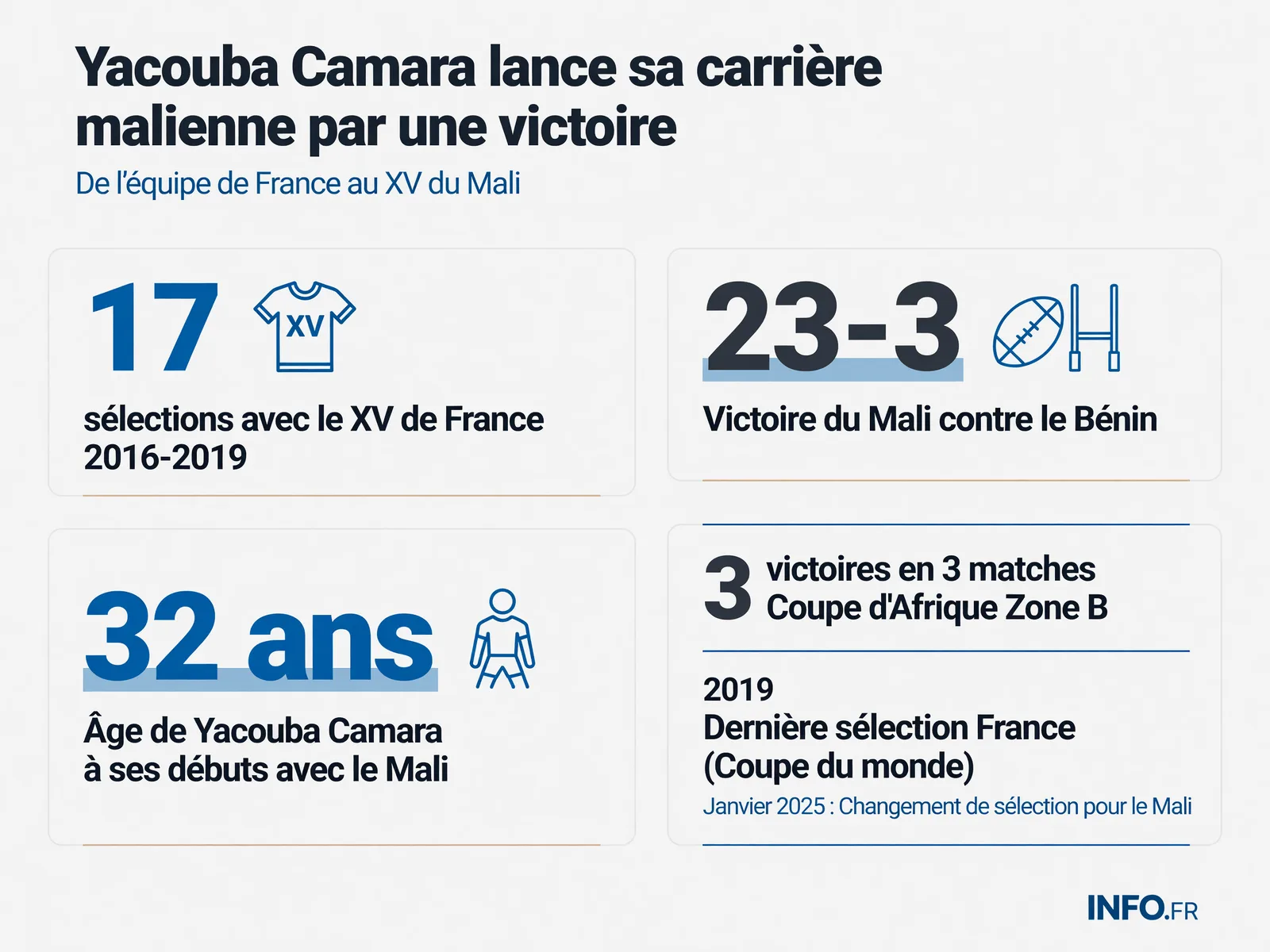
Mali secured a decisive 23-3 win over Benin in Bamako, continuing their perfect start to the tournament. The Aigles had earlier crushed Niger 52-9 and defeated Guinea 32-7 in their opening matches.
Seven years after last representing France
Camara’s return to international rugby marks a significant milestone. His last appearance for France came at the 2019 Rugby World Cup, and nearly seven years later, he has found a new path wearing Mali’s colors.
The decision reflects a deep personal connection—the flanker, born in France to Malian parents, chose to contribute his expertise to African rugby’s growth.
Transforming Mali’s rugby landscape
Beyond his on-field contributions, Camara could play a pivotal role in shaping Mali’s rugby future. A seasoned professional with experience in top-tier leagues, he brings technical know-how to a federation aiming for greater professionalization.
Why France overlooked a top performer
Camara’s switch to Mali raises broader questions about France’s handling of dual-national players. Despite proving himself in Europe’s elite league, he was excluded from the French squad after 2019. Successive coaches opted for different profiles, leaving Camara without international prospects. This situation highlights the challenges France faces in managing players who no longer fit long-term plans while maintaining competitive standards. Similar cases could push other dual-national athletes to explore opportunities abroad.
A familiar pattern in French rugby
Camara’s journey echoes that of other French-trained players who have chosen African nations. These transitions underscore the value of dual-national players in boosting rugby development across the continent. With his high-level experience, Camara sets a powerful example for emerging talent and reinforces the potential of African rugby.
What this shift reveals about modern rugby
Camara’s choice goes beyond a career decision—it reflects a deeper trend in rugby. Unlike many veterans who seek overseas club roles, he embraced a new identity and purpose with Mali. His move also challenges France’s approach to athlete transitions, proving that experienced players can find renewed purpose when given the opportunity.
The flanker’s journey may inspire others facing similar situations, offering a fresh perspective on international career paths in rugby.