
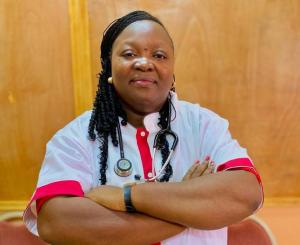
Dr Gloria Damoaliga Berges: a strong advocate for sickle cell patients in Burkina Faso
Ouagadougou – In Burkina Faso, sickle cell disease affects approximately 4.63% of the population, with nearly 2% of newborns diagnosed with the severe SS form. These figures highlight a pressing public health challenge requiring a unified, multi-sector response involving all segments of society.
Dr Gloria Damoaliga Berges, Vice President of the CID/B (Centre d’Initiative contre la Drépanocytose au Burkina Faso), has been a prominent advocate in the fight against this condition over the past decade. Her commitment stems from firsthand encounters with patients, which ignited a lifelong dedication to improving care and awareness.
From personal conviction to national impact
Dr Berges’ journey began with the distress of seeing children and young adults endure excruciating pain from sickle cell complications. This experience drove her to take action. In 2015, she played a pivotal role in establishing a specialized sickle cell care unit in a Ouagadougou hospital, marking a turning point in her advocacy work.
Why does sickle cell still affect new generations?
Sickle cell disease is hereditary. When both parents carry the hemoglobin S gene, there is a 25% chance their child will inherit the severe form of the disease. Despite this risk, many couples remain unaware of their genetic status before conception. Premarital or prenatal hemoglobin electrophoresis tests are often overlooked, underscoring the need for greater public awareness.
Community outreach and education
Dr Berges has spearheaded extensive community sensitization efforts, organizing screenings and awareness campaigns across Burkina Faso. Between January and July 2024, she coordinated a campaign that screened nearly 15,000 children across five regions, in partnership with a local NGO. These initiatives also combat the stigma often associated with the disease.
Concrete actions transforming care
Her contributions extend to implementing neonatal screening programs, training healthcare professionals in pain management for sickle cell patients, and launching Drépa Minute, a free hotline (dial 80001350) offering information in local languages. These efforts aim to enhance disease awareness, improve care quality, and support affected families.
The CID/B collaborates closely with Burkina Faso’s Ministry of Health, particularly the Division for Prevention and Control of Non-Communicable Diseases (DPCM), with funding from partners like the French Development Agency, the Pierre Fabre Foundation, and the Principality of Monaco. Together, they provide comprehensive care, including medical treatment, psychosocial support, and socioeconomic assistance to patients.
Through regional branches, the organization facilitates peer support groups, therapeutic education sessions, and income-generating activities to empower patients financially. CID/B also advocates for universal health coverage, partnering with health mutuals to improve access to care for its members.
Measurable progress and lingering challenges
Thanks to concerted efforts, sickle cell disease has gained recognition in Burkina Faso’s public health policies. The Ministry of Health, through the DPCM, has developed a dedicated strategic plan, mobilizing resources for its implementation. Awareness has grown among both the public and medical professionals, with specialized training programs now available.
Perceptions of the disease have shifted, too. Previously shrouded in myths—such as the belief that it was a curse or that patients had limited lifespans—sickle cell disease is now better understood. Many patients live fulfilling lives, pursuing careers and raising families, thanks to proper management and follow-up care.
Overcoming persistent barriers
Despite progress, significant challenges remain. Key issues include:
- Limited access to screening and diagnostics in rural areas
- High costs and shortages of essential medications (hydroxyurea, painkillers, antibiotics)
- Inadequate vaccination coverage for preventable diseases
- Challenges in managing complications and transfusion needs
Dr Berges emphasizes the urgency of scaling up neonatal and early screening, strengthening care delivery, and fostering coordinated action between the Ministry of Health and its partners. “The silent cries of sickle cell patients must be heard,” she asserts. “Investment in this fight is an investment in dignity and hope.”
Her unwavering dedication reflects a belief that every patient deserves a chance at a healthy, fulfilling life.