
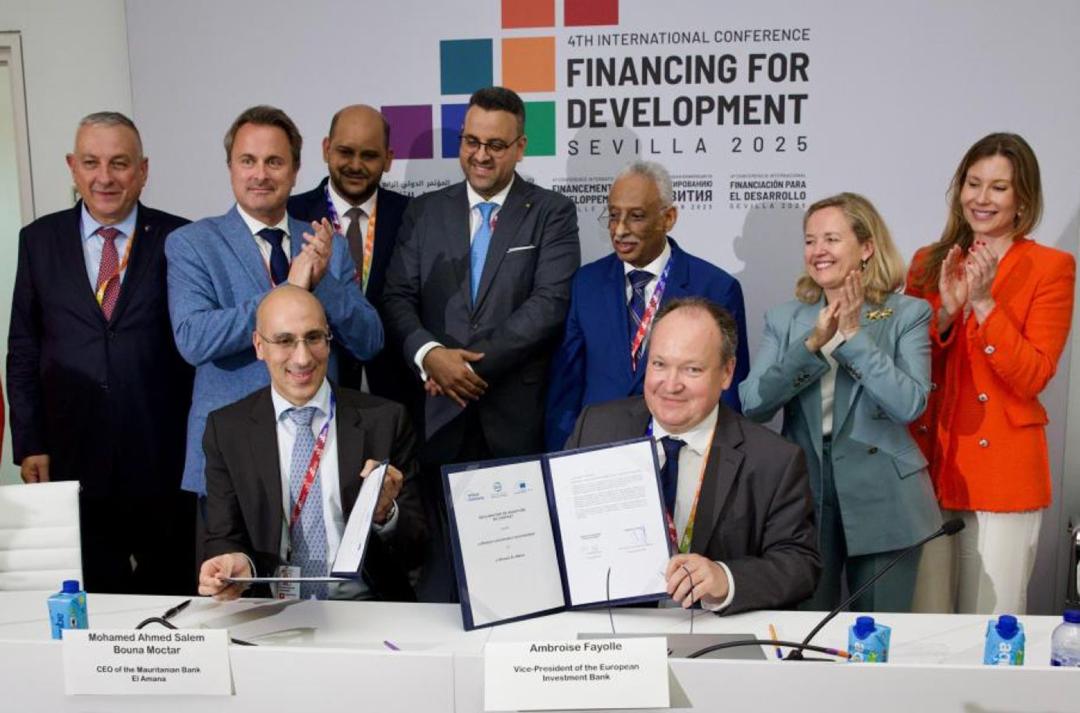
EU-backed €20 million loan to empower women and youth in Mauritania’s blue economy
A groundbreaking €20 million financing agreement has been signed between Banque El Amana (BEA) and BEI Monde—the European Investment Bank’s global development arm—to bolster financial inclusion for women and young entrepreneurs in Mauritania’s blue economy sector. This landmark initiative aligns with the European Union’s Global Gateway strategy, aiming to create sustainable economic opportunities while promoting responsible resource management.
Targeted funding for inclusive growth
- 30% of the financing will support businesses led by women or those with significant female workforce participation, addressing long-standing barriers to financial access for Mauritania’s female entrepreneurs.
- Another 30% is earmarked for youth-led enterprises or companies prioritizing youth employment, reflecting the country’s demographic reality where over 60% of the labor force is under 35.
- The remaining funds will strengthen value chains in Mauritania’s seafood industry, a strategic sector under the UN Financing for Development framework.
Strategic partnerships for sustainable development
Mohamed Ahmed Salem Bouna Moctar, BEA’s Managing Director, emphasized the project’s transformative potential: «This partnership with BEI Monde amplifies our commitment to sustainable growth in Mauritania’s blue economy. By prioritizing women and youth, we’re not just investing in business—we’re building resilient communities and unlocking the potential of our natural resources responsibly.»
Ambroise Fayolle, EIB Vice President, highlighted the dual focus on environmental and social impact: «By supporting sustainable fishing—a cornerstone of Mauritania’s economy—we’re preserving marine resources while creating inclusive value chains. This project’s emphasis on empowering underrepresented groups like young people and women underscores our dedication to equitable development through the Global Gateway initiative.»
Blue economy as a catalyst for change
The agreement reinforces the EU-Mauritania partnership in sustainable fisheries, governed by the Marine Stewardship Council (MSC) certification standards. Beneficiary companies must adopt eco-friendly practices and obtain international certifications, with technical assistance provided to facilitate this transition. This aligns with Mauritania’s broader goals under the EU-Mauritania Migration Partnership, launched in 2024 to boost local employment and regional stability.
Breaking barriers in financial inclusion
Despite progress, Mauritania’s women face significant hurdles in accessing finance, particularly in high-potential sectors like fishing and agro-processing. This initiative directly tackles these challenges by reserving 30% of funds for women-led businesses, in line with the 2X Challenge criteria. BEA’s 2023 initiative to open a banking outlet in Mbera refugee camp—in collaboration with UNHCR—further demonstrates its commitment to financial inclusion for marginalized groups.
About the partners
BEI Monde is the EIB’s specialized arm for international partnerships, aiming to mobilize €100 billion by 2027 under the Global Gateway strategy. As part of Team Europe, it collaborates with development banks like Germany’s KfW and local institutions like BEA to drive sustainable investments.
Banque El Amana (BEA), established in 1996, is a leading Mauritanian private bank with a network spanning nine regions. Beyond core banking services, BEA has pioneered initiatives like Amanty, a mobile wallet launched in 2023 to promote cashless transactions and financial inclusion. The bank’s 2023 partnership with KfW to finance small pelagic fish processing also underscores its role in Mauritania’s economic and ecological transition.
EU’s long-term commitment to Mauritania
The European Union has supported Mauritania for five decades, investing €125 million (2021-2024) in health, education, green energy, and private sector development. The blue economy is a key focus, with projects like the upcoming artisan fishing port in southern Mauritania complementing the Global Gateway agenda. Through these efforts, the EU aims to foster stability, governance, and sustainable growth in the region.