
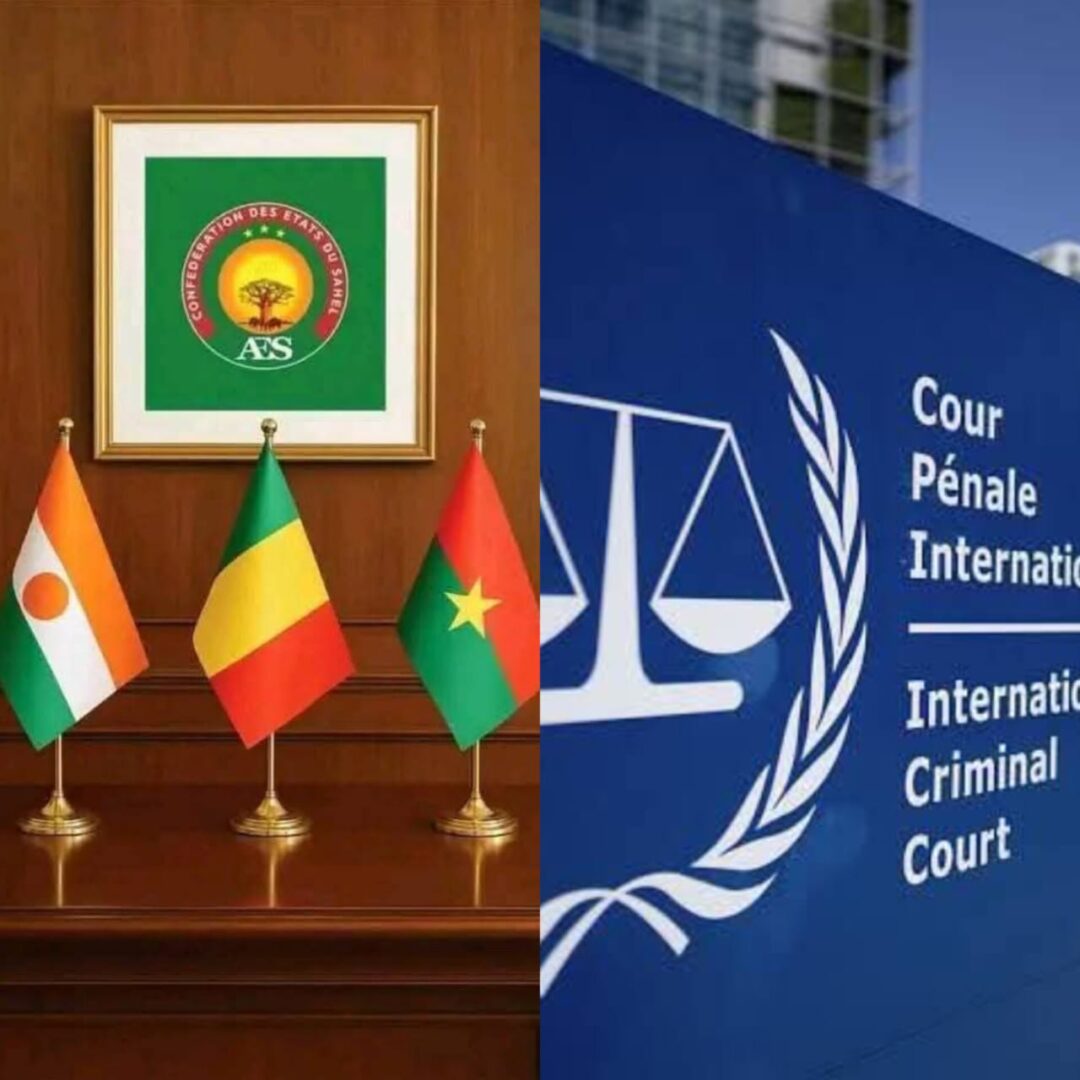
The decision by Burkina Faso, Mali, and Niger to leave the International Criminal Court (ICC) marks more than a diplomatic shift—it signals a fundamental challenge to the very foundations of global justice in the 21st century.
On September 22, the Alliance of Sahel States (AES) crossed a line from which there can be no return. By jointly withdrawing from the ICC, these nations did not merely realign their foreign policies; they delivered the most symbolic and damaging blow to international criminal justice since the Rome Statute was adopted in 1998. Critics argue this move paves the way for impunity among embattled military regimes, yet the decision resonates deeply across the Global South. Beyond immediate political calculations, the AES’s departure forces the ICC to confront its own contradictions, failures, and inability to function as a truly universal tribunal.
The sovereignty argument: a break from colonial legacies
For transitional authorities in Bamako, Ouagadougou, and Niamey, leaving the ICC is the logical extension of an unyielding quest for sovereignty. Following the denunciation of military agreements with France and the United States, the rupture with ECOWAS, and the withdrawal from the Francophonie, exiting the Rome Statute completes this process of institutional disconnection. The message is clear: Sahelian affairs must be resolved by Sahelians alone.
Strategic calculations behind the withdrawal
Yet beneath this display of national dignity lie pragmatic motivations. As these governments wage an asymmetrical war against terrorist groups, their security forces face recurring allegations of civilian abuses. By severing ties with the ICC, they erect a legal shield for military command structures and reassure non-Western security partners—particularly Russia, which has also distanced itself from the Hague-based court.
The widespread public support for this break stems from a damning indictment of the ICC: its blatant double standards and politicized justice. How can the court claim neutrality when architects of some of the 21st century’s most devastating wars—such as the 2003 Iraq invasion, launched on false pretenses—remain untouched? Neither George W. Bush nor Tony Blair have ever faced proceedings in The Hague. When the ICC attempted to investigate alleged war crimes by U.S. forces in Afghanistan, Washington retaliated with direct financial sanctions against its prosecutors.
The pattern extends to perceived bias in prosecutions. The nearly decade-long detention of former Ivorian President Laurent Gbagbo—acquitted of all charges after seven years of preventive detention—exemplifies the court’s uneven approach. Judges condemned the prosecution’s « exceptional weakness » of evidence, yet the perception of a « victor’s justice » persists, with the ICC targeting one side while ignoring abuses by allied forces.
The swift issuance of an international arrest warrant against Vladimir Poutine for the Ukraine invasion, while decades of inaction followed Western-backed conflicts, further fuels accusations of a « white man’s justice » system.
Can Africa build an alternative to the ICC?
Africa already possesses robust tools to uphold fundamental rights: the African Court on Human and Peoples’ Rights (ACHPR) at the continental level and the ECOWAS Court of Justice at the regional level. However, a glaring contradiction undermines these institutions. Many West African states proudly claim membership in ECOWAS yet routinely ignore the court’s rulings when they conflict with domestic interests—such as condemning arbitrary arrests, political repression, or authoritarian overreach.
If Sahelian nations seek credibility in denouncing the ICC’s flaws, they must first strengthen the ECOWAS Court of Justice and rigorously enforce its decisions. Without binding regional justice, complaints about Hague bias ring hollow. Sovereignty cannot justify swapping international arbitrariness for national impunity. True rule of law—in the Sahel or beyond—requires independent judges whose rulings apply equally to heads of state.
The AES withdrawal must not become a pretext for unchecked power. If it merely shields regimes while ignoring African courts, it will replace external domination with domestic tyranny, leaving citizens without recourse. But if this decision sparks a collective awakening—driving states to fund, respect, and submit to regional and continental jurisdictions—Africa could lay the groundwork for authentic justice.
The Sahel’s message is unmistakable: the ICC has lost its monopoly on global morality. It is now up to African nations and sub-regional bodies to prove that the alternative to The Hague is not the law of the strongest, but a strong, independent, and equitable continental justice system respected by all.