
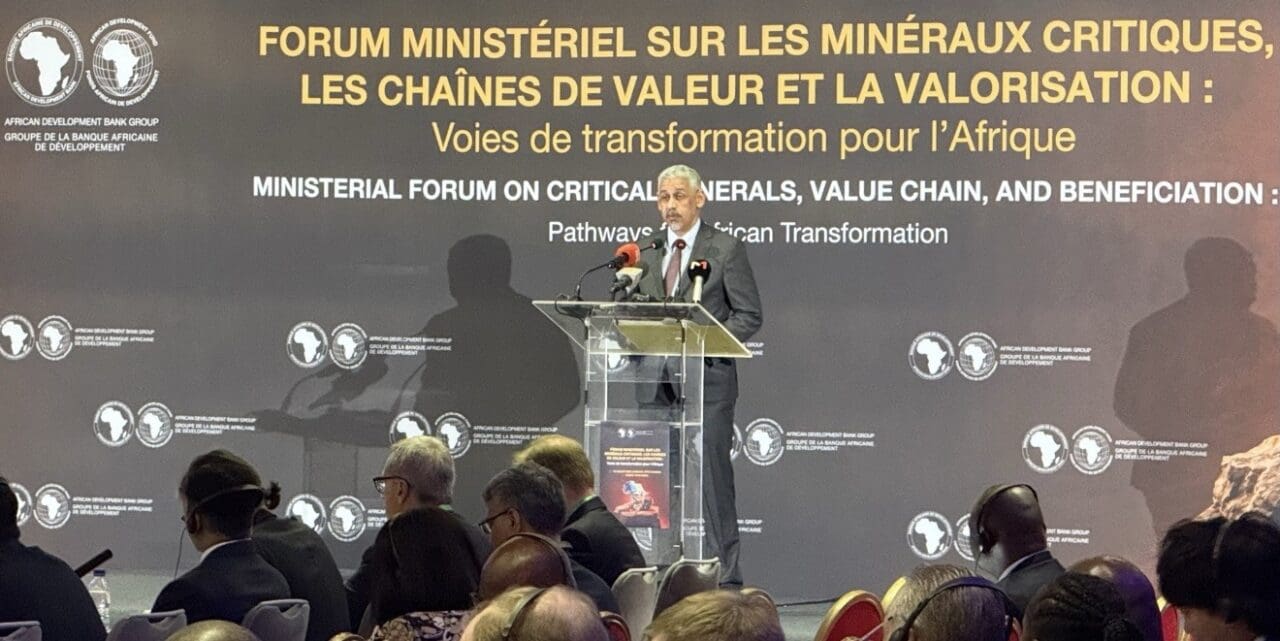
The African continent is charting a bold new course for its future, one where its vast reserves of critical minerals become the foundation of sustainable economic growth, industrial might, and shared prosperity. This vision took center stage at a landmark ministerial conference in Abidjan, where leaders from mineral-rich nations and global development partners gathered to redefine Africa’s role in the global resource economy.
The July gathering brought together ministers from across Africa—spanning Mines, Energy, Industry, Green Economy, and Natural Resources—alongside top officials from the African Union Commission, the African Continental Free Trade Area (AfCFTA) Secretariat, the United Nations Economic Commission for Africa, regional development banks, financial institutions, and international investors. Their shared mission? To ensure Africa no longer merely exports raw materials but builds robust local value chains that fuel industrialization and job creation.
Abidjan hosts historic mineral pact to shift africa’s economic future
The conference sent a clear message: Africa is ready to claim its rightful place in the global mineral supply chain. The stakes are enormous. The continent holds approximately 30% of the world’s reserves of minerals essential for the energy transition—including cobalt, lithium, graphite, rare earths, platinum group metals, copper, manganese, and nickel. With an estimated mineral wealth valued at nearly $29.5 trillion—more than eight times Africa’s annual GDP and nearly 20% of global resources—only about $8.6 trillion of these reserves remain untapped.
From raw exports to industrial powerhouse: a new mineral economy
The gathering marked a turning point. African leaders are no longer content with being mere suppliers of unprocessed ore. Instead, they are pushing for deep reforms: local processing, infrastructure development, and strategic financing to unlock the full potential of their underground wealth. The goal is to transition from extractive economies to high-value industrial hubs capable of meeting the surging global demand.
The President of the African Development Bank (AfDB), Sidi Ould Tah, issued a powerful call for systemic change. He emphasized the need to move beyond traditional models of resource management, urging African countries to prioritize local transformation of raw materials and strengthen regional value chains. “We must consolidate our development finance institutions,” he stated. “Despite having over 100 such institutions, their combined balance sheet represents just 1% of the global total. Reform and recapitalization are not optional—they are essential.”
Ould Tah also underscored the critical role of resilient infrastructure and industrial clusters in maximizing returns from mineral wealth. “Only by building integrated ecosystems can Africa ensure its resources translate into real benefits for its people,” he said.
Côte d’Ivoire leads with bold mineral strategy
The Ivorian delegation, led by Minister of Mines, Petroleum, and Energy Mamadou Sangafowa-Coulibaly, showcased the country’s ambitious plan to harness its mineral potential. With three-quarters of its territory believed to hold critical minerals, Côte d’Ivoire is positioning itself as a future industrial powerhouse. The nation’s long-term mineral and energy roadmap (2026–2040) outlines a $38 trillion CFA franc investment program, with 88% of funding expected to come from private sector participation.
Minister Sangafowa-Coulibaly stressed the importance of continental solidarity. “No single country can achieve this transformation alone,” he said. “We must collaborate to build regional value chains that add value, create jobs, and spread prosperity equitably.” His vision aligns with President Alassane Ouattara’s goal of elevating Côte d’Ivoire to upper-middle-income status by 2030—a target now within reach thanks to a renewed focus on mineral-led industrialization.
A once-in-a-generation opportunity
The timing could not be more critical. Global demand for strategic minerals is set to explode. By 2040, platinum group metals demand is projected to surge over 1,000%, lithium needs could rise by 842%, and copper demand may climb 88% compared to 2023 levels. The electric vehicle and battery value chain alone could grow from $7 trillion in 2030 to $59 trillion by 2050—an unprecedented economic shift.
Africa stands at the crossroads. With the right policies, investments, and regional cooperation, it can transform its mineral wealth from a source of foreign revenue into a driver of industrialization, technological advancement, and inclusive growth. The Abidjan conference was more than a dialogue—it was a declaration of intent: Africa is ready to take control of its mineral destiny.