
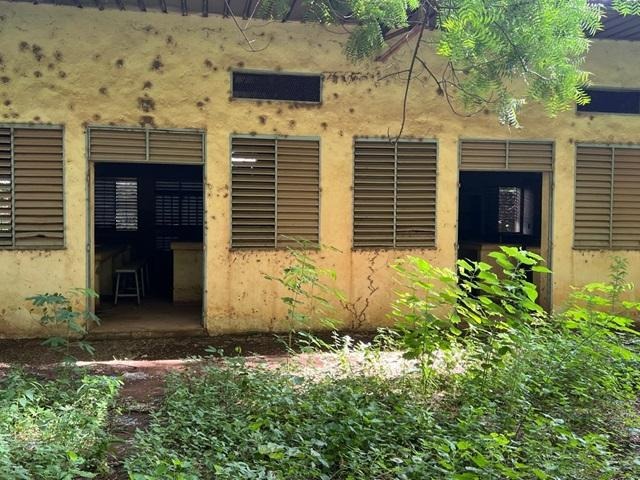
The first day of the 2026–2027 school year in Mali arrived this October 1st amid official fanfare. General Assimi Goïta, leader of the transitional government, had declared it the “Year of Education and Culture— a bold promise to rebuild a nation through knowledge and values. Yet reality on the ground tells a starkly different story: over 2,400 schools remain shuttered, locking out more than 730,000 children from learning and exposing a critical failure in Bamako’s strategic response.
Extremist Onslaught: How Armed Groups Are Turning Schools Into Battlegrounds
The collapse of Mali’s education system isn’t accidental—it’s deliberate. Over 20 percent of the nation’s schools are now non-functional, not due to neglect, but as a direct result of targeted violence by Islamist armed groups. These factions, including the Islamic State in the Greater Sahara (EIGS) and the Group for the Support of Islam and Muslims (GSIM, linked to Al-Qaeda), systematically destroy or occupy educational institutions. Schools are either burned down as symbols of “Western corruption” or repurposed as makeshift shelters for displaced families fleeing relentless conflict.
The scale of the disaster is most apparent in the northern and central regions. In Kidal, nearly 84 percent of schools remain closed, effectively erasing public education from the map. In Ménaka, a stronghold of the EIGS, 52 percent of schools are no longer operational. The crisis has now spread to the central regions of Mopti, Bandiagara, and Ségou, where GSIM-affiliated rebels enforce brutal local governance—closing schools under threat of violence and executing teachers who defy their edicts. Even areas once considered safe, like Koulikoro and Kaya, are now under infiltration, with dormant GSIM cells disrupting fuel supplies and road networks to cripple the capital.
A Military Gamble That Backfired: The Transition’s Hollow Victory
The junta’s legitimacy has long rested on restoring national sovereignty and security. But after severing ties with traditional partners—expelling French forces from Barkhane, ending the UN MINUSMA mission, and abandoning the Algiers Peace Accord—Bamako turned to new alliances, notably Russian military support and Africa Corps (formerly Wagner) mercenaries. The stated goal: a swift military recapture of lost territory.
That gamble has failed spectacularly. Despite a highly publicized reoccupation of Kidal in late 2023, the Malian Armed Forces (FAMa) and their Russian allies became mired in prolonged, bloody campaigns. Then came the devastating defeat at Tinzaouatène in the summer of 2024, where GSIM and allied rebels routed government forces. The loss exposed deep structural weaknesses in the junta’s security apparatus and triggered a wave of retaliatory attacks. In September 2024, armed groups struck at the heart of Bamako’s institutions—targeting the Faladié gendarmerie school and the military airport—sending shockwaves through the capital.
Fragmented State, Collapsing Society: The Map of Abandonment
Mali today is a fractured nation. In the far north, the state survives only in fortified strongholds across Kidal, Ménaka, and Taoudénit. The EIGS controls vast desert expanses in Ménaka, where they impose zakat taxation and enforce their version of Islamic law. Meanwhile, GSIM and other factions vie for control of border crossings with Mauritania and Algeria.
In the center—home to the GSIM’s heartland around the Katiba Macina—rural communities exist beyond state reach. Insurgents impose sieges on towns like Niono and Djenné, blockading food and medicine while shutting down schools under penalty of death. Even the south and west, once insulated from conflict, now face infiltration. GSIM sleeper cells are choking supply lines to Bamako, crippling the economy and driving further instability.
This fragmentation isn’t just geographic—it’s generational. With schools closed and teachers silenced, millions of children are left idle, vulnerable to extremist recruitment narratives that promise purpose, identity, and even survival.
An “Education Year” That Never Was: The Silent Cost of Inaction
The contrast between rhetoric and reality could not be sharper. While Bamako celebrates its “Year of Education and Culture”, the streets tell a different story. Children play in the ruins of abandoned classrooms. Parents whisper warnings about the dangers of sending their sons and daughters to school. Teachers, once pillars of society, now hide for fear of assassination. Every shuttered school is not just a building lost—it’s a mind left uneducated, a spirit broken, and a future surrendered.
The junta’s failure to protect its people—and its schools—has handed extremists a crucial ideological victory. In a land where books are burned and minds are starved, the true cost of this crisis will be measured not in battles won or lost, but in generations lost to darkness.