
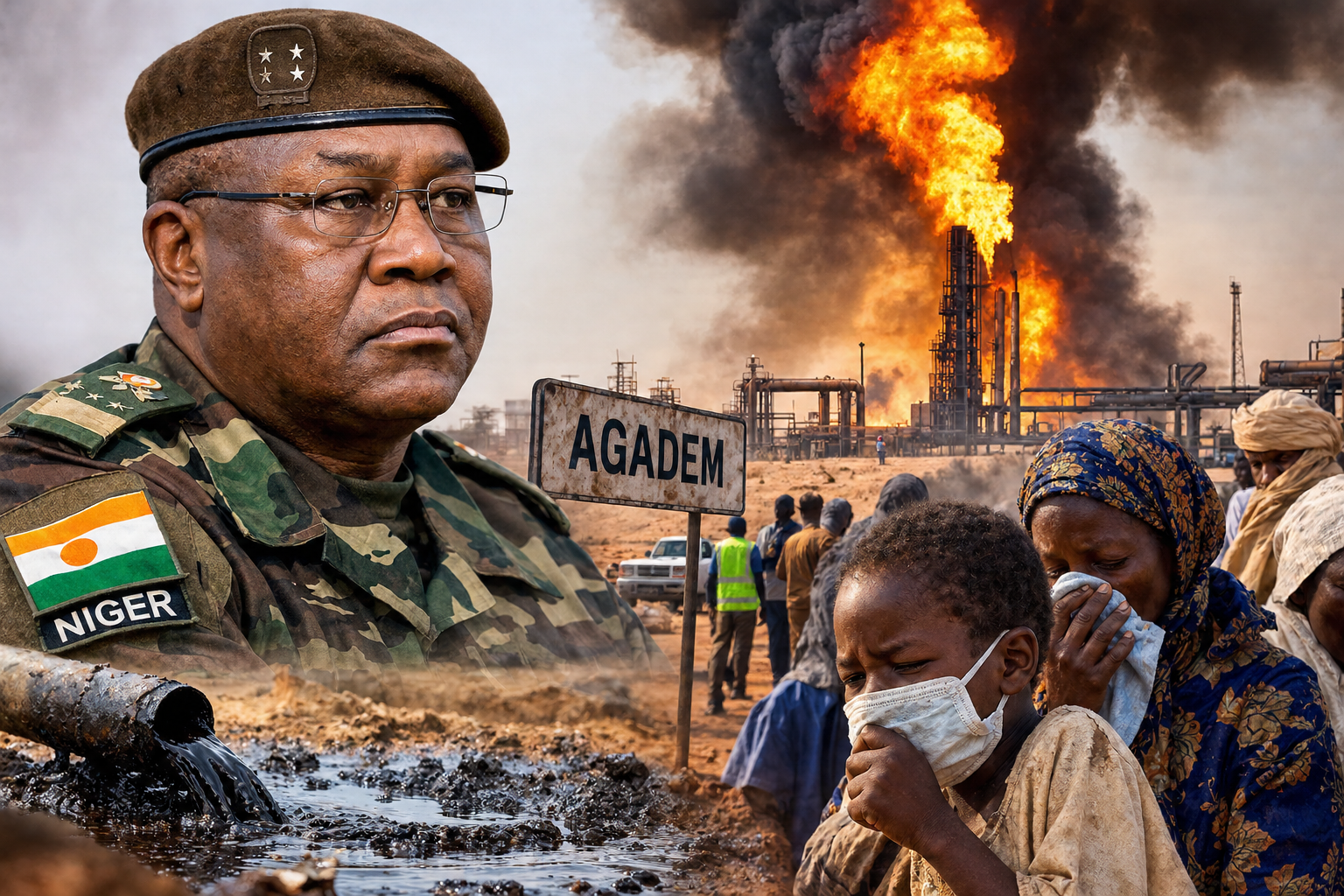
In the heart of Diffa region, Agadem has become the epicenter of an unprecedented industrial crisis. A catastrophic oil and gas eruption officially classified as an exceptional event by Niger’s own Petroleum Ministry has thrust local communities into immediate danger. With containment efforts still incomplete, one question looms larger than all others: who is safeguarding the health of the people living in harm’s way, and what concrete actions are being taken to address the growing threat?
The silent threat: how oil and gas eruptions endanger public health
Crude oil and associated gases are not harmless substances. When released uncontrollably, they pose serious risks depending on their composition, concentration, and duration of exposure. Residents near the Agadem site could face immediate health effects such as skin and eye irritation, persistent headaches, dizziness, and respiratory distress. Long-term exposure to certain hydrocarbons may lead to more severe complications, including damage to internal organs and the nervous system.
Beyond personal health concerns, the risk of environmental contamination is equally alarming. Soil and water reserves essential for daily life could become polluted, jeopardizing agriculture, livestock, and access to clean drinking water. In an unfolding crisis like this, the first priority must be clear: secure the affected area, minimize exposure to toxic substances, monitor contamination levels, and ensure that residents receive accurate safety guidance.
Lessons from neighboring crises: why delay in action is not an option
Recent incidents in neighboring energy-producing regions underscore the real-world consequences of delayed response. Reports indicate that communities exposed to uncontrolled gas leaks have experienced acute symptoms such as chemical burns and nosebleeds within hours. These events serve as a stark reminder: waiting for definitive proof of harm before taking protective action is not only irresponsible it can be fatal.
Given the gravity of the Agadem situation, with authorities still struggling to regain control, the central question is no longer about assigning blame it is about capacity. Does the Tiani administration possess the technical, human, and logistical resources required to manage an industrial disaster of this scale and complexity? Declaring an investigation into the causes is a necessary step, but it does not protect a single child from breathing contaminated air today.
Urgent measures: what must be done now to protect lives
The survival and health of Agadem’s residents depend on immediate, measurable responses. First and foremost, the government must provide transparent data: what hazardous substances have been released, in what quantities, and over what timeframe? Without this information, local medical teams cannot assess exposure risks or provide appropriate care.
Additionally, authorities are expected to implement the following critical measures without delay:
Establish a dedicated health surveillance system to monitor symptoms among exposed individuals, especially children, the elderly, and pregnant women.
Conduct comprehensive environmental testing of air, soil, and water in the surrounding area to determine contamination levels.
Issue clear public safety alerts in local languages, including advice on evacuation routes, protective gear, and first aid.
Deploy rapid-response intervention teams trained to manage industrial hazards and equipped with medical and environmental assessment tools.
Ensure continuous communication between government agencies, healthcare providers, and local communities to prevent misinformation and panic.
These are not bureaucratic recommendations they are non-negotiable obligations of any state entrusted with protecting its citizens.
Sovereignty isn’t just about control it’s about protection
The Tiani administration has repeatedly emphasized national sovereignty, resource ownership, and the Nigerien people’s right to self-determination. But sovereignty carries a deeper meaning: the duty to prevent industrial disasters, enforce safety standards, and shield citizens when crises occur. It is not enough to claim control over oil revenues; a government must demonstrate the ability to protect those living in the shadow of extraction.
The economic benefits of oil cannot justify endangering public health. If the prosperity generated by hydrocarbons comes at the cost of chronic illness, contaminated environments, and compromised safety for local families, then the model is fundamentally flawed. Citizens deserve both economic opportunity and the right to live in a safe environment.
What the future holds: accountability and transparency must lead
Until now, the Agadem crisis has been marked by uncertainty and delayed action. While investigations may someday reveal technical or human causes, the immediate concern is the well-being of the people affected. Will they receive timely medical support? Will their land and water be tested and, if necessary, remediated? Will they be informed in real time about the risks they face?
The true test of leadership is not how it wields power, but how it protects the vulnerable. In Diffa, time is running out. The government’s next steps will reveal whether sovereignty is truly about defending resources or defending people.
By Henri Nkeng — Journaliste / Rédacteur