
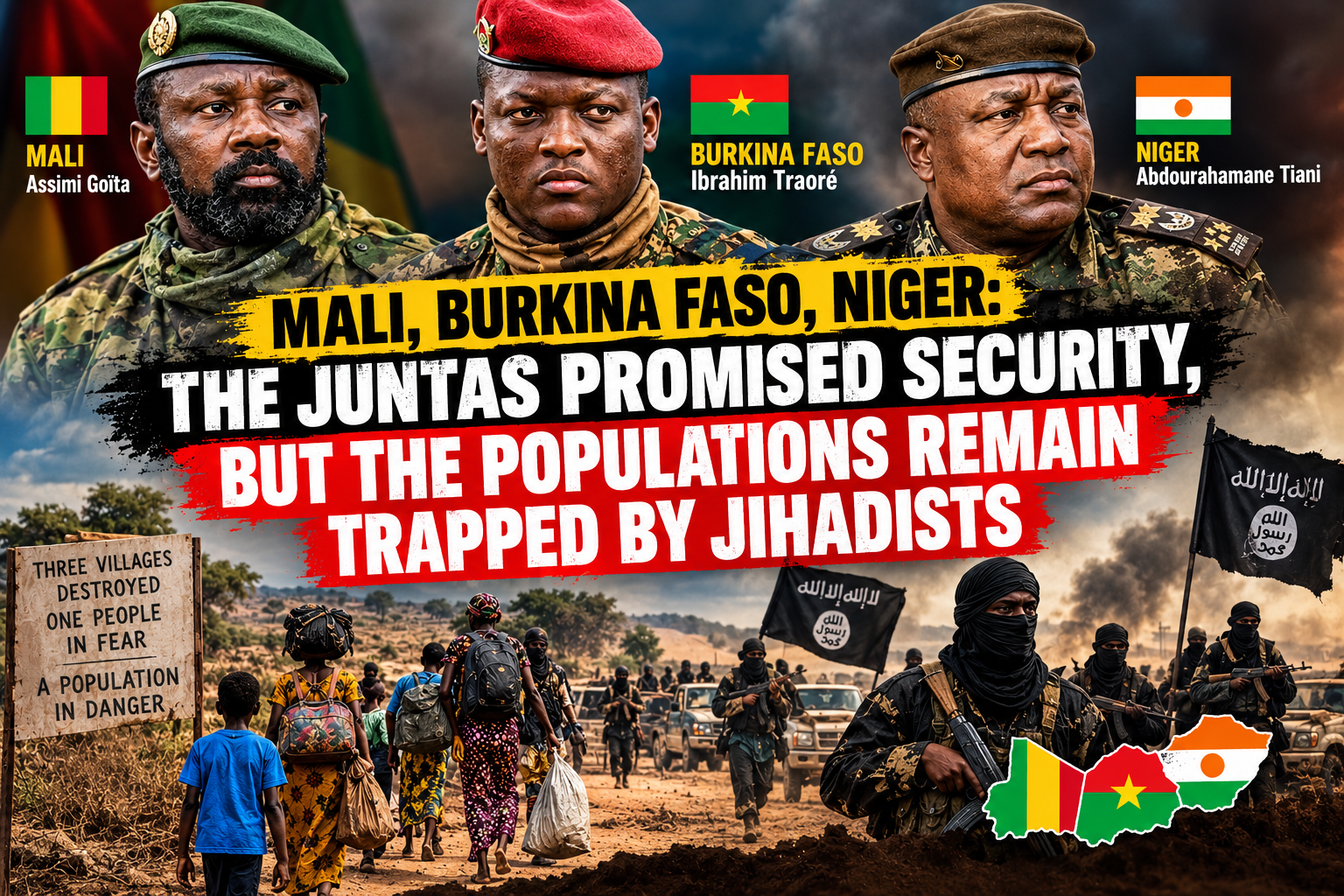
In the tri-border zone where Mali, Burkina Faso and Niger meet, two of the Sahel’s most formidable jihadist factions are locked in a deadly struggle for dominance. The Islamic State in the Greater Sahara and the Group for the Support of Islam and Muslims (JNIM), an Al-Qaeda affiliate, are trading territory, resources and influence in a conflict that has left hundreds dead in recent months. Now, the military regimes in Bamako, Ouagadougou and Niamey face an uncomfortable reckoning: after vowing to restore security, what remains of their promises when civilians remain trapped in the crossfire?
Why the jihadist turf war is reshaping the Sahel’s security landscape
This isn’t just another skirmish between militants. The escalating clashes between IS-GS and JNIM represent a strategic shift one that goes beyond targeting state forces or symbols. These factions are now fighting to control not only land and supply routes but also the loyalty of local communities. For families living in remote villages, the consequences are immediate: forced displacement, roadblocks, crippled economies and a suffocating climate of fear.
Residents in these areas describe a daily struggle for survival, where the priorities of warring militants overshadow their own needs. Markets shrink, children miss school and farmers abandon fields, all because the threat of violence looms larger than the prospect of stability.
The hollow promise of military juntas: security in name, but not in practice
The juntas in Mali, Burkina Faso and Niger rose to power on a single pledge: to reclaim control and restore safety. They severed ties with former partners, reshuffled military alliances and framed their rule as a fight for sovereignty. Yet in the tri-border zone, where the jihadist conflict has intensified, these claims ring increasingly hollow. How can a government claim independence when its people still live at the mercy of armed groups?
Sovereignty isn’t just about rejecting foreign influence or delivering fiery speeches it’s measured by tangible outcomes. Can citizens move freely? Are farmers able to till their land without fear? Are children able to attend school safely? For many in the Sahel’s most vulnerable regions, the answer remains a resounding no.
The human cost when jihadists turn on civilians
As IS-GS and JNIM battle for supremacy, civilians often pay the highest price. Retaliatory attacks, forced conscription and the closure of aid routes have pushed displacement rates higher than ever. While militant groups tout their victories in propaganda, independent verification of casualties remains scarce. The true scale of the conflict and its impact on communities is obscured by a fog of competing narratives.
But beyond the propaganda, a critical question lingers: who protects families when fighting erupts near their homes? Who ensures access to healthcare, education and the freedom to work? These are the responsibilities that separate rhetoric from reality, and they demand answers the juntas have yet to provide.
The erosion of state authority in the most exposed regions
The Sahel’s insecurity isn’t limited to sporadic attacks it’s a slow-burning erosion of state presence. In rural areas hardest hit by the jihadist rivalry, public services vanish, security forces struggle to maintain a constant shield, and militant groups tighten their grip on daily life. The result? Abandoned farmland, deserted markets and families forced to choose between risking their lives or losing their livelihoods.
This isn’t a problem the juntas can ignore by pointing to past failures or shifting blame. The question now is whether they can deliver the concrete results that matter most: fewer attacks, safer roads, the return of displaced families and the restoration of basic services. Without these, their claims of sovereignty ring increasingly hollow.
Can sovereignty exist without security?
The Sahel’s military regimes have staked their legitimacy on a new regional alliance the Alliance of Sahel States positioned as a break from past partnerships. But legitimacy isn’t built on declarations alone. It’s forged in the ability to shield citizens, ensure uninterrupted access to essential services and create conditions where life can return to normal.
The jihadist conflict shows no sign of abating. If IS-GS and JNIM continue to carve up territory in an area where civilians remain vulnerable, the juntas must move beyond excuses. They need to explain how their strategies will translate into real-world safety not just in headlines, but in the daily lives of those who call the tri-border region home.
The measure of a government’s success isn’t in its words, but in its actions
The crisis in the Sahel isn’t a problem that can be solved with slogans or reshuffled international alliances. To counter a threat this adaptable and resourceful, the response must be multi-pronged: robust civilian protection, intelligence-driven operations, cross-border cooperation, accountability and the restoration of governance where it has collapsed.
For the regimes in Bamako, Ouagadougou and Niamey, the test is no longer about denouncing foreign interference or forging new pacts. It’s about proving that sovereignty means something tangible that the people they govern can live, work and thrive without fear. Until then, their promises of security will continue to clash with the harsh reality on the ground.
By Yvette Tchuente — Journalist