
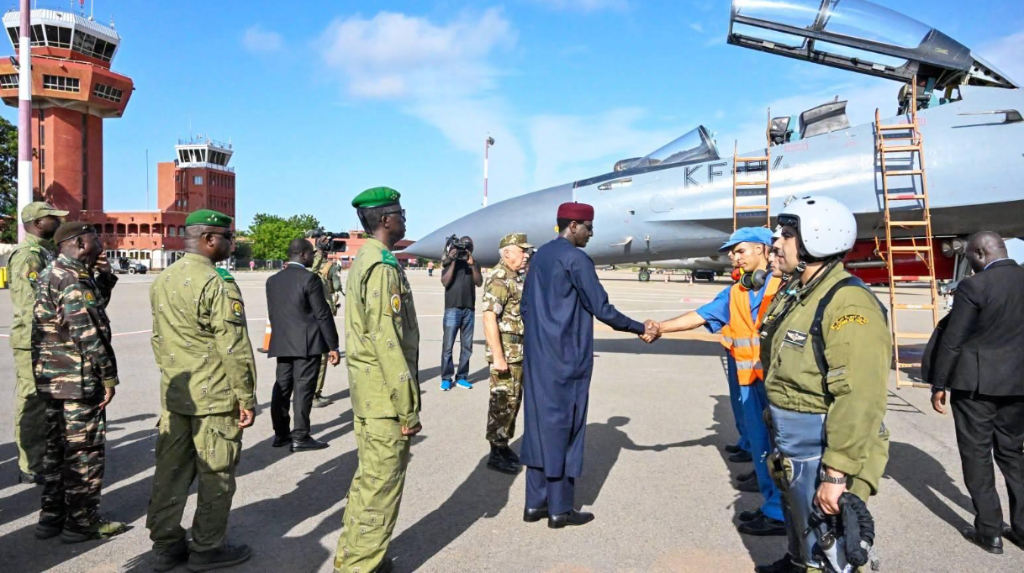
As Algeria’s parliament prepares for an extraordinary session on 25 October, a critical question looms: is the nation poised to escalate its military involvement in Niger? The gathering of both legislative chambers, convened under tight secrecy, has reignited debates about Algerian ambitions in the Sahel—a region grappling with shifting security alliances and escalating instability.
Why this parliamentary session raises strategic questions
The lack of a published agenda has fueled speculation that Algeria may seek parliamentary approval for military deployment abroad. While no official announcement confirms an impending intervention in Niger, recent political and military developments suggest Algiers is recalibrating its regional stance. The stakes extend beyond potential troop movements, touching on sovereignty, geopolitical influence, and the fragile balance of power in the Sahel.
A deepening military partnership with Niger
Recent weeks have seen tangible signs of strengthened ties between Algeria and Niger. On 30 August 2026, Algiers deployed four Su-30 fighter jets and a refueling aircraft to Niamey at the request of Nigerian authorities. This move, framed as cooperation, underscores Algeria’s intent to maintain operational leverage in a volatile region where traditional security frameworks are eroding and external powers vie for dominance.
On 21 October, the two nations signed a military cooperation protocol, further cementing their defense relationship. Though the agreement’s specifics remain undisclosed, its existence signals a growing prioritization of security collaboration. Yet, without concrete details, it would be premature to interpret this as a prelude to direct military action.
The constitutional hurdle: a key to understanding the session
Algeria’s constitution offers a critical clue. Article 91 mandates that any deployment of the National People’s Army abroad requires approval from both parliamentary chambers, with a two-thirds majority. This constitutional provision explains why the upcoming session has sparked such intense scrutiny.
However, the absence of a stated agenda demands caution. The session could address Niger—or it might focus on entirely different matters. Distinguishing between institutional procedure, strategic deliberation, and operational decision-making is essential to avoid conflating speculation with policy.
Niger’s strategic importance for Algeria
For Niamey, a stronger partnership with Algeria could diversify its security support at a time when the Sahel faces persistent armed threats and shifting alliances. Algeria, meanwhile, views Niger as a geographic linchpin. The two share a border and confront shared challenges: cross-border armed groups, illicit trafficking, and the risk of spillover instability. For Algiers, the priority may lie in containing these threats rather than launching offensive operations.
Support, cooperation, and deterrence do not equate to combat intervention. This nuance is vital in assessing Algeria’s potential next steps.
Geopolitical rivalries and unconfirmed hypotheses
Some observers suggest Algeria might target Emirati interests in Niger amid broader regional power struggles. Yet, no official evidence supports this claim. Direct confrontation with a third-party state would mark a significant strategic shift, exposing Algeria to heightened diplomatic and security risks in an already fractured region.
It is crucial not to mistake competition for influence in the Sahel with concrete military plans against specific actors. Any conclusions must be grounded in verified information about state interests, alliances, and positions.
25 October: a pivotal moment for algerian regional policy
Beyond the intervention speculation, the parliamentary session poses a broader question: how far is Algeria willing to go to safeguard its security interests in its southern neighborhood?
Approval for foreign troop deployment would send a major political signal. Conversely, a session focused on other topics would remind observers that temporal proximity between events does not imply causation. The immediate focus will be on the agenda, any resolutions passed, and subsequent official statements. These will clarify whether Algeria intends to bolster its support for Niger or adopt a more assertive military posture.
For now, one fact remains clear: Algerian-Nigerien rapprochement is a political reality worth monitoring. But the hypothesis of military intervention remains unconfirmed. In a Sahel where every military move can alter the balance of power, rigorous analysis is essential to separate strategic signals from uncertain scenarios.