
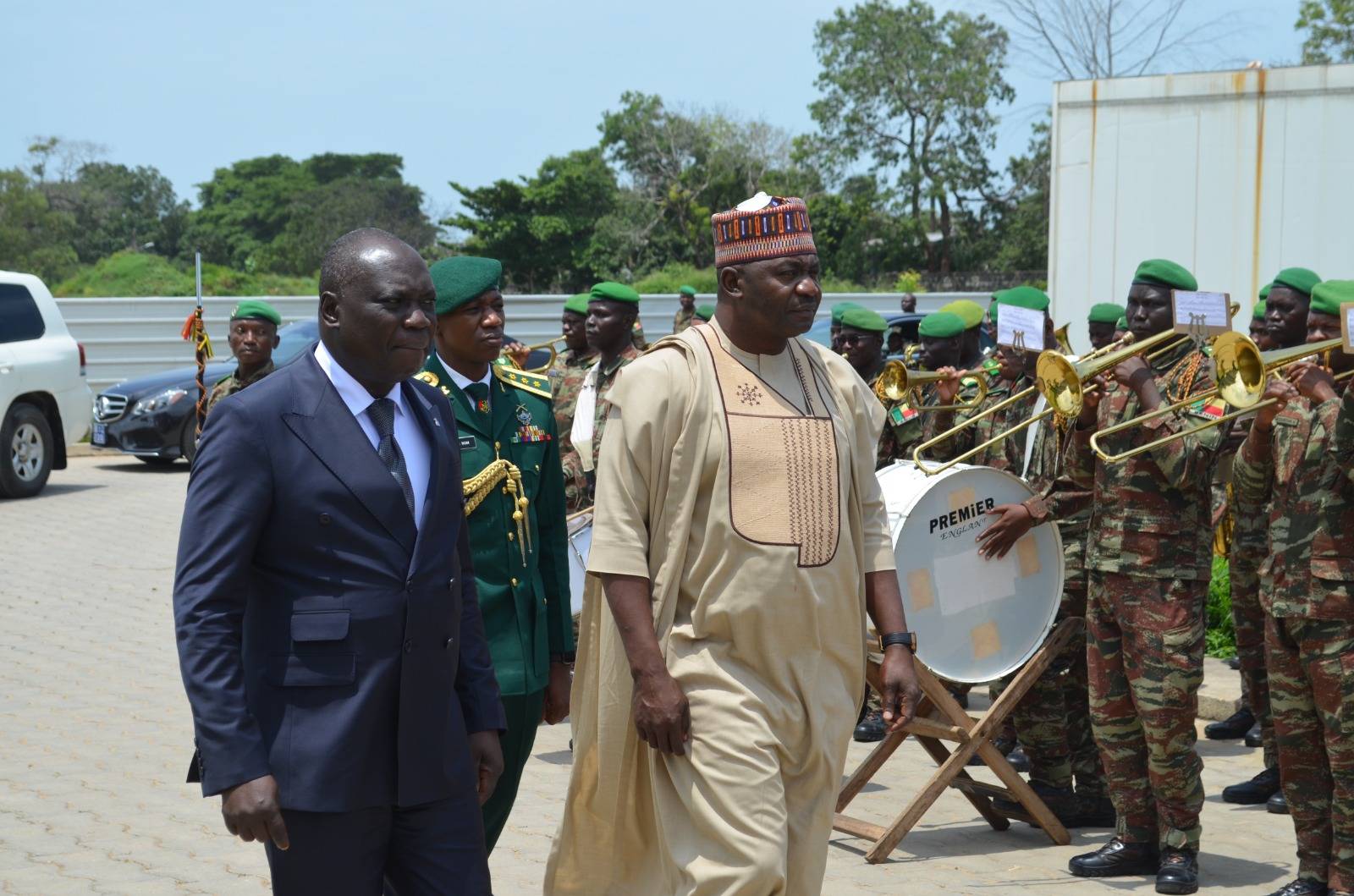
As violent extremist groups extend their reach across West Africa, Benin and Nigeria are accelerating joint military efforts to counter the growing threat. On August 4, 2026, a high-level Nigerian military delegation led by Defense Minister General Christopher Gwabin Musa met with his Beninese counterpart, Gildas Agonkan, in Cotonou. This strategic meeting marks a decisive shift toward deeper, more practical regional cooperation.
Shared urgency drives historic defense talks
The visit underscored both nations’ shared resolve in the face of escalating insecurity. General Musa, a key figure in Nigeria’s security apparatus, emphasized the gravity of the situation and the need for immediate, coordinated action. Before formal talks at the Ministry of Defense, the delegation visited Togbin military barracks, where they engaged with Nigerian troops deployed in Benin for the country’s 66th Independence Day celebrations. This symbolic presence highlighted the deep historical, cultural, and geographic ties uniting both nations.
Cross-border terrorism demands regional solutions
The Sahel and Gulf of Guinea regions are experiencing unprecedented challenges, with armed groups affiliated with Al-Qaeda and the Islamic State expanding southward. Benin’s northern regions, bordering Burkina Faso and Niger, face mounting pressure, while Nigeria continues to combat Boko Haram, ISWAP, and armed banditry. Both ministers agreed that fragmented responses are no longer viable.
General Musa stressed that porous borders serve as the terrorists’ greatest advantage. To dismantle their networks, a unified strategy involving Benin, Nigeria, Niger, Burkina Faso, and Mali is essential. Despite political and diplomatic challenges, the overriding security imperative demands seamless communication and coordination among Sahelian and Gulf of Guinea forces.
Strengthening military ties through shared intelligence
During the discussions, both sides reaffirmed their commitment to merging operational capabilities. Key priorities include:
- Continuous exchange of strategic intelligence to disrupt terrorist financing
- Joint border patrols in high-risk zones
- Enhanced interoperability of armed forces for seamless cross-border operations
The goal is to maintain relentless pressure on extremist groups, preventing them from exploiting weak points along either side of the border. This approach reflects a broader truth: sustainable solutions to Africa’s crises must originate from within the continent, leveraging the expertise of local militaries.
The power of community vigilance
Beyond military strategy, the talks in Cotonou highlighted the vital role of public engagement. Terrorism thrives in environments marked by economic marginalization and a lack of state presence. General Musa urged Beninese and Nigerian citizens to remain vigilant, reporting suspicious activities to security forces. Without active community participation, critical intelligence fails to reach authorities, leaving gaps that extremists exploit.
Community sensitization is now recognized as the first line of defense against both ideological and operational infiltration by armed groups.
A model for regional stability
The deepened security partnership between Benin and Nigeria extends far beyond bilateral relations. It serves as a cornerstone for preserving peace across West Africa. By securing their shared borders and enhancing operational cooperation, Cotonou and Abuja send a clear message to criminal networks: their advancement will be met with a united and determined front.
Economic growth, trade integration, and public welfare are inextricably linked to territorial stability. By reaffirming their joint commitment in early August 2026, Benin and Nigeria are stepping forward as guardians of regional security. The roadmap is now drawn—it is time to turn words into action and ensure a peaceful future for the next generation.