
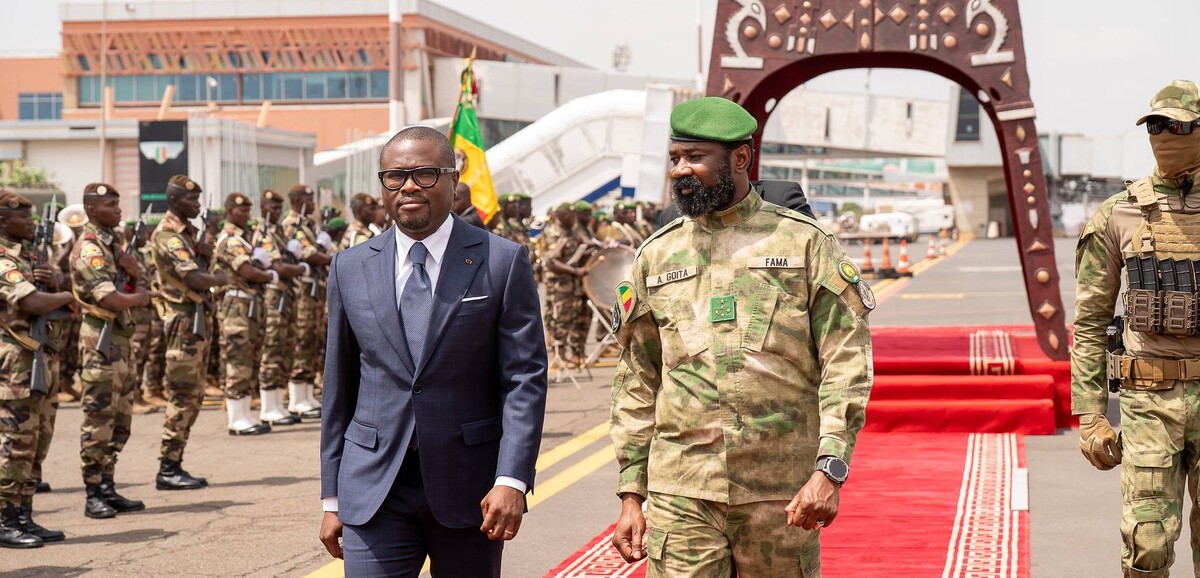
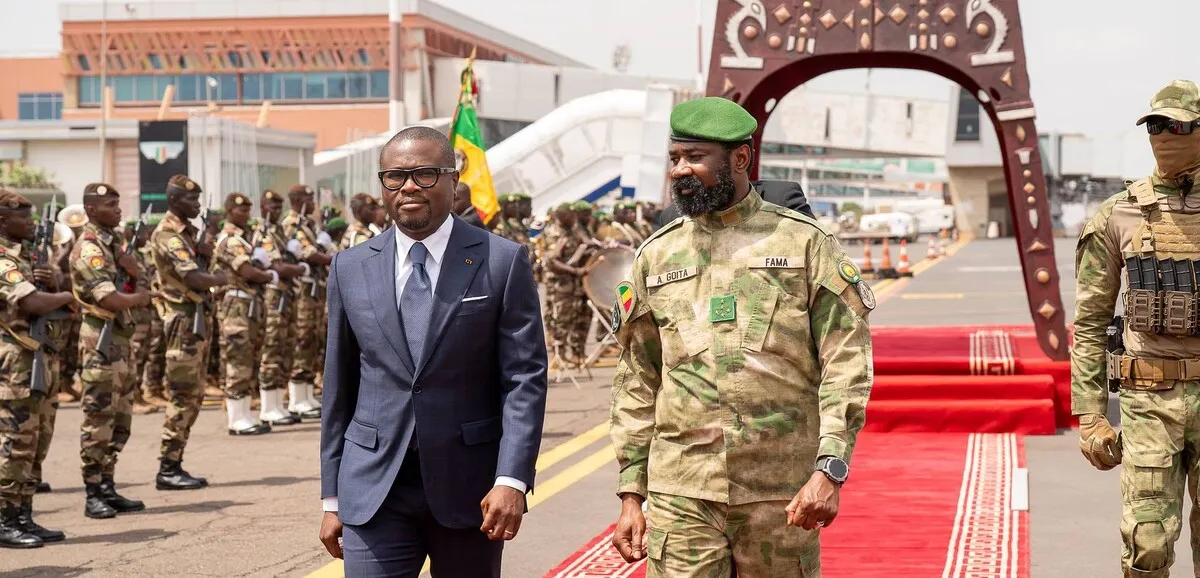
The diplomatic rapprochement between Cotonou and the member nations of the Alliance of Sahel States (AES) is becoming increasingly evident. During a visit to Bamako on Tuesday, June 9, Béninese President Romuald Wadagni held talks with the Malian Head of State, Assimi Goïta, as part of a regional tour launched shortly after his inauguration.
Having already traveled to Niger and Burkina Faso, this Malian leg of the journey highlights the new Béninese leader’s determination to restore dialogue with the military administrations in the Sahel region.
A new chapter for Bamako and Cotonou
At the conclusion of their meeting, the two leaders issued a joint statement expressing their commitment to breathing “new life” into the partnership between Mali and Bénin.
The discussions focused on intensifying cooperation across several key areas, including the economy, trade, and cultural exchanges.
In a move that signals a significant easing of tensions between the two capitals, Romuald Wadagni also extended an invitation to Assimi Goïta for an official visit to Bénin.
A shift in regional dynamics
Relations between Bénin and the AES countries have faced considerable strain in recent years, particularly with neighboring Niger following the 2023 coup. Since taking office on May 24, Romuald Wadagni has initiated multiple diplomatic efforts to rebuild trust with the authorities in Bamako, Ouagadougou, and Niamey.
Strategic implications for West Africa
This tour takes place at a time when West Africa is grappling with deep divisions between the Economic Community of West African States (ECOWAS) and the AES nations. Mali, Burkina Faso, and Niger chose to exit the regional bloc to establish their own confederation, arguing that ECOWAS no longer adequately addressed their sovereignty and security needs.
Consequently, Romuald Wadagni’s diplomatic mission stands as one of the first major acts of his presidency and could play a pivotal role in reducing friction within the West African region.