
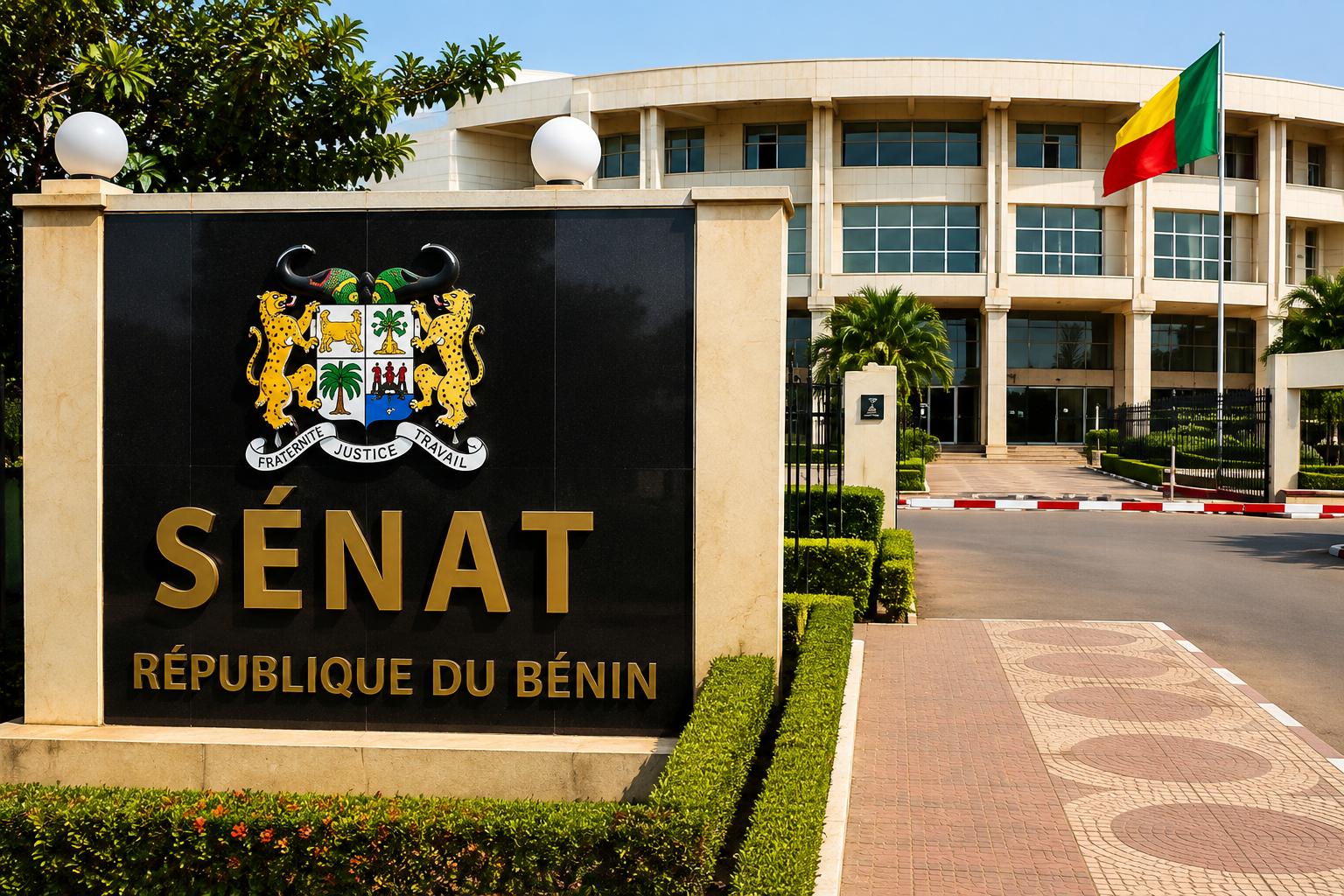
The political landscape in Bénin has been buzzing with discussions since the former President Patrice Talon assumed the role of Senate President. While social media platforms and informal channels have fueled speculation about a potential concentration of power, a closer look at the constitutional framework reveals a different reality. The country maintains a strict separation of powers, with the Executive branch retaining full authority despite the strengthening of the Legislative branch.
Understanding the Executive’s Unchallenged Authority
At the heart of the matter lies the constitutional mandate of the Head of State. The elected president in Bénin holds exclusive control over the Executive branch, a principle firmly established in the nation’s fundamental laws. This includes the power to define national policy, appoint government ministers, assign their duties, and oversee public administration. The transition of Patrice Talon from the presidency to the Senate presidency does not alter this dynamic. The current president retains full executive powers, including serving as the head of government, commander-in-chief of the armed forces, and the ultimate authority over public administration.
Contrary to some interpretations, the former president’s new role does not grant him any influence over executive decisions. The Executive branch remains autonomous, with the sitting president solely responsible for implementing policies, managing state projects, and directing national affairs.
The Senate’s Purely Legislative Role
A common misconception is that the Senate President shares in executive duties. This assumption is incorrect. The Senate is a legislative body designed to review, refine, and approve laws, not to participate in governance. Its functions include drafting legislation, conducting oversight of government actions, and representing local authorities. However, it has no role in policy execution, budget implementation, or decree issuance.
The Senate President presides over legislative sessions but does not influence ministerial appointments, policy directions, or the daily operations of the Executive branch. Financial oversight, such as approving the national budget, is a collective parliamentary responsibility, but the Senate President does not hold any spending authority. Their influence is confined to the legislative process and institutional checks on the government.
Why Benin’s System Differs from Regional Models
Some observers have drawn parallels between Bénin’s institutional reorganization and changes seen in neighboring countries like Togo. However, such comparisons overlook critical differences in constitutional design. In Togo, recent reforms shifted the country toward a parliamentary system where the Prime Minister, chosen from the majority party in the Assembly, exercises real executive power. In contrast, Bénin remains firmly rooted in a presidential system.
The Head of State in Bénin derives legitimacy from direct universal suffrage and retains complete executive authority. The introduction of the Senate enhances the country’s bicameral system, strengthening legislative review without altering the fundamental balance of power. The Executive branch continues to dominate policymaking, while the Senate serves as a deliberative and consultative body.
A Stabilizing Force in Democratic Maturity
The creation of the Senate also reflects a strategic move toward institutional stability. Its members—comprising former senior officials, seasoned politicians, and qualified experts—bring a wealth of experience to the legislative process. This infusion of wisdom helps temper the often passionate debates that accompany electoral cycles, providing a measured counterbalance to short-term political impulses.
In this context, the Senate acts as a stabilizing element, ensuring that laws are scrutinized with care and that national unity remains a priority. The former president’s leadership of the chamber underscores a commitment to preserving institutional memory and offering strategic guidance, rather than engaging in day-to-day governance. His role is one of counsel and oversight, not executive decision-making.
A Milestone for Beninese Democracy
The establishment of the Senate and the clear delineation of powers it embodies represent a significant step forward for Bénin’s democratic consolidation. Far from enabling a hidden concentration of power, the constitutional framework reinforces the separation of roles: the President steers the Executive, while the Senate ensures rigorous legislative scrutiny and republican vigilance. This clarity fosters a more informed and balanced public discourse, free from unfounded speculations about overlapping authorities.