
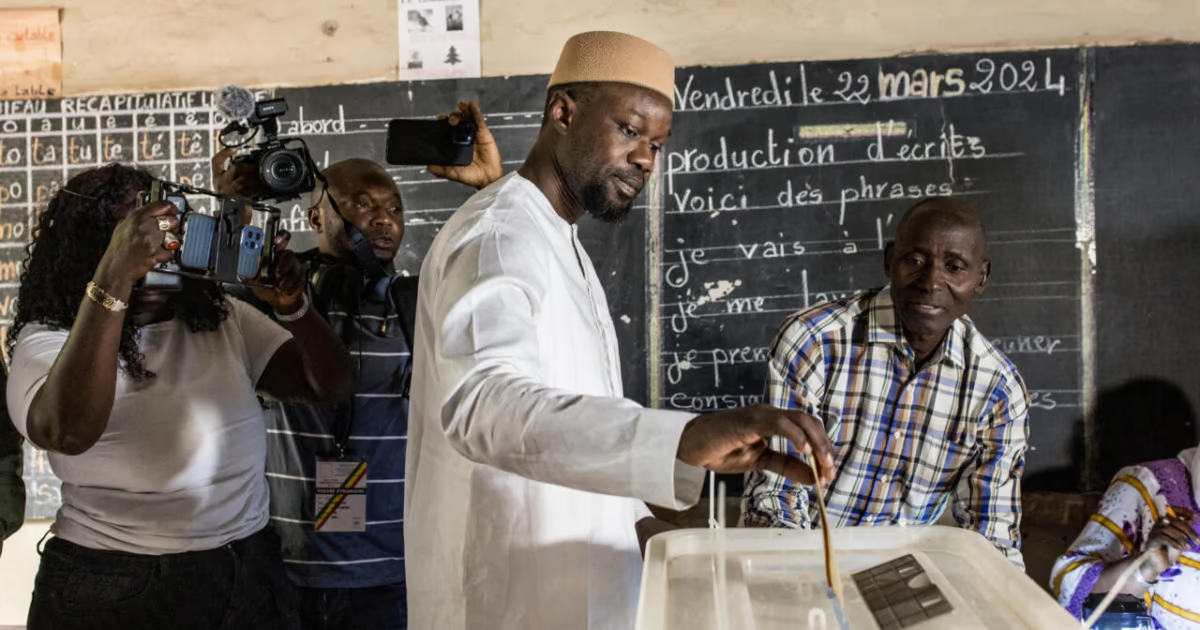
As Senegal gears up for its 2027 local elections, a critical question looms over voters: could the early candidates already declaring their bids reshape the political landscape of your city? From Dakar’s bustling streets to the administrative corridors of Matam, the race for municipal power is heating up—and the stakes have never been higher for citizens who depend on effective local governance.
With the official election date set for January 17, 2027, and political parties scrambling to position their strongest candidates, the early declarations are more than just political posturing. They signal the beginning of a high-stakes battle for municipal leadership, where every candidate’s vision could determine the future of service delivery, infrastructure development, and community priorities in your neighborhood.
Dakar’s mayoral race: ambitious visions collide
The capital city is already witnessing a high-profile showdown. Dr. Arona Coumba Ndoffène Diouf, a former advisor to President Macky Sall and member of the Kiiraay party, officially declared his candidacy for Dakar’s mayoralty on October 9, 2026. His campaign promises a sweeping transformation—modeled after Singapore’s urban excellence—to modernize Dakar’s infrastructure, transportation, and public services.
But he’s not the only contender. In Pikine, a major suburban municipality, the race is intensifying. Deputy Babacar Ndiaye, a member of Pastef, declared his candidacy in January 2026, positioning himself as a progressive voice within the coalition led by Ousmane Sonko. Meanwhile, the Diomaye Président coalition has tapped Dr. Cheikh Dieng, former director-general of the National Sanitation Office (ONAS), to represent them in Pikine. His focus? Urban cleanliness, public health, and environmental sustainability—key concerns for residents of this densely populated area.
Beyond Dakar: rising voices in Matam, Hann Bel-Air, and Ogo
The political energy isn’t confined to the capital. In Matam, Souleymane Barka Ba made headlines on October 10, 2026, when he accepted the nomination for the mayoralty under the “Sénégal d’abord” movement. His platform centers on local empowerment, economic development, and grassroots governance—aimed at addressing the unique challenges of this region.
In Hann Bel-Air, a municipality within Dakar’s department, Matar Diaw has thrown his hat into the ring. A sitting municipal councilor, he launched “Maire Matar Horizon 2027” in August 2026, positioning himself as a reformer ready to challenge the status quo led by outgoing mayor Babacar Mbengue. His priorities? Transparency, youth employment, and improved public service delivery.
And in Ogo, a smaller but strategically important municipality in Matam, Professor Abdoulaye Bâ Ndiaye has entered the race with a bold agenda. His focus spans education, environmental sustainability, healthcare access, and water supply—signaling a comprehensive approach to rural development.
From declarations to ballots: what comes next?
While these early announcements signal momentum, they are not yet official candidacies. Each candidate must still navigate internal party selections, coalition alliances, and the formal submission of dossiers to electoral authorities. The Electoral Code mandates that candidate lists be finalized and published at least 70 days before election day—meaning the final roster is unlikely to be settled until late November 2026.
The upcoming months will be critical. Political parties will finalize their headliners, forge local alliances, and present coherent municipal programs. For voters, the choice will come down to more than personalities—it will be about which candidate’s vision aligns with the pressing needs of their community: safer streets, better schools, reliable sanitation, or sustainable urban growth.
A turning point for local democracy
These municipal elections matter deeply. Local leaders shape the daily lives of citizens far more than national politicians ever could. A well-managed town hall can deliver clean water, efficient public transport, and responsive emergency services. A poorly led one may struggle with corruption, mismanagement, and decaying infrastructure.
With the political groundwork being laid today, one thing is clear: Senegal’s 2027 local elections are not just about who runs the city. They’re about who defines the future of your city—its priorities, its people, and its place in the nation’s progress.