
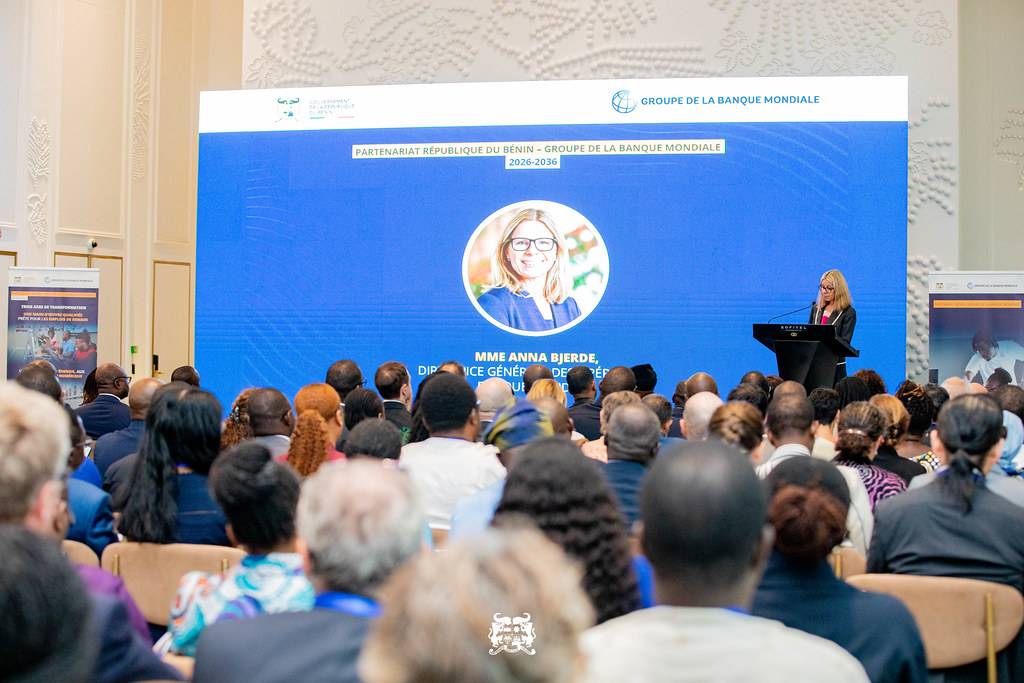
The Sofitel Cotonou Marina Hotel & Spa buzzed with anticipation on Friday, July 17, 2026, as officials from Benin and the World Bank jointly unveiled the groundbreaking Country Partnership Framework (CPF) 2026-2036. This decade-long strategic pact, rooted in Benin’s forward-looking Alafia Bénin 2060 vision, is set to redefine the nation’s socio-economic landscape through three transformative pillars: human capital, productive infrastructure, and youth employment.
Why this partnership matters now
In a packed hall of government officials, diplomats, and private sector leaders, the launch of the CPF 2026-2036 signaled more than just a new funding agreement—it marked a bold reimagining of Benin’s development trajectory. Unlike previous programs, this framework is a complete overhaul of the World Bank’s financial and technical support, designed to align with Benin’s long-term goals of economic diversification and inclusive growth.
The timing couldn’t be more critical. With Benin’s macroeconomic stability on solid ground, the government is now doubling down on equitable growth, ensuring that prosperity reaches every corner of the country. The presence of Anna Bjerde, World Bank Managing Director of Operations, underscored the international confidence in Benin’s structural reforms and its commitment to sustainable development.
From growth to transformation: The three pillars in action
The CPF 2026-2036 isn’t just about boosting GDP numbers—it’s about rewiring the economy to be more competitive, resilient, and inclusive. The World Bank’s decade-long funding commitment provides Benin with the financial stability to execute large-scale projects without compromising fiscal health, while also attracting private investment to create a self-sustaining growth cycle.
The framework’s success hinges on three interconnected priorities:
1. Strengthening human capital: Investing in the future workforce
A nation’s economic potential is only as strong as its people. The first pillar tackles Benin’s most pressing challenges: health, nutrition, and skills development. The goal? To align vocational training with market demands, ensuring that young Béninois enter the workforce with the right tools to thrive in a rapidly evolving economy.
2. Building productive infrastructure: Connecting opportunities
Logistics bottlenecks have long stifled Benin’s economic potential. The CPF addresses this head-on with massive investments in energy, digital connectivity, and transport. By improving links between agricultural hubs, urban centers, and the Port of Cotonou, the country aims to slash trade costs, boost exports, and unlock new revenue streams for businesses and farmers alike.
3. Empowering the private sector: The engine of job creation
The private sector is the linchpin of sustainable employment. The World Bank’s support will focus on streamlining business regulations, expanding access to credit for SMEs, and fostering entrepreneurship among youth and women. Reforms in these areas are expected to create high-quality jobs that anchor young talent in Benin’s economy rather than driving emigration.
Youth employment: The ultimate test of success
With over 60% of its population under 25, Benin faces a demographic dividend—or a crisis. The CPF 2026-2036 places youth employment at the heart of its strategy, targeting sectors like agro-processing and high-value agriculture to absorb young workers and curb rural exodus. Minister Aristide Medenou of Economy and Finance emphasized that this plan isn’t just about temporary fixes; it’s about embedding lasting economic opportunities in Benin’s communities.
Regional resilience: Spreading benefits beyond Cotonou
Prosperity can’t be confined to the capital. The CPF dedicates significant resources to northern and peripheral regions, addressing disparities in infrastructure and economic opportunity. By bringing essential services—clean water, electricity, and rural roads—to underserved areas, the program aims to reduce social vulnerabilities and strengthen national cohesion in a region facing security and climate challenges.
Global confidence in Benin’s vision
Anna Bjerde praised Benin’s leadership for its strategic foresight, highlighting the government’s determination to turn macroeconomic policies into tangible benefits for entrepreneurs, farmers, and families. Her endorsement reinforces Benin’s reputation as a reform leader in West Africa and signals the World Bank’s long-term commitment to the country’s success.
Can Benin emerge as a model by 2036?
The CPF 2026-2036 is a high-stakes gamble on Benin’s future—a 10-year roadmap to economic transformation. Its success will depend on flawless execution, robust project governance, and the ability of Benin’s institutions and private sector to absorb and maximize these investments.
If the promises made in Cotonou translate into real progress across the country, Benin could set a new standard for inclusive growth in West Africa. The clock is ticking, and the next decade will determine whether this bold vision becomes reality.