
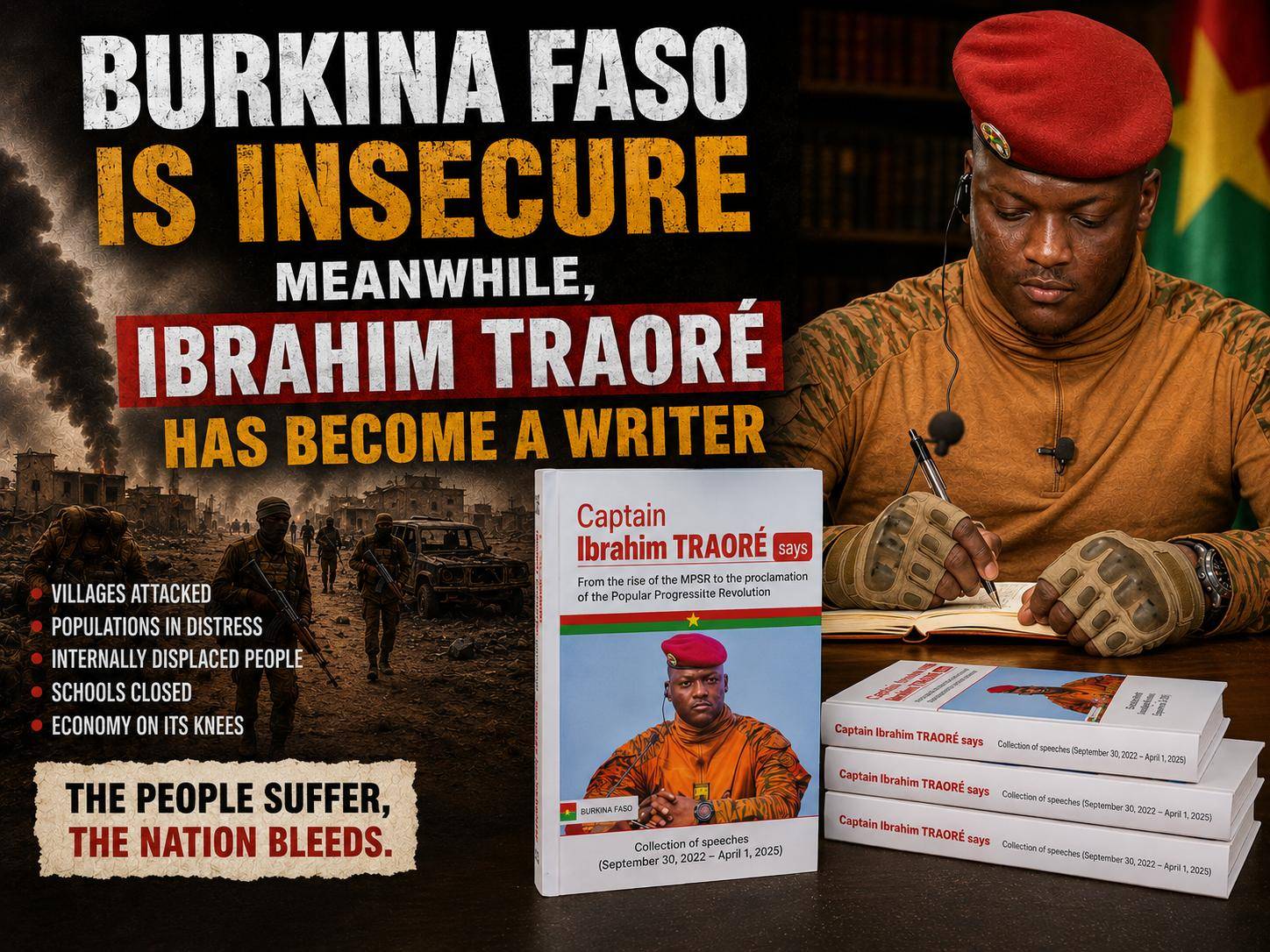
The nation of Burkina Faso continues to grapple with an unprecedented humanitarian and security crisis, yet recent actions by the transitional leadership have sparked widespread concern. A stark contrast has emerged between the government’s communication efforts and the harsh realities unfolding on the ground.
Words versus action: a widening gap
Daily reports paint a grim picture—terrorist attacks, besieged villages, and a growing number of internally displaced persons pleading for peace and territorial sovereignty. Meanwhile, the presidential palace appears preoccupied with promoting a new book attributed to Captain Ibrahim Traoré, raising eyebrows across the country.
For many Burkinabè citizens, the message is clear: the transitional presidency has devolved into a platform for political self-promotion rather than addressing urgent national needs.
Propaganda or progress?
The recent publication of a book linked to the head of state has done little to quell public frustration. In Ouagadougou and beyond, citizens voice a singular demand: security, not literature. The allocation of resources toward state-sponsored publishing, at a time when defense and security forces face critical logistical shortages, underscores a troubling disconnect.
As one civil society activist put it, “The people do not need stories; they need their homeland restored.”
A broken social contract
When Captain Ibrahim Traoré assumed power, he pledged to restore territorial integrity and bring peace—a promise that initially garnered widespread support. Today, however, military rhetoric has overshadowed tangible progress, fueling public disillusionment. The regime’s focus on personality cults and political branding has eroded trust, pushing many to question whether the leadership remains committed to its core mission.
The growing unrest suggests a breaking point. If security remains unaddressed, calls for change may intensify, with demands for a leadership capable of fulfilling its fundamental duty.
What lies ahead for Burkina Faso?
The transitional government now faces a critical juncture. Prioritizing self-promotion over security risks deepening the rift between the state and its people. Burkina Faso does not need image-makers at its helm; it requires strategic leaders who can restore stability.
Without an immediate shift toward addressing the security crisis, history may record Ibrahim Traoré’s tenure as a period marked by illusion rather than action, as the nation continues to burn.