

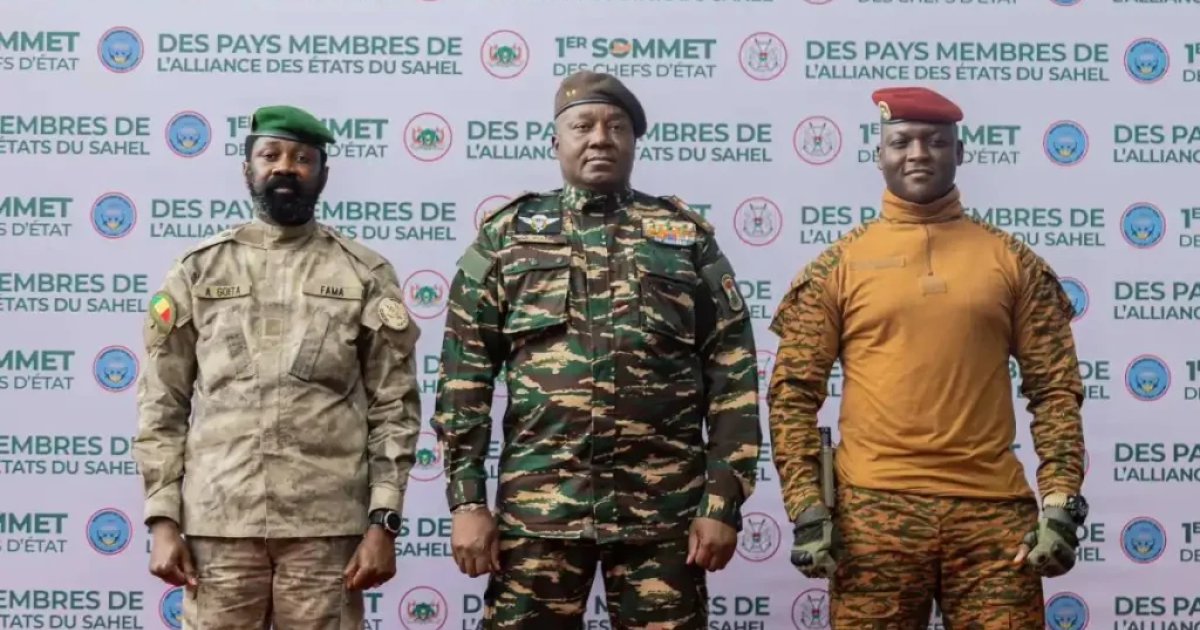
In a decisive move for national sovereignty, Burkina Faso announced the immediate termination of its diplomatic relations with France on Friday, June 26, 2026. This major shift, confirmed by authorities in Ouagadougou, marks the lowest point in a relationship that has been deteriorating steadily since Captain Ibrahim Traoré assumed leadership. The decision effectively aligns Burkina Faso with the firm geopolitical stances already adopted by Mali and Niger within the Alliance of Sahel States (AES).
The formal declaration was delivered via national television by the government spokesperson, Pingdwendé Gilbert Ouédraogo. According to the announcement, the rupture in bilateral relations is effective as of June 26, 2026, signaling a clean break from decades of traditional diplomacy with Paris.
Authorities in Ouagadougou have justified the move by accusing France of actions that undermine Burkinabè interests. The government cited concerns over interference, neocolonial ambitions, and alleged support for networks deemed hostile to the state. In response, France has dismissed these claims, characterizing the decision as an unjustified and hostile act.
This diplomatic divorce is the culmination of years of escalating friction. Since the transition in September 2022, the political climate between the two nations has grown increasingly volatile. Burkina Faso has systematically moved to diminish French influence, starting with the January 2023 demand for the withdrawal of French special forces involved in Operation Sabre.
Furthermore, several French media organizations have faced suspensions or total broadcasting bans within the country. The expulsion of various French diplomats in recent months also foreshadowed this final break, as accusations of activities incompatible with national security became a recurring theme in official discourse.
While the French Ministry of Foreign Affairs has acknowledged the decision, it is currently evaluating reciprocal measures. Meanwhile, French citizens residing in Burkina Faso have been advised to exercise extreme caution as the situation evolves.
The AES forms a unified front against Paris
By cutting ties with France, Burkina Faso has joined its neighbors, Mali and Niger, in a coordinated rejection of the former colonial power. The three members of the Confederation of Sahel States now present a synchronized diplomatic and political front.
Mali and Niger had previously initiated their own departures from the French sphere of influence amidst intense political and military tensions. Burkina Faso’s latest action completes the alignment of the AES nations, which are increasingly focused on sovereignty and the rejection of external interference.
This shift highlights a profound transformation of the Sahel’s geopolitical landscape. Following their exit from CEDEAO, the trio of Mali, Burkina Faso, and Niger has prioritized internal cooperation while diversifying international partnerships. These nations are notably strengthening ties with alternative global powers, including Russia, Turkey, and Iran.
For Ouagadougou, this rupture is central to a broader strategy to redefine its alliances and reclaim total control over its diplomatic and security frameworks. For France, it represents a significant contraction of its historical influence in a region where it once held a dominant position.
As the Sahel enters this new era, the future of consular and security management between Burkina Faso and France remains uncertain. What is clear, however, is that the AES intends to operate as a singular, independent voice on the global stage, moving away from its traditional Western partners.