
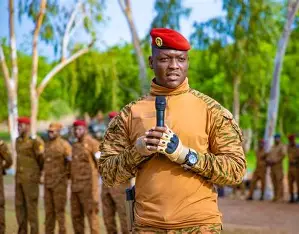
On June 26, 2026, Burkina Faso officially announced the termination of its diplomatic relations with France. Authorities in Ouagadougou justified this decisive move by citing grievances related to neocolonialism, internal interference, and the alleged support of networks aimed at destabilizing the nation. While this rupture represents a critical turning point in the deteriorating relationship between the two countries, it also sparks a fundamental debate regarding the nature of modern sovereignty.
A shift in global alliances
Severing ties with a former colonial power is a potent political act and a sovereign choice available to any independent nation. However, the core issue remains whether such a break leads to genuine autonomy or merely facilitates a transition toward a different form of external reliance. Since 2023, Burkina Faso has been steadily diversifying its international partnerships, strengthening ties with Russia, China, Turkey, and Iran.
This strategic redirection is frequently described as a pivot toward a multipolar world. On the military front, cooperation with Moscow has intensified, while economic efforts are focused on attracting new investors and opening alternative markets. Yet, multipolarism does not automatically equate to independence. True sovereignty requires that strategic decisions be made exclusively in the national interest, without becoming militarily, economically, or ideologically beholden to any foreign power.
The role of the Alliance of Sahel States
The recent decisions made by Ouagadougou have led many to look toward Mali and Niger, the other members of the Alliance of Sahel States (AES). For several years, these three nations have demonstrated a growing political and diplomatic convergence, particularly in their shared rapprochement with Russia. If Mali and Niger were to adopt similar measures in the coming months, it would reinforce the image of a unified regional strategy.
However, this potential coordination raises a legitimate question: are these choices the result of independent national deliberations, or do they reflect a geopolitical roadmap coordinated around a single strategic partner? For some analysts, the prospect of three countries taking identical steps in succession suggests a shift in influence rather than a complete liberation from it.
Defining authentic independence
Breaking away from Paris only to become heavily dependent on Moscow or Beijing does not necessarily constitute the achievement of total sovereignty. It may simply represent a relocation of the centers of influence. History demonstrates that major global powers, regardless of their identity, primarily pursue their own strategic, economic, and geopolitical interests.
The challenge for Burkina Faso moving forward will be to prove that this diplomatic rupture is more than a change of alliances. Real success will be measured by the state’s capacity to:
- Independently finance its national development.
- Ensure the security of its own territory.
- Process and transform its natural resources locally.
- Strengthen domestic institutions.
- Maintain a foreign policy free from external dictates.
Ultimately, sovereignty is not defined by the number of embassies closed or the intensity of rhetoric. It is found in the ability of a state to freely decide its own future and prioritize the needs of its population over the interests of any ally. A truly sovereign nation does not replace one guardianship with another; it builds the freedom to act independently of all partners.