
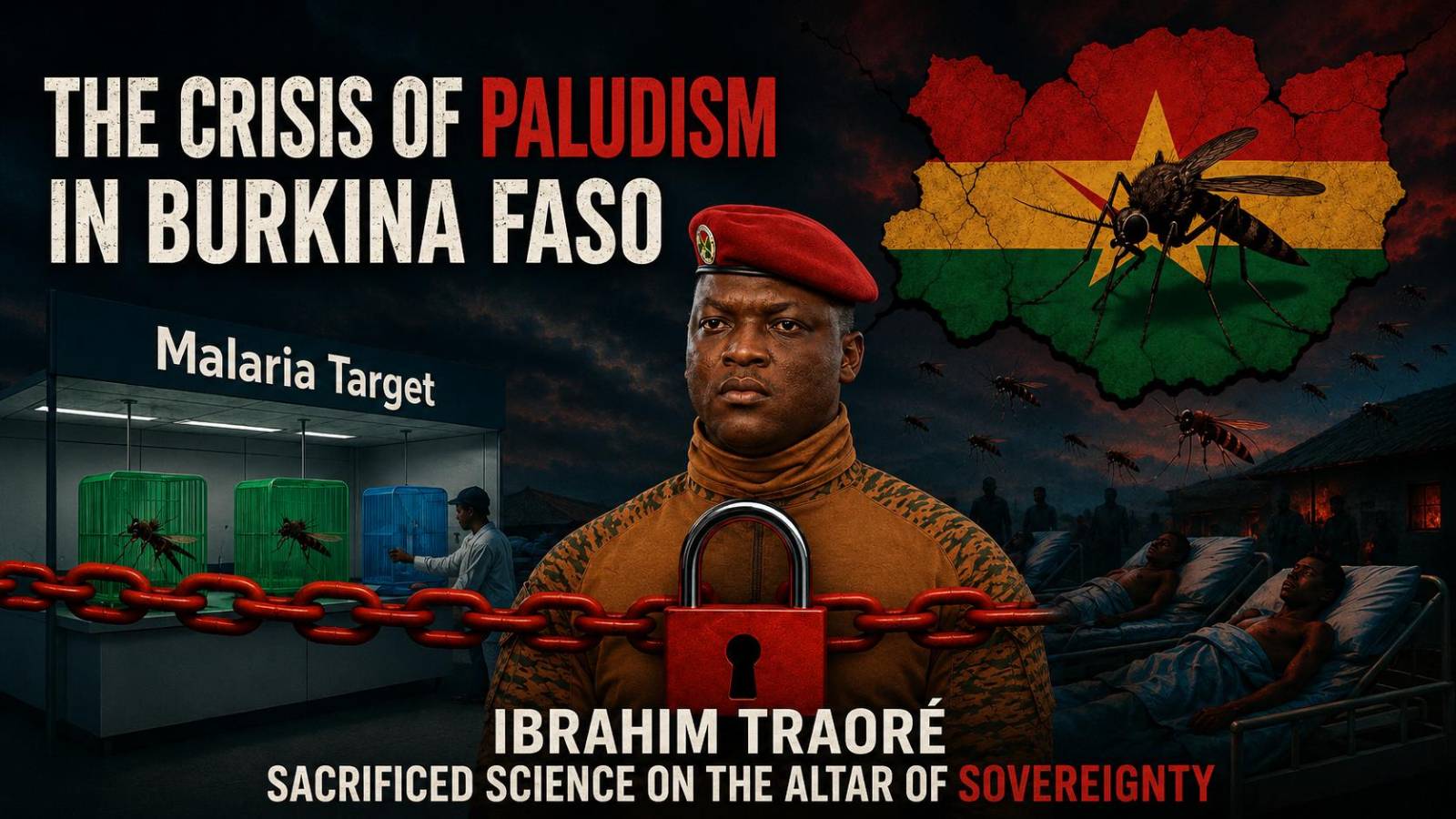
The Burkina Faso government’s definitive termination of the Target Malaria research project and the ordered destruction of its genetically modified mosquito samples mark a critical juncture in the nation’s sovereignist stance. While framed as a bold assertion of national control, this radical move raises serious concerns about the future of medical research in the Sahel region and the economic repercussions of scientific isolation.
Political symbolism overshadowing scientific progress
By sealing the fate of the Target Malaria initiative—largely funded by the Bill & Melinda Gates Foundation—and mandating the eradication of its genetically modified mosquito specimens, Ouagadougou has abruptly concluded a decade-long scientific and political saga. The decision, though anticipated following a temporary suspension in August 2025, now stands as a definitive ideological rupture with international research collaborations.
Sacrificing innovation on the altar of sovereignty
The Target Malaria project, though contentious, represented one of the most promising avenues for combating malaria, a disease that continues to devastate sub-Saharan populations, particularly children under five. Advocates promoted a groundbreaking genetic approach (gene drive) to suppress mosquito fertility. However, the regime’s insistence on labeling the country a “test tube for experimentation” aligns with local NGOs and civil society warnings about ecological uncertainties.
The proclaimed “sanitary sovereignty” rhetoric fails to conceal deeper repercussions:
- Stifling local innovation: The project integrated top-tier Burkinabè researchers (including from the IRSS). Its abrupt termination deprives the national scientific community of vital funding and cutting-edge infrastructure.
- Brain drain risk: By criminalizing international research partnerships, the regime sends a chilling message to local academics and scientists.
- Geopolitical aftershocks: The decision reshapes perceptions among institutional investors, credit rating agencies, and global NGOs, underscoring a profound erosion of trust in Sahelian markets.
A seismic shift in investor confidence
This move exposes three fundamental fractures in Burkina Faso’s economic and scientific landscape:
- Contractual security collapse: Pre-2022 agreements were generally honored with moderate predictability. Today, unilateral, politically driven decisions have replaced transparency, prompting donors to freeze long-term investments.
- Regulatory opacity: The former reliance on regional and international standards has given way to arbitrary governance via sudden decrees. This legal volatility has triggered capital flight toward more stable jurisdictions.
- R&D paradigm shift: Once hailed as development catalysts through North-South partnerships, international research programs are now viewed with suspicion as potential vectors of interference or espionage. This pervasive mistrust risks confining the nation to technological stagnation.
The perils of sanitary autarky
The Burkina Faso government’s assertion of protecting its “biological heritage” against foreign interference reflects an attempt to construct national self-sufficiency. Yet, the feasibility of this ambition remains questionable. Malaria eradication demands billions in investment and cross-border cooperation, as mosquitoes transcend national borders. Misguided sovereignty risks severing the Sahel from global capital and therapeutic innovation flows, with rural communities—most vulnerable to malaria—bearing the brunt of this political posturing.