
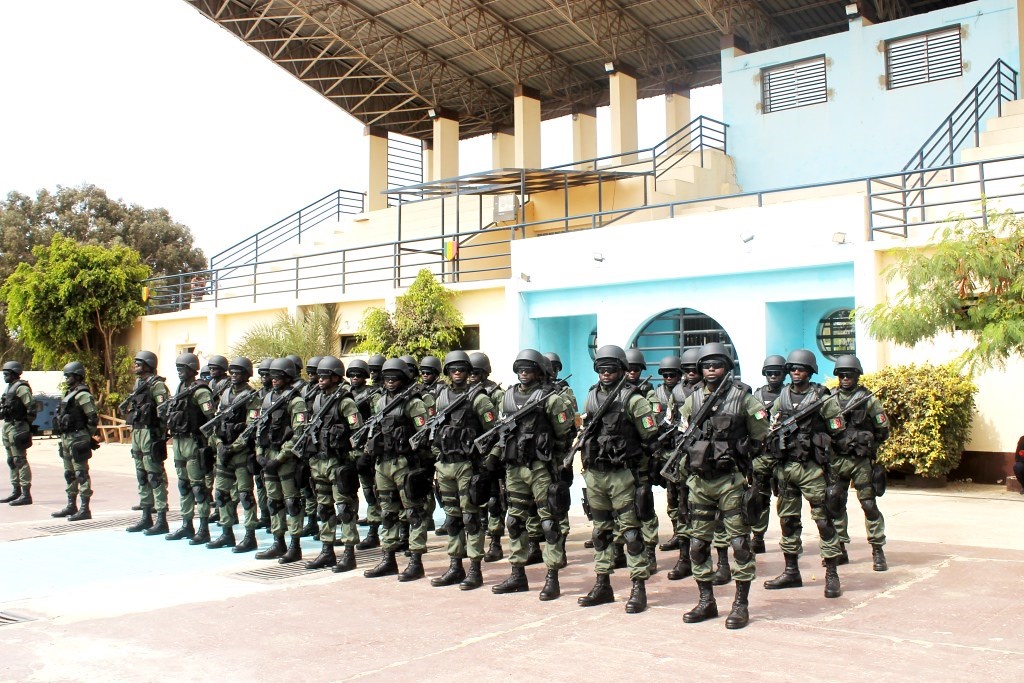
With over 400 km of shared border with Mali and deeply rooted trade ties, Senegal is intensifying its security measures to address the escalating crisis in its eastern neighbor and the broader Sahel region.
Dakar is adopting a low-profile approach in its counterterrorism strategy despite growing concerns. Officials remain tight-lipped about recent incidents, including attacks on Senegalese transporters in Mali and the burning of trucks following an assault on April 25. «We are closely monitoring the situation, especially for transporters. For now, no repatriation requests have been filed, but we remain vigilant,» stated a foreign affairs ministry representative, speaking on condition of anonymity.
The Senegalese government is taking the jihadist threat in West Africa seriously, investing heavily in border control infrastructure. In the southeastern regions of Tambacounda and Kédougou—neighboring Mali—three new operational bases were inaugurated on April 8 and 9, 2026, as part of the Groupe d’Action et d’Intervention Rapide (Garsi 2) Saraya unit, funded by the European Union.
Garsi and Cico: the backbone of the security framework
According to national gendarmerie reports, these bases are designed to shorten response times, enhance reaction capabilities, and improve proximity to local communities within Garsi 2’s operational zone. «They serve as the frontline of Senegal’s counterterrorism and cross-border crime prevention efforts,» explained a military officer. «With 420 km of border to patrol, deploying troops at every kilometer is impossible. We focus on critical transit points, where these bases enable rapid intervention if needed.»
The officer highlighted the Garsi units as «highly effective operational tools, well-equipped to counter threats like those seen in the Sahel, where military convoys frequently face ambushes.» Two such bases are located in Kidira and Saraya (Kédougou), supporting combined patrols to monitor the frontier.
Coordinated patrols along the borders
Beyond the Garsi, Senegal relies on the Cadre d’Intervention et de Coordination Opérationnel (Cico), a multi-agency task force designed to streamline the state’s response to terrorist threats. This framework ensures seamless coordination among emergency services—hospitals, ambulances, police, gendarmes, helicopters, and the military—in the event of an attack. «Managing this complex response is a challenge, but the Cico ensures all agencies work in unison,» noted a defense analyst.
Recent months have seen further enhancements, including the activation of the Kédougou regional headquarters and the deployment of additional technical units. While Senegal has not been directly targeted, it ranks among the highest defense spenders in Sub-Saharan Africa. Between 2020 and 2025, the country accounted for 8.8% of regional arms imports, according to the Stockholm International Peace Research Institute, with notable acquisitions including OTT Technologies’ Puma M36 armored vehicles. These are specifically engineered to withstand landmines and improvised explosive devices—common threats in Sahel conflicts. Major defense contracts with Turkey were also finalized in 2025.
Cultural and religious resilience: Senegal’s hidden shield
Beyond military efforts, experts emphasize the role of social cohesion in Senegal’s relative resilience to jihadist infiltration. Professor Bakary Sambe of the Timbuktu Institute notes that ethnic and religious communities in the country live in harmony, creating a cultural barrier against groups like the Jama’at Nusrat al-Islam wal-Muslimin (JNIM). In Kédougou, interethnic marriages and mutual respect among groups such as the Bassari, Bédik, and Fulani reinforce this cohesion. «This cultural shield is as vital as any military post,» Sambe stated.
He also underscored the influence of Sufi brotherhoods and religious leaders in preventing radicalization. «While Sufi influence is less pronounced in eastern border areas, the absence of widespread radicalization and collaboration between religious leaders and authorities significantly bolsters resilience,» he added. These leaders are recognized as key players in the national strategy to combat extremism.
President Bassirou Diomaye Faye, speaking to local media on May 2, stressed the need for continental cooperation to tackle terrorism. «This is a threat that spares no country—not the United States, nor Nigeria, the largest ECOWAS member, which has faced attacks for years,» he warned. Faye called for stronger intelligence-sharing and condemned the withdrawal of Sahel states from ECOWAS, urging regional organizations to collaborate for shared security.
Highlighting historical ties between Senegal and Mali, the president reaffirmed Dakar’s commitment to solidarity: «What affects Mali affects Senegal. The Malian people can always count on the support of both governments and citizens,» he said. While acknowledging ongoing dialogue and intelligence exchanges between the two countries, Faye cautioned that not all efforts can be disclosed publicly. «We are ready to contribute to peace in Mali through dialogue, but some measures must remain discreet to ensure effectiveness.»