
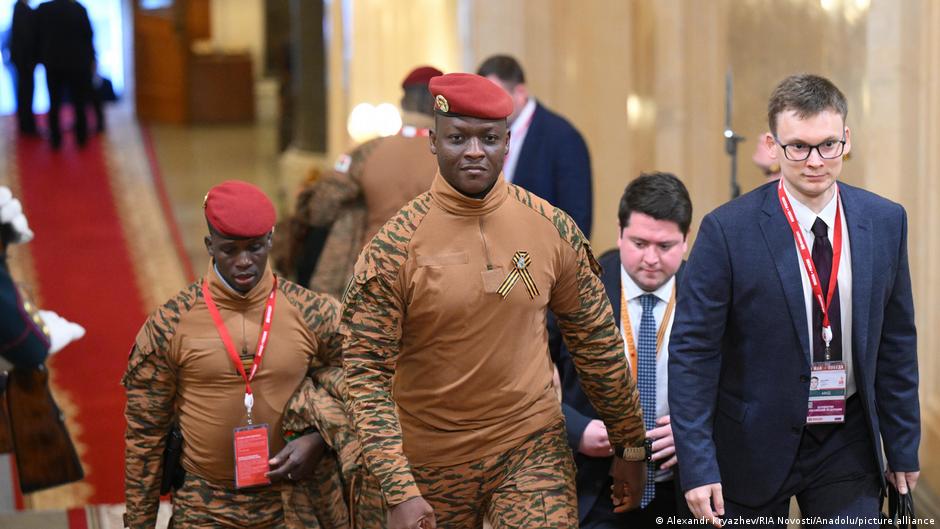
The adoption of Burkina Faso’s new Charter of the Popular Revolution has reignited debates about the country’s future. Meanwhile, Captain Ibrahim Traoré’s evolving stance on democracy continues to spark controversy. These pressing issues were dissected in a recent forum, where analysts weighed the realities of Burkina Faso’s political landscape.
From transition to transformation: the new charter in focus
At the end of March, the National Transitional Legislative Assembly (ALT) unanimously endorsed the Charter of the Progressive Popular Revolution (RPP), marking a significant shift from the earlier Transitional Charter adopted in 2024. This move signals a bold, yet contentious, step toward reshaping Burkina Faso’s governance framework.
However, the transition’s credibility has been called into question. Critics argue that the military leadership, now led by Captain Traoré since late September 2022, has strayed far from its initial promise of temporary governance. Once pledging a swift return to civilian rule, the junta has instead consolidated power, raising concerns about democratic erosion.
Human rights organisations have not remained silent. Amnesty International has urgently called for the reversal of the military government’s decision to dissolve over a hundred associations—including human rights groups—deeming the move a direct threat to civic freedoms.
Traoré’s legacy: the Sankara paradox
Captain Traoré has repeatedly invoked the legacy of Burkina Faso’s revolutionary icon, Thomas Sankara, positioning himself as his ideological successor. Yet, comparisons between the two leaders reveal stark contrasts. While Sankara championed transparency and grassroots democracy, Traoré’s administration faces accusations of authoritarianism, particularly in its crackdown on dissent and civil society.
The debate over Burkina Faso’s direction has also extended to its regional alliances. The country’s participation in the Alliance of Sahel States, established in September 2023, adds another layer of complexity to its political and security strategies. How this coalition impacts Burkina Faso’s internal stability and international relations remains a hotly contested topic.
Voices shaping the discourse
The conversation was enriched by expert perspectives from across the continent:
- Teehl Loé Konaté, a project coordinator and analyst specialising in Pan-African dynamics and international relations. He also serves as the deputy secretary-general of Kamita, a civil society organisation focused on culture, history, and African futurism.
- Paul Amegakpo, president of the Tamberma Institute for Governance (ITG), bringing insights into governance challenges and reform.
- Mayra Djibrine, president of the Alliance of Sahel Democrats, offering a regional perspective on democracy and security.
The full discussion remains available for review, providing deeper context on Burkina Faso’s evolving political narrative.