
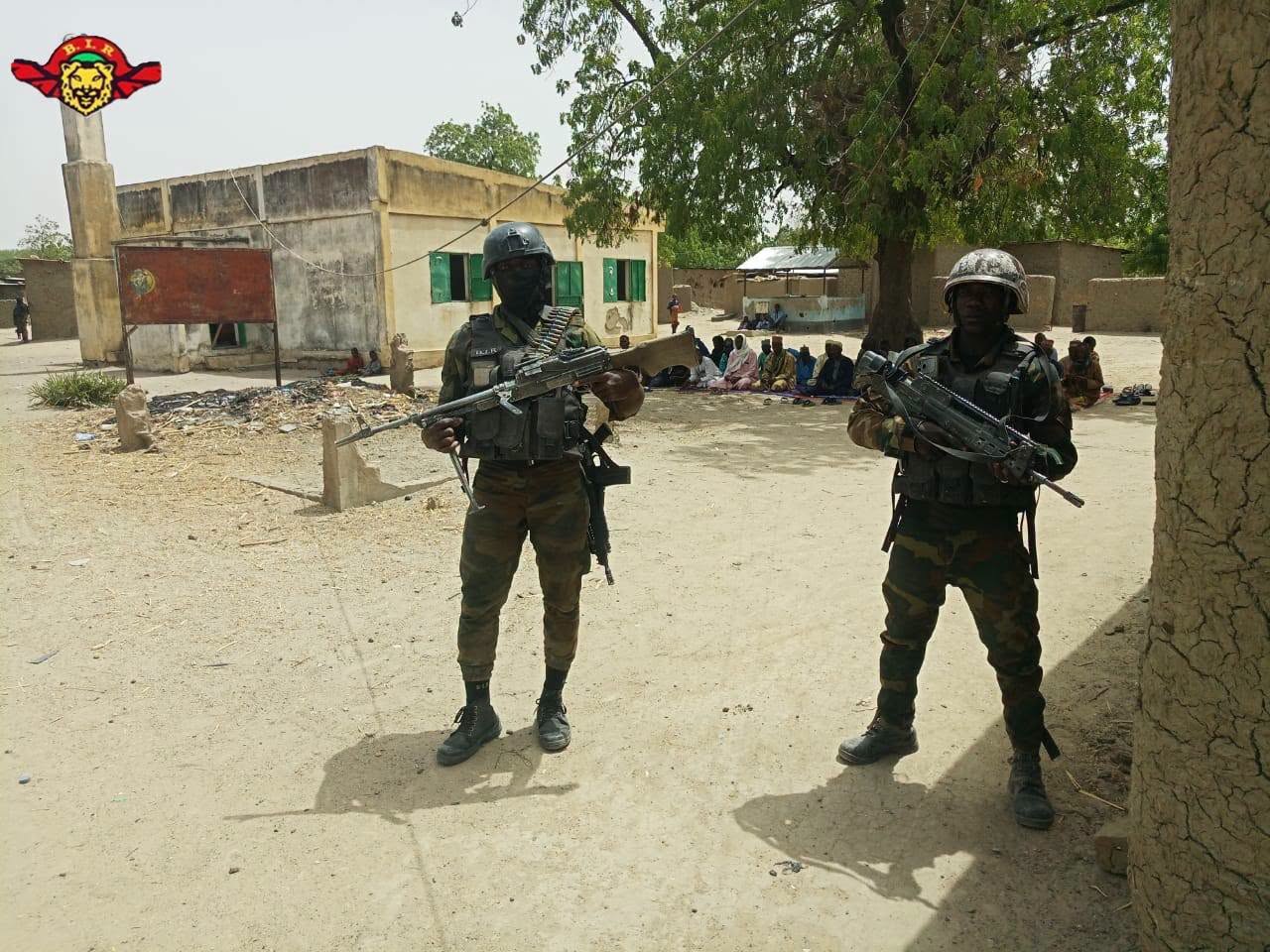
As part of the ongoing fight against terrorism, particularly the persistent threat posed by Boko Haram, the Operation Alpha mission of the Rapid Intervention Battalions (BIR) is placing a heavy emphasis on the safety of religious sites.
These sacred spaces are frequently targeted by extremist groups aiming to spread panic and disrupt social harmony. In response, the BIR has deployed reinforced surveillance and tailored protection measures to secure these sensitive areas.
Through consistent patrolling, a visible deterrent presence, and heightened alertness during religious gatherings, Operation Alpha works to intercept threats and provide a safe environment for worshippers. This initiative reflects the BIR’s unwavering commitment to civilian protection, the preservation of religious freedom, and the maintenance of peace and stability in the region.
The Rapid Intervention Battalion (BIR) is an elite branch of the Cameroon military that answers directly to the President of the Republic. Supported by the United States, this unit is actively engaged against Boko Haram insurgents in northern Cameroon and separatist factions in the western regions.
The BIR operates with its own distinct budget, separate from the Ministry of Defense, which is funded by the Société Nationale des Hydrocarbures (SNH). The unit carries its own flag, emblazoned with a lion symbol. Its central headquarters in Yaoundé is commonly referred to as Bastos, named after the district where it is located.
Between 2001 and 2008, the force was structured into three main battalions, corresponding to different joint military regions. Each battalion typically consists of a 145-man intervention unit, a specialized command and support section of 37 personnel, a 37-man special intervention unit, a command and support group of 97 members, and a light intervention group.