
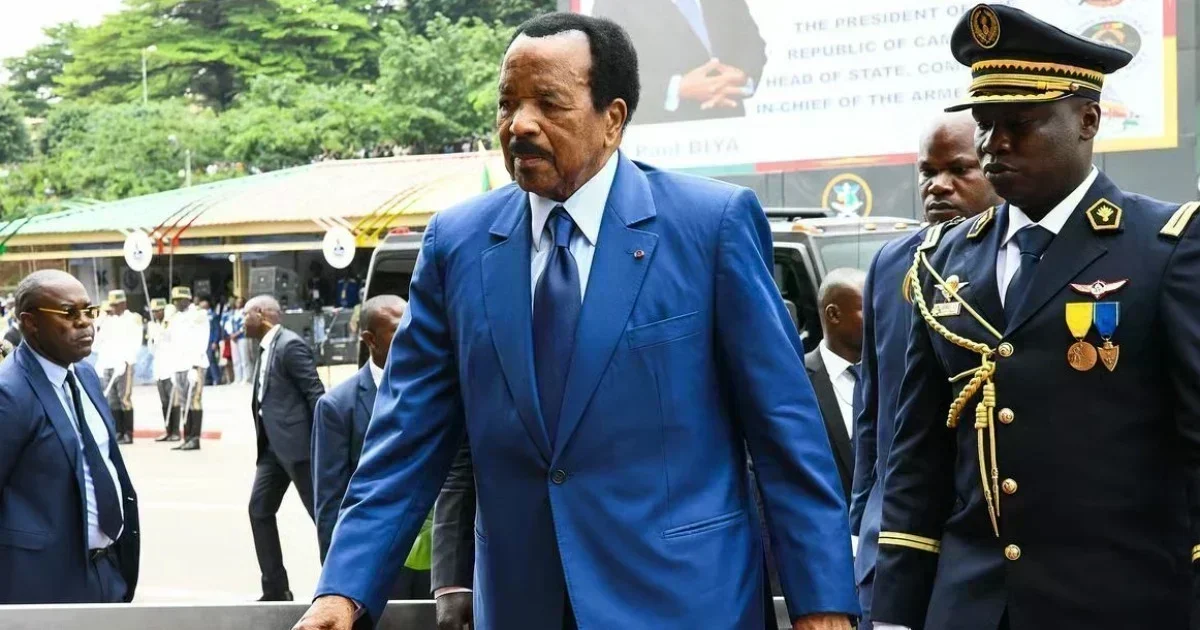
Cameroon is experiencing a significant shift in its military leadership, marked by a recent decree from President Paul Biya that reshapes the nation’s top defense hierarchy. The move comes as the 93-year-old leader, the world’s longest-serving head of state, remains absent from the country—a situation that has intensified public scrutiny and raised questions about his continued governance.
New security appointments signal tightened presidential protection
On August 3, a presidential decree formally appointed four high-ranking generals to key security roles, including the leadership of the Presidential Guard. This marks the first time a general has been named to head this critical security unit, which is responsible for protecting the president. The appointments underscore an effort to reinforce the president’s immediate security apparatus during his extended absence.
Key military figures gain new responsibilities
Among the appointees is General Raymond Jean Charles Beko’o Abondo, who now leads the Presidential Guard. Additionally, General Ebaka Hypolite, aged 73, has been named Major General of the Armed Forces—while retaining his previous role as Major General of the Ground Forces. This dual appointment highlights the continued reliance on experienced leadership within Cameroon’s military structure.
The Major General of the Armed Forces ranks as the second-highest military authority in the country, directly under the Chief of Staff of the Armed Forces, General René Claude Meka. These changes reflect a broader strategy to consolidate control within the defense sector during a period of political uncertainty.
Ongoing absence fuels national debate
President Biya, who has been in power since 1982, left Cameroon on June 7 for what was described by the presidency as a “private stay in Europe.” His absence, now approaching two months, has sparked widespread debate over his ability to fulfill his duties at a time when national leadership is under intense focus.
Government officials have dismissed claims of deteriorating health, insisting that Biya remains in control of state affairs and is expected to return soon. However, the opposition has seized on the situation, accusing the administration of operating in “institutional limbo” and warning of a country running on “autopilot.”
Critics point to the delayed formation of a new government and the long-awaited appointment of a vice president as evidence of a leadership vacuum. The prolonged absence of a sitting president, especially one of Biya’s age and tenure, has intensified national conversations about governance, succession, and the future of Cameroon’s political stability.