
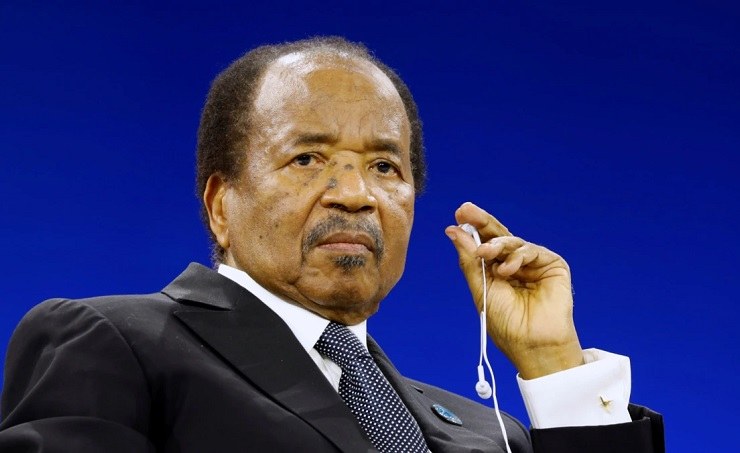
Fifty-six days of silence have ended. The Cameroonian government has finally confirmed that President Paul Biya is alive and that his return is imminent, yet the announcement has done little to dispel the deep uncertainty gripping the nation.
Government breaks months-long silence on Paul Biya’s whereabouts
For 56 consecutive days, Africa’s oldest serving leader remained invisible, sparking widespread speculation about his health and the stability of the government. On August 2, 2026, Minister of Communication and government spokesperson René Emmanuel Sadi broke the official silence in a national broadcast. “The president is alive,” Sadi declared firmly. “There is no power vacuum.”
The statement, though intended to reassure, has only deepened public skepticism and raised new questions about the president’s prolonged absence and the government’s handling of the situation.
Paul Biya: Africa’s longest-serving president at 93
Paul Biya, aged 93, has led Cameroon since 1982, accumulating over four decades in power. On June 7, 2026, he left Yaoundé for what was initially described as a brief private visit to Europe. However, what was meant to be a short trip has turned into one of the longest absences in his decades-long tenure, surpassing even his 42-day stay abroad in late 2024.
During this period, government activity was minimal—limited to routine military decrees and official telegrams, including congratulatory messages to France on its National Day. No images, speeches, or public appearances were released, leaving citizens and observers to fill the void with their own interpretations.
A nation held hostage by uncertainty
Local media outlets have been vocal about the consequences of the president’s absence. “Fifty days is too long!” declared the front-page headline of Le Messager, a leading Douala-based newspaper. The editorial criticized the government’s inaction, describing a nation paralyzed by indecision, a government rendered impotent, and a people living in perpetual anxiety about the future.
The opposition has not remained silent. Jean-Michel Nintcheu, a prominent opposition deputy, has formally called on the Constitutional Council to declare a power vacuum. The opposition party UDC has argued that the stability of a republic cannot depend on silence or assumptions, also highlighting the absence of a vice president—a position left vacant since a constitutional revision in April 2026.
Government responds: “The president is alive”
René Emmanuel Sadi addressed the nation in an exclusive interview, carefully weighing his words. He dismissed claims of a power vacuum outright, stating, “Those in the opposition calling for the declaration of a power vacuum should review the constitution with greater rigor and objectivity.”
He reiterated the constitutional reality: the Constitutional Council has not ruled on any vacancy. “President Paul Biya is alive. He has not resigned.” However, when pressed for a return date, Sadi remained evasive. “I cannot tell you exactly when President Paul Biya will return. Even if I knew, it would not be my place to announce it here.” Yet he offered a reassurance: “I can tell you that he will return very soon.”
Is the president’s absence legally justified?
The debate has also turned to the legal framework governing presidential absences. While some analysts argue that the Constitutional Council should intervene after 45 days, the Cameroonian Constitution does not specify any time limit for presidential stays abroad. The UDC has pointed out this legal loophole, describing it as a dangerous institutional void.
The government has relied on this constitutional ambiguity to justify the prolonged absence, while critics accuse it of fostering instability and opacity.
Public reaction: relief mixed with skepticism
On social media, reactions have been mixed. Some citizens expressed relief at the government’s announcement, while others remain unconvinced. “Paul Biya is the luckiest president in the world,” commented one user. “He can do as he pleases, when he pleases, with no consequences.”
Others pointed to the record-breaking duration of this absence—over two months—as fuel for speculation about the president’s health. The government’s vague promise of a “very soon” return may do little to quell the growing demand for transparency.
The unspoken question: what comes after Biya?
Beyond the immediate uncertainty, a deeper question looms: the future of Cameroon after Paul Biya. At 93, his prolonged absence has intensified discussions about succession and governance. The UDC has called for an institutional process to regulate future presidential absences, framing it as a matter of transparency and stability.
What remains unresolved
Despite the government’s statement, key questions persist:
- Where is Paul Biya? Unconfirmed reports suggest he may be in Switzerland with members of his inner circle, but no official confirmation exists.
- What is the exact nature of his stay? Described as “private,” the prolonged duration and lack of clarity have fueled concerns.
- When will he return? The government’s promise of an imminent return offers no concrete timeline.
- What is his state of health? The only official confirmation is that he is “alive.”
Will the government’s announcement be enough?
The government’s delayed and vague response has left many unconvinced. By the time it spoke, rumors had already taken root, and the lack of specifics risks further eroding public trust.
René Emmanuel Sadi has defended the government’s position, citing constitutional legitimacy and promising a swift return. Yet, in a system where power is deeply personalized, the words of a minister carry less weight than the silence of a president who has ruled for over four decades.
Cameroon holds its breath
As the nation waits for Paul Biya’s return, the episode has exposed deep vulnerabilities in Cameroon’s governance. The crisis has not only tested the resilience of its institutions but also highlighted the urgent need for clarity on leadership transitions and accountability.
For now, Cameroonians wait. They wait for their president. They wait for answers. And above all, they wait to see if the “Lion of Africa” will indeed roar again.