
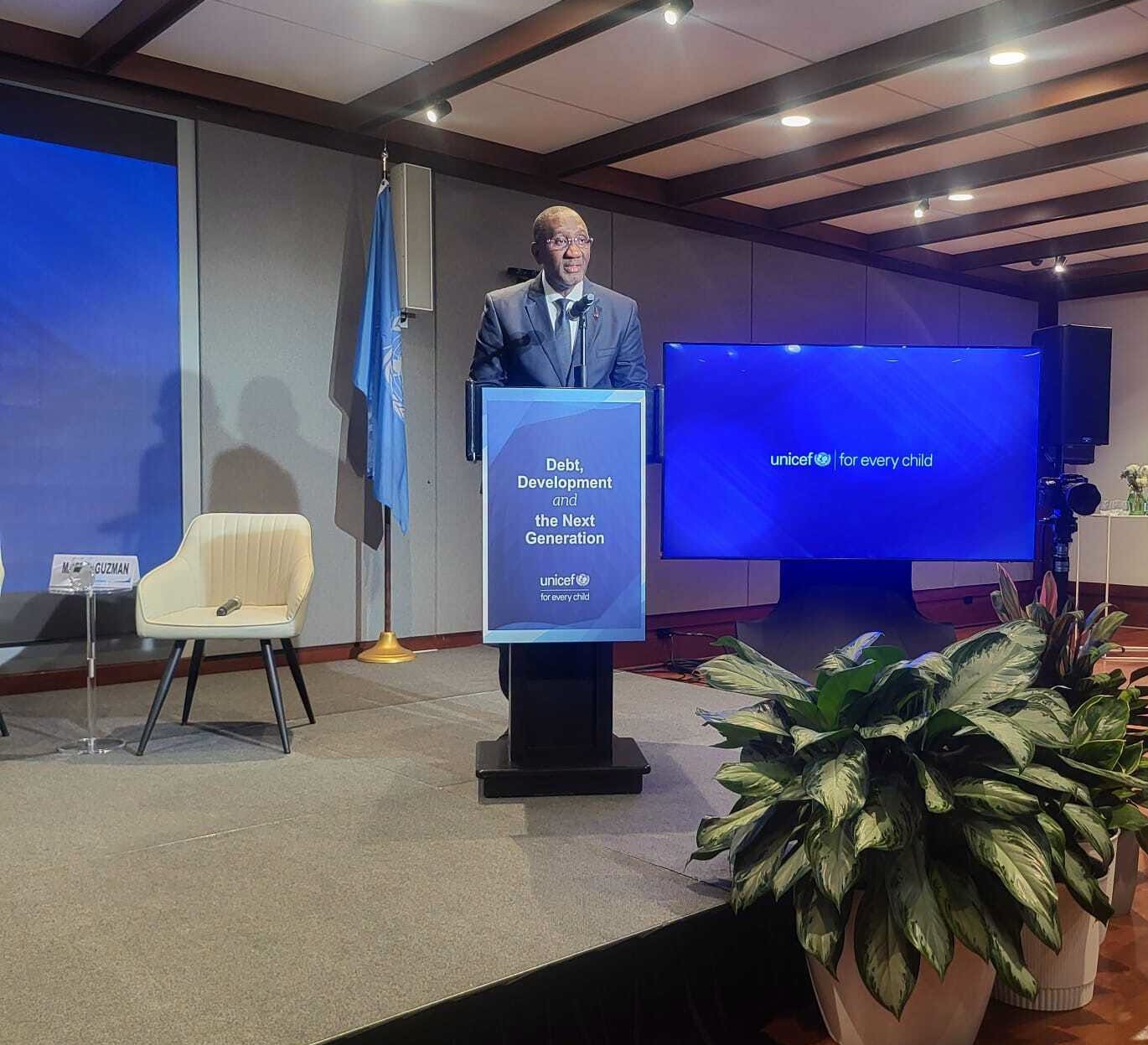
In a decisive move that marks a turning point in how developing nations approach the delicate balance between debt and human capital, Côte d’Ivoire took center stage at two high-level meetings in New York on September 21 and 22, 2026, convened by UNICEF. The sessions—one on financing artificial intelligence in education, the other on debt’s impact on future generations—became the platform where the West African nation unveiled a bold vision: debt that serves people, not the other way around.
Dr. Souleymane Diarrassouba, Minister of Planning and Development, presented Côte d’Ivoire’s experience and the strategic choices made to protect investments in human capital, signaling a major shift in the country’s development financing approach.
The ai-education nexus: a new frontier for financing
On September 21, the Minister intervened within the Learn AI Global Compact, a UNICEF initiative themed “Responsible AI for every learner,” to share Côte d’Ivoire’s pioneering experience in sustainability-linked financing.
In 2025, the country adopted a dedicated framework and secured a €433.3 million loan whose financial terms adjust based on results in renewable energy and forest restoration. The operation benefits from a joint guarantee from the International Bank for Reconstruction and Development (IBRD) and the Multilateral Investment Guarantee Agency (MIGA)—marking the first sovereign sustainability-linked loan in West Africa.
Expanding the model to human capital
In New York, the possibility of extending this method to human capital through a sustainability-linked bond was explored. Under such a mechanism, the loan’s financial conditions would be tied to learning outcomes measured at the national level.
Such a device requires reliable and verifiable learning indicators, along with prudent management of financial risks. The loan’s duration must remain consistent with that of the investments financed. The protection of children’s data and the responsibility of states and teachers in pedagogical choices are also among the principles highlighted by Côte d’Ivoire.
The National Development Plan (PND) 2026-2030 envisions increased use of digital technology and artificial intelligence, particularly in the education and training sector. Côte d’Ivoire expressed its readiness to continue working with UNICEF and partners of the Learn AI Global Compact on verifiable learning indicators and an adapted guarantee mechanism.
Debt with a human face: redefining the narrative
On September 22, the Minister spoke at a second high-level UNICEF meeting on debt, development, and future generations.
According to UNICEF, nearly 400 million children live in countries where debt burdens are growing faster than investments in health, education, and nutrition.
The Minister reiterated Côte d’Ivoire’s position: the impact of debt on populations depends on its allocation, structure, and cost.
The PND 2026-2030 provides the reference framework for this policy. It places significant emphasis on human capital, skills, and employment, and sets objectives for maternal and child health, universal health coverage, social protection, and improving the human capital index.
A track record of strategic debt management
Côte d’Ivoire simultaneously pursues debt management based on risk control, fiscal sustainability, and the search for better financing conditions.
In 2024, with support from the World Bank Group, the country executed a debt-for-development swap. Nearly €400 million in commercial debt was refinanced. The operation is expected to generate approximately €330 million in budgetary resources over five years, a significant portion of which is allocated to education through national budgetary mechanisms.
“A debt with a human face is not a debt erased. It is a debt whose allocation, structure, and cost are placed at the service of health, education, and child protection,” declared Dr. Souleymane Diarrassouba.
Charting the course: from principles to action
Through these two interventions, Côte d’Ivoire presented the choices guiding its development financing policy: preserving debt sustainability, directing resources toward national priorities, and exploring new instruments when they can contribute to the objectives of the PND 2026-2030. Education, health, social protection, and more broadly, human capital development remain at the heart of these priorities.
The momentum built in New York signals a decisive shift—one where financial engineering meets human impact, and where the true measure of debt is not its size, but the future it builds.