
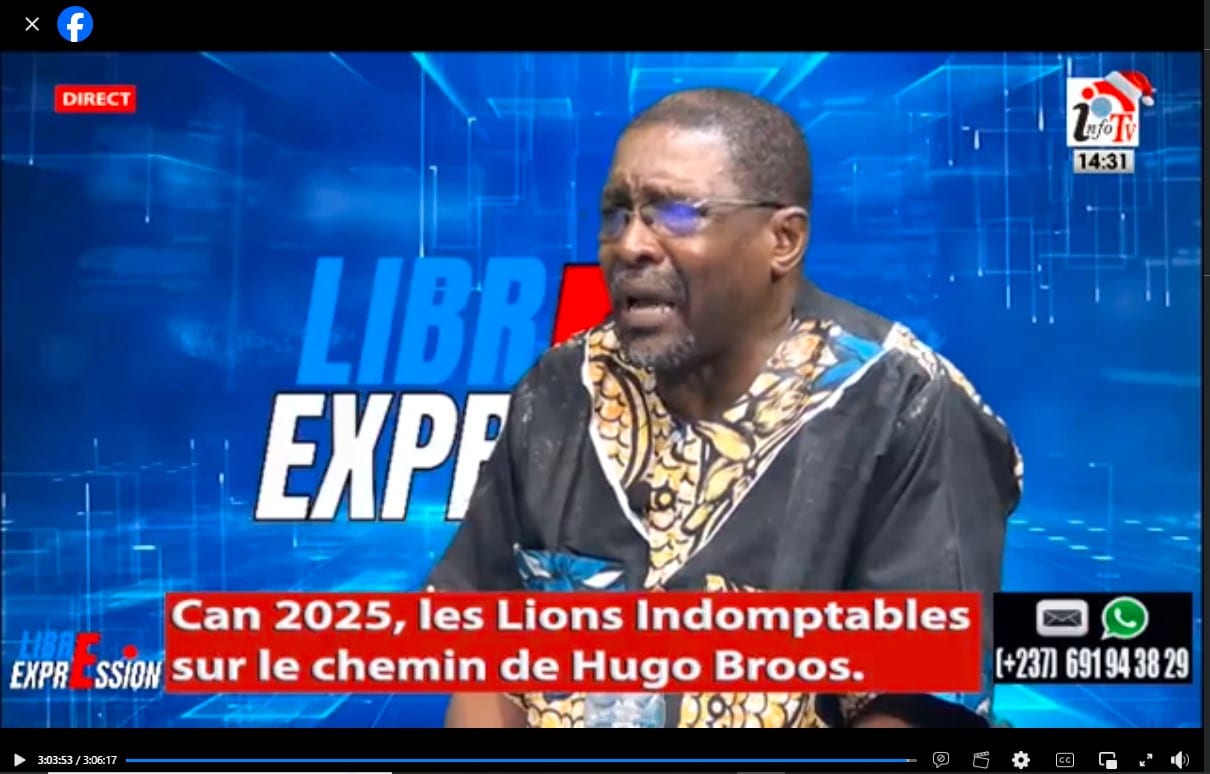
Cameroon’s citizenship and identity: equality over origin
According to Oscar Njiki, the Constitution guarantees equality for all citizens. Rights are based on citizenship, not origin. Autochtony is a cultural identity, not a legal privilege.
Drawing from the insights of Oscar Njiki, Cameroon’s Constitution stands as a guarantor of citizen equality. Individual rights are fundamentally tied to one’s citizenship, not to their ancestral origins. Njiki firmly posits that autochtony constitutes a distinct cultural identity, rather than a legal entitlement or a source of privilege.
Let’s delve into his comprehensive analysis:
can a cameroonian citizen be considered autochthonous everywhere in Cameroon?
The straightforward answer is no. Autochthonous status is not a universal quality inherently conferred by citizenship. It is deeply rooted in a shared memory, a specific lineage, and a collective history. Simply owning a plot of land, settling there, or investing in it is insufficient to attain autochthonous recognition. Indigenous communities share an profound, almost sacred connection with their ancestral lands; these territories are perceived as an extension of their very identity. The customary rights associated with these lands cannot be transferred through a mere commercial transaction; they are extinguished upon cession.
autochthonous status is not universally applicable.
2) is it essential to be autochthonous to truly feel at home?
Not at all. Citizenship transcends the concept of autochtony. Every Cameroonian citizen possesses the right to feel at home in any region of Cameroon. The legitimacy of their settlement is not dependent on their origins but on their membership in the national community. Being a Cameroonian means having full rights of residence in places like Yaoundé, Bangangté, or Maroua, entirely free from any autochthonous prerequisites.
every cameroonian citizen belongs everywhere in Cameroon.
3) does autochthonous status grant unlimited access within one’s own village?
No, it does not. Even within a village, all space is structured by defined property rights. Each individual maintains ownership of their lands, homes, and fields. Autochthonous status does not authorize trespass or the appropriation of another person’s belongings. An allogeneic individual who holds legal property within an autochthonous village is rightfully at home there, as legal possession establishes a right recognized and protected by law.
autochthonous status does not confer all rights to autochthonous people; allochthonous status does not diminish the rights of allogenes.
4) do autochthonous individuals possess more rights in their village than allogenes?
Absolutely not. The law is singular and applies uniformly across the nation. The Constitution explicitly guarantees the equality of all citizens. Rights are determined by one’s citizenship, not by their origin. Autochtony serves as a cultural identifier, not a foundation for legal advantage.
autochthonous and allogeneic citizens are equal under the law.
5) exception: specific roles reserved for autochthonous citizens
An exception exists where the law designates certain official positions – specifically city mayor and president of the Regional Council – for autochthonous individuals. However, for the vast majority of other elected offices, including those for deputies, mayors, and councillors, no such autochthonous condition is required.
while two specific functions are reserved by law for autochthonous citizens, all other elected positions are accessible to all citizens, regardless of their origin.
In conclusion, the ongoing debate concerning autochtony and allochtony is ultimately a distraction. It confines citizens within fragmented identities and shifts attention away from what truly matters: our collective future. The crucial focus should not be on a competition of origins, but rather on the convergence of our shared destinies. Autochtony and allochtony should be acknowledged as rich cultural realities to be integrated within a unified and indivisible Republic, rather than being exploited as tools of division.
We must collectively align our vision, moving forward as the children of a single nation, rather than as rival micro-states within our country. For the future of Cameroon will not be built upon fragmentation, but upon unwavering unity, profound solidarity, and a shared consciousness of our common destiny.
OSCAR NJIKI