
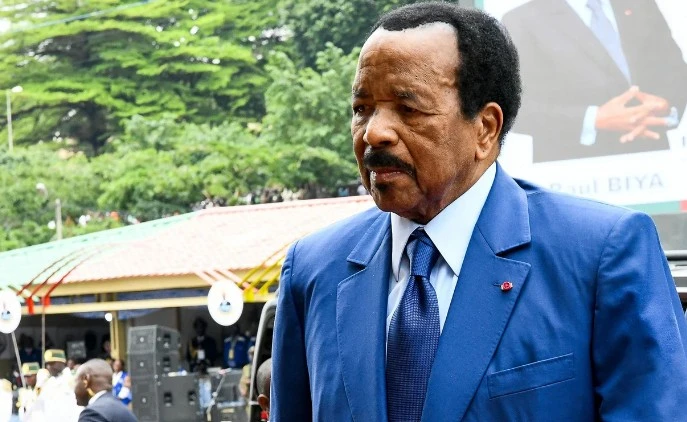
The 93-year-old leader of Cameroon has now been away from the country for 49 consecutive days, matching his longest absence this year. Since departing for what was officially described as a private trip to Europe on June 7, President Paul Biya has not made any public appearances. In newsrooms across Yaoundé, the silence has only deepened concerns.
An absence that echoes last year’s pattern
Reliable sources indicate the president is staying at a Geneva hotel, mirroring his 2024 stay. The government has moved quickly to dispel mounting rumors, with the Minister of Communication, René Emmanuel Sadi, publicly denying on June 18 any reports of Paul Biya receiving medical treatment at a Geneva clinic.
Despite these assurances, no recent photographs or videos have surfaced to support the government’s claims, leaving many unconvinced.
On Sunday, during a television appearance on the program Droit de Réponse on Equinoxe TV, Rdpc party activist Lucien Bidima asserted he had visited the InterContinental Geneva and met the president, describing him as “in excellent health” and actively engaged. Yet, without visual evidence—no photos, no videos—his testimony rings hollow, widely seen as another attempt to reassure the public.
Chantal Biya’s growing influence and the constitutional void
This time, the situation is different. Chantal Biya, the First Lady, appears to be playing an increasingly central role in state affairs. Her name has been linked to key government appointments, and reports suggest she now serves as a gatekeeper to the president during his trips abroad. This raises serious questions about access to power and the transparency of decision-making.
Adding to the unease is the fact that Cameroon still lacks a vice president. According to the constitution, in the event of a power vacuum, Senate President Aboubakary Abdoulaye would step in as interim leader. However, this constitutional mechanism has never been tested under such circumstances, leaving many in the political sphere deeply uneasy.
The prolonged absence, combined with the opaque handling of the situation, has done little to calm an already tense political climate in the country.