
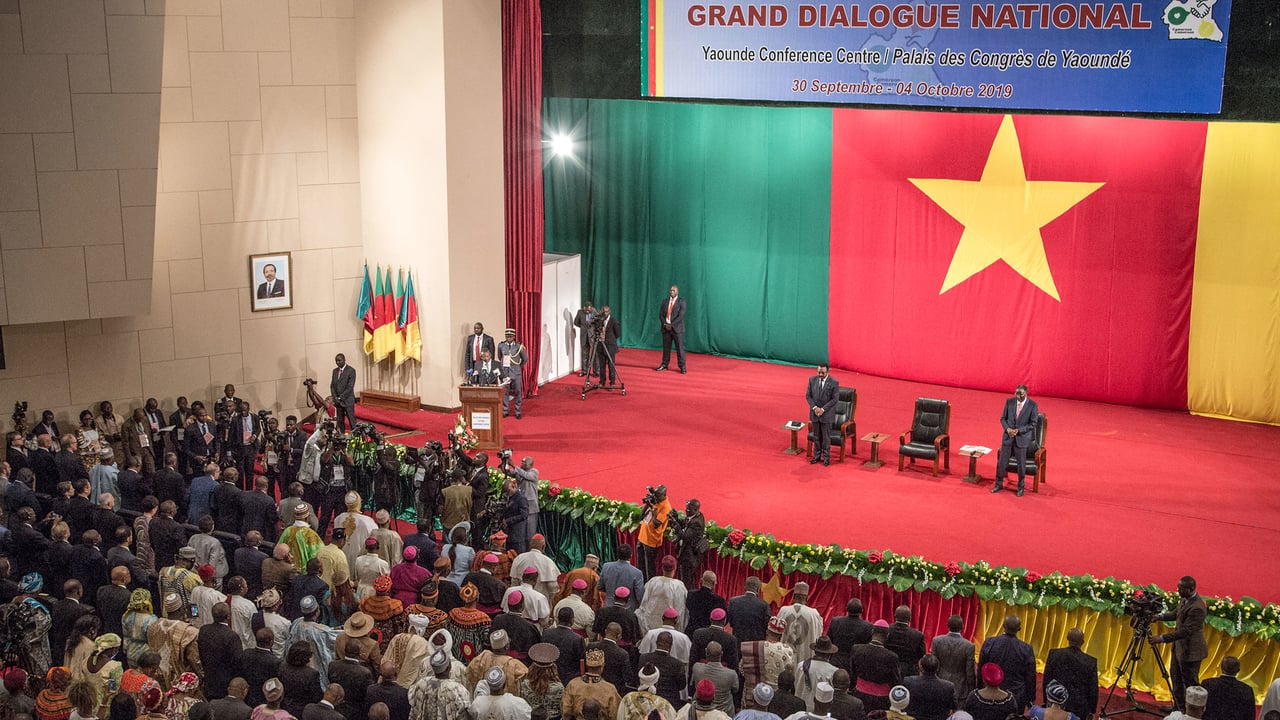

National dialogue sparks federalism debate in Cameroon
The Cameroon government’s national dialogue, launched in 2019 to resolve the Anglophone crisis, has reignited discussions about a return to federalism. The initiative, presided over by Prime Minister Joseph Dion Ngute, sought to address longstanding grievances in the country’s North West and South West regions, where separatist movements have gained traction.
However, the absence of key rebel leaders at the discussions has cast doubt on the potential for meaningful progress. While the government has framed the dialogue as an opportunity for reconciliation, critics argue that without inclusive participation, the process risks falling short of its goals.
Historical context of federalism in Cameroon
The debate over federalism in Cameroon is not new. The country operated as a federal state from 1961 to 1972, following the union of French-speaking and English-speaking regions. The shift to a unitary state under President Ahmadou Ahidjo and later Paul Biya centralized power, sparking tensions that persist today.
Proponents of federalism argue that a return to this system could grant greater autonomy to the Anglophone regions, addressing cultural and political disparities. Opponents, however, warn that decentralization could further fragment the nation, complicating governance and economic stability.
Challenges to restoring federalism
The path to federalism faces significant hurdles. The government’s reluctance to fully accommodate separatist demands, coupled with the rebels’ refusal to engage, has created a deadlock. Additionally, economic disparities between regions and the ongoing security crisis in the Anglophone zones add layers of complexity.
While Prime Minister Ngute has emphasized the need for dialogue, the lack of consensus among stakeholders suggests that a return to federalism remains uncertain. The crisis in the Anglophone regions continues to strain national unity, leaving many to question whether the current approach will yield lasting solutions.
Public sentiment and political implications
Public opinion in Cameroon is divided. Some citizens view federalism as a necessary step toward justice and equality, while others fear it could weaken national cohesion. Political leaders, meanwhile, remain cautious, balancing competing interests to avoid further destabilization.
The federalism debate underscores deeper questions about Cameroon’s future. As the government navigates this delicate issue, the outcome will shape the country’s trajectory for years to come.