
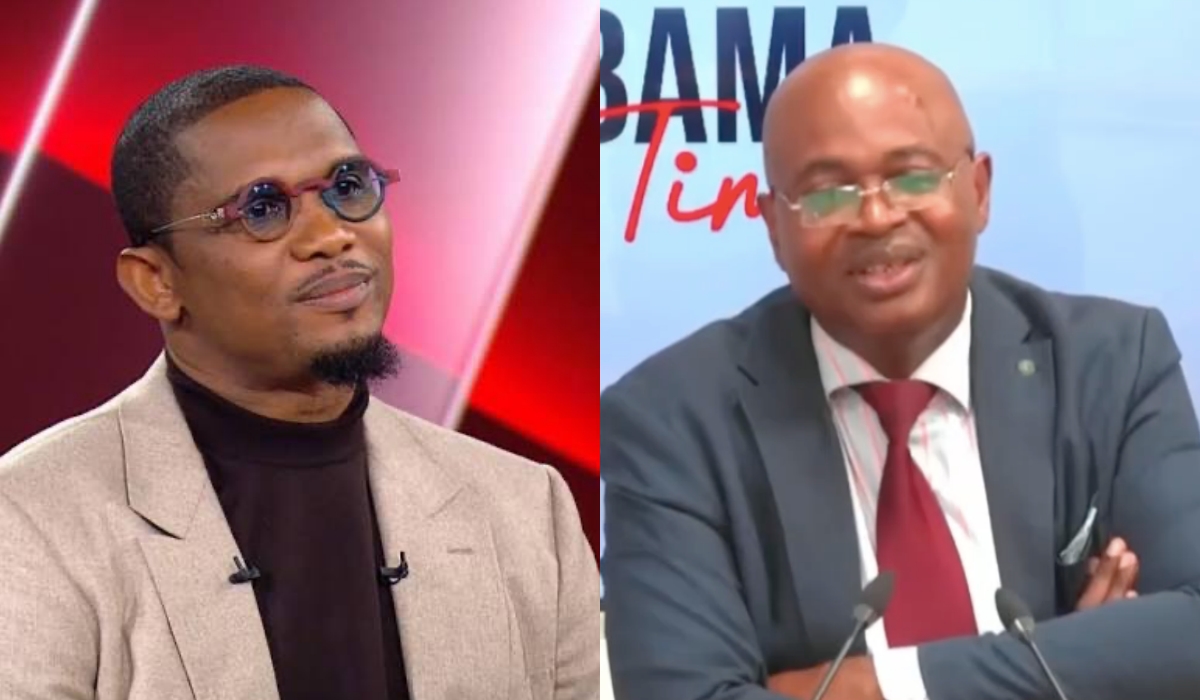
According to Jean Rodrigue Atemengue, in a country where a long-awaited government reshuffle remains stalled for months, public discourse should not be held hostage by a ball.
Camerounians must face a difficult reality. Our national team, the Lions Indomptables, failed to qualify for the upcoming World Cup. They will not be present on the world stage. Yet, despite this absence, our society remains trapped in endless disputes over football, federation politics, and matches that do not even involve us. While these debates rage, the wounds of our nation continue to fester.
Are our national priorities misplaced?
There is a disturbing trend at play. Football, which was once a powerful unifying force and occasionally a tool for national distraction, is now in a state of total disarray. The very medium used to divert attention is itself crumbling.
The state of football in Cameroun, once the pride of the continent and a symbol of our ability to compete with the world’s best, is now a mere shadow of its former glory. We are witnessing contested management, personal vendettas, recurring scandals, and a federation constantly mired in controversy. With crumbling infrastructure and young talents left to fend for themselves, our failure to qualify for the World Cup is simply the logical conclusion of this internal decay.
We are not participating in the World Cup, yet some attempt to keep football at the center of public discourse as if nothing has changed. It is a striking paradox: the public is expected to remain obsessed with a sport that many see as being in a state of terminal decline.
The sport itself is not the enemy. Football remains a legitimate passion and a source of national identity that transcends political and social divides. Figures like Samuel Eto’o are rightly admired for their legendary careers. However, football cannot serve as a veil to hide the critical questions regarding our nation’s future, particularly when our team is absent from the global stage.
The urgent issues we should be discussing
In a country where the executive branch has failed to deliver a promised reshuffle for months, the ball should not dominate the news. In a country where the Parliament held an extraordinary session to create a Vice-President position that remains empty months later, the health of our institutions should be the priority.
When the Council of Ministers and the Higher Judicial Council have not met in years, we must question the state of our institutional normalcy. When ministers resign only to be replaced by temporary officials for extended periods, and when high-ranking officials pass away without being replaced, our focus is clearly in the wrong place.
In a nation where a judge signs an arrest warrant only for administrative notes to block its execution, the rule of law is what should concern us, not the FIFA rankings. When a court-ordered provisional release is publicly dismissed as a forgery, the integrity of our justice system is what requires citizen mobilization.
Furthermore, while our roads deteriorate, public projects go unfinished, and access to clean water and electricity remains a luxury for many, we cannot justify making football our primary topic of conversation. With rising living costs and high unemployment among graduates, the priorities must shift.
Who benefits from this distraction?
Every time public debate fixates on a football scandal, institutional, economic, and social crises are pushed into the shadows. Intellectuals, academics, and journalists have a duty to resist this. Focusing on sporting noise while the country faces existential institutional questions risks choosing spectacle over substance and emotion over analysis.
We do not have to give up on football, but we must rank our priorities. Once our institutions are functional, our justice system is trusted, our roads are paved, and our youth have jobs, we can talk about football as much as we like. But today, using the sport as a primary focus is a way of turning a blind eye to urgent challenges.
Camerounians deserve a public debate that matches the scale of our difficulties. We deserve governance that inspires confidence and a transparent justice system. History will remember those who dared to ask the right questions, not those who preferred to argue about a tournament we aren’t even attending.