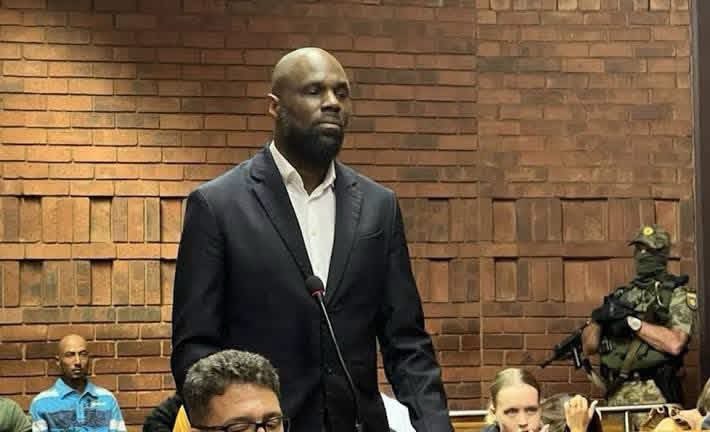
The Kemi Seba case has taken a decisive turn following the judge’s decision to deny the activist’s request for bail. This ruling comes at a time when prosecutors have revealed disturbing details about a suspected international escape plot, prompting intense scrutiny over the network behind it.
Héry Djehuty at the heart of the investigation: Who initiated the first contacts?
The central figure in this investigation is Héry Djehuty, coordinator of Urgences Panafricanistes and a close associate of Kemi Seba. Prosecutors allege that he was the one who established the initial links with foreign intermediaries involved in the alleged exfiltration scheme. This raises critical questions: Who instructed him to make these contacts? Was this an official request or a personal initiative? And how deep was Seba’s inner circle involved in the planning?
The sequence of these early exchanges could reveal the origins of the entire escape network, as well as the identities of those who played a role in its formation. If Djehuty acted on instructions, it would point to a structured operation rather than a spontaneous effort.
Financial irregularities: Were collected funds misused?
Another pressing issue revolves around the funds collected by Héry Djehuty under the guise of financing Kemi Seba’s legal defense. However, the investigation now questions whether these resources were diverted to support logistical arrangements for an escape. Prosecutors have raised concerns about the possibility that financial contributions from supporters may have been used for purposes other than their declared intent.
Key unresolved questions include: What was the total amount collected, and who received the funds? Were there legitimate expenses for legal representation, or did some of the money facilitate the planning of an international escape? The transparency of these financial transactions has become a major focal point in determining the legitimacy of the defense’s claims.
Russian intermediaries and South African rangers: The international network under scrutiny
Russian operatives and their alleged role
One of the most sensitive tracks in this case involves Russian nationals suspected of facilitating Kemi Seba’s clandestine departure. The investigation is now examining how these individuals were identified, the channels through which they were contacted, and the nature of the agreements proposed to them. An international exfiltration operation requires coordination, resources, and secure communication channels, all of which demand meticulous planning.
Crucial questions remain unanswered: Who was responsible for funding the logistics of such an operation? Were external sources of financing involved, or did the financial burden fall entirely on sympathizers? The answers could determine whether this was an improvised plan or a well-coordinated effort.
South African rangers: Logistical facilitators or security operatives?
Another dimension of the investigation involves individuals described as South African rangers, whose profiles suggest they may have played a role in the suspected escape plot. Their involvement raises further questions about the nature of their duties were they meant to provide logistical support, secure travel routes, or assist in the operational execution of the plan?
The investigation must now determine whether these rangers had any connection to the Russian intermediaries and whether Héry Djehuty’s initial contacts facilitated their involvement in the scheme.
The role of South African intelligence: Did authorities know?
The potential involvement of foreign intelligence services, particularly South African agencies, adds another layer of complexity to this case. Authorities are examining whether these services were aware of the contacts between intermediaries and whether they monitored the individuals involved. The timeline of communications and movements among the suspects could reveal whether local or international surveillance was in place.
If intelligence services had prior knowledge, it would suggest that the escape plot was not entirely clandestine and that multiple entities may have been involved in its prevention or facilitation.
Bail denied: The flight risk that shaped the ruling
The rejection of Kemi Seba’s bail request underscores the gravity of the situation. Prosecutors have argued that the risk of flight is substantial, given the evidence of an international escape network that was allegedly in the final stages of preparation. The judge’s decision reflects concerns over the potential obstruction of justice and the possibility of Seba evading legal proceedings.
While the ruling is based on legal considerations, the full extent of the escape plot’s sophistication remains unclear. Investigators must now assess whether the network was operational or merely theoretical, and whether the funds collected were sufficient to execute such an operation.
Unanswered questions and the path forward
The denial of bail is just one chapter in this unfolding investigation. Several critical questions remain unanswered:
Who directed Héry Djehuty to initiate contact with foreign intermediaries?
What was the relationship between the Russian operatives and the South African rangers?
Who was responsible for funding the logistics of an escape?
Were the collected funds used exclusively for legal defense, or were some diverted for other purposes?
Did South African intelligence services have prior knowledge of the plot?
Did Kemi Seba have any awareness of the actions taken by his associates?
The answers to these questions will not only determine the legal fate of those involved but also reveal the extent of the international reach of this alleged escape network. The investigation must now focus on reconstructing the timeline of events and establishing individual responsibilities.
A case with far-reaching implications
The Kemi Seba case has evolved from a legal dispute into an international affair with potential geopolitical ramifications. The network of contacts allegedly involved spanning multiple countries and involving diverse actors suggests a high level of coordination. The role of Héry Djehuty as a central figure in initiating these contacts places him at the forefront of the investigation.
Beyond the legal proceedings, this case raises broader concerns about the misuse of financial contributions, the potential infiltration of foreign operatives, and the vulnerabilities in national security frameworks. As the investigation deepens, the answers will shape not only the outcome of this case but also future measures to prevent similar plots from materializing.
By Yvette Tchuente — Journalist