
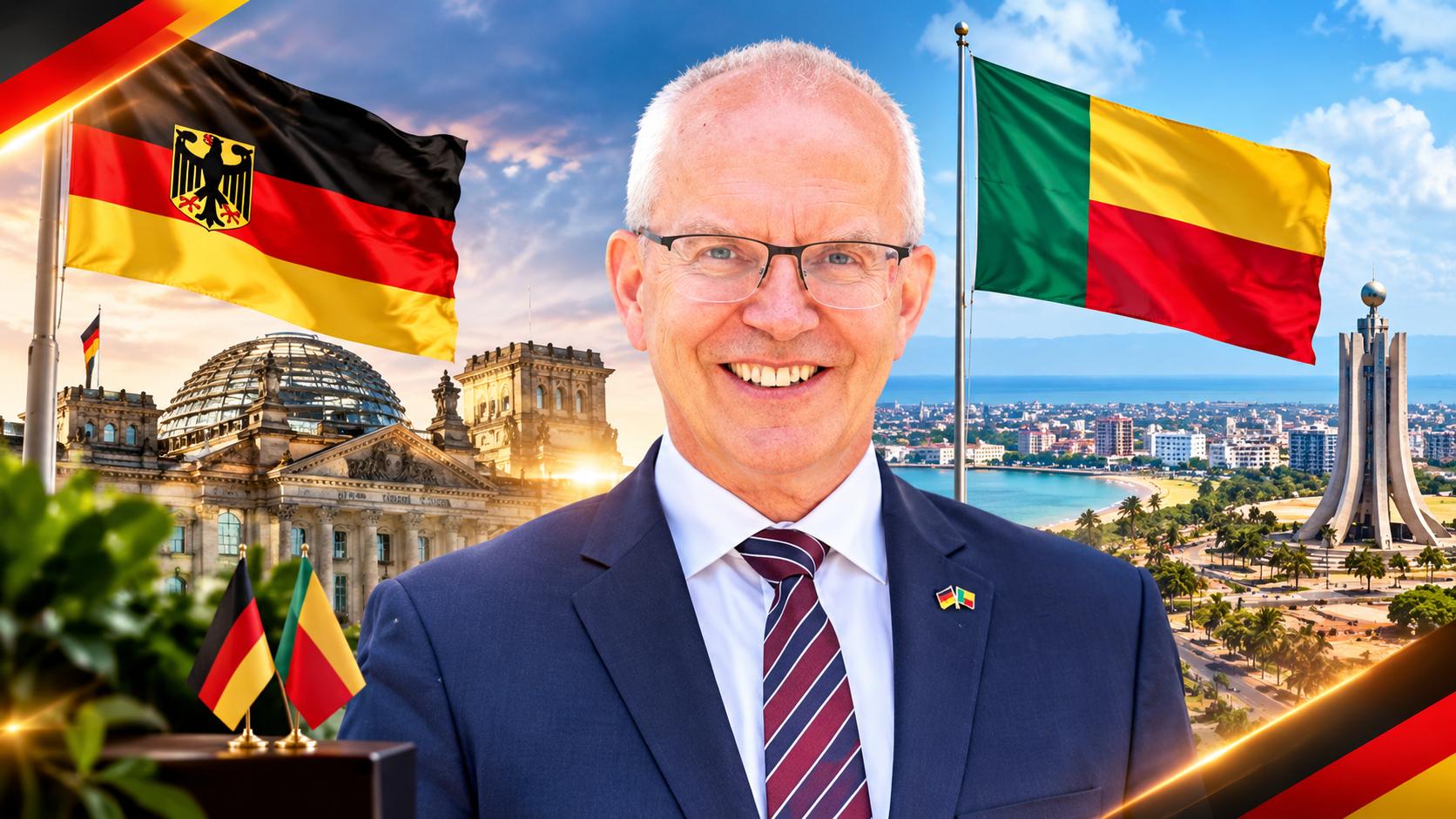
Why Berlin 2027 could hinge on what’s decided now with 15 million euros
The question isn’t just about the 15 million euros pledged by Germany to Benin during high-stakes bilateral talks in Cotonou last October. It’s whether this injection can catalyze lasting change before the 2027 intergovernmental negotiations in Berlin rewrite the future of their partnership.
Co-chaired by Hugues O. Lokossou, Benin’s Minister of External Resource Mobilization and Debt Management, and Dr. Silvia Morgenroth, Director of the West Africa Division at Germany’s Federal Ministry for Economic Cooperation and Development (BMZ), the October 2026 meeting set the stage for Berlin’s pivotal deliberations. But the real test lies in how swiftly and effectively these funds can bridge energy gaps, empower local businesses, and advance gender equity before the 2027 agenda takes shape.
Where the 15 million euros will flow: three critical focus areas
The German delegation’s announcement wasn’t an abstract commitment—it targeted structural gaps in Benin’s development roadmap. The 15 million euro allocation is earmarked for:
- Renewable energy transition: Funding a hybrid solar-hydroelectric expansion at the Nangbéto power plant, a key project for regional energy security and climate resilience.
- Small business growth and female entrepreneurship: Expanding technical advisory programs for SMEs, with targeted support for women-led enterprises to strengthen economic inclusion.
- Institutional strengthening aligned with Benin’s PAG reforms: Reinforcing fiscal decentralization, youth employment through vocational training, and environmental resilience in water management and biodiversity conservation.
These choices reflect a strategic alignment with Benin’s National Development Plan (PAG), signaling Germany’s intent to invest in systemic change rather than short-term fixes.
Berlin 2027 on the horizon: what’s at stake beyond the money
The timing of this pledge is deliberate. As the 2027 Berlin talks approach, Germany’s funding signals more than financial support—it’s a diagnostic of Benin’s reform progress and a vote of confidence in its trajectory. The core areas of cooperation announced underscore Germany’s priorities:
- Governance and fiscal transparency: Local budget management and decentralization reforms remain a litmus test for Benin’s institutional credibility.
- Youth skills and private sector dynamism: Bridging the gap between vocational training and market demands will determine whether Benin can harness its demographic dividend.
- Climate and ecological sustainability: Water resource management and biodiversity protection are no longer optional—they’re prerequisites for long-term economic stability.
The 15 million euro boost is a down payment. But Berlin 2027 will judge whether Benin can scale these initiatives into enduring pillars of partnership. The stakes are high: failure to deliver could derail not just energy access and entrepreneurship goals, but the broader trust in Benin-Germany cooperation.
From Cotonou to Berlin: the roadmap ahead
Both governments have framed their collaboration around shared values—rule of law, democracy, and multilateralism—but the proof will be in the execution. Berlin 2027 isn’t just a summit; it’s a milestone. Success hinges on:
- Accelerated project timelines to demonstrate tangible outcomes from the 15 million euro funds.
- Transparent reporting mechanisms to reassure stakeholders of progress, particularly in decentralized governance and SME support.
- Concrete benchmarks for environmental projects, ensuring measurable improvements in water management and biodiversity.
The October 2026 talks were a prelude. The real dialogue begins in Berlin—but it will be shaped by how Benin and Germany turn promises into results. As the clock ticks toward 2027, the question remains: can this 15 million euro pledge be the catalyst for a partnership that outlasts the headlines?