
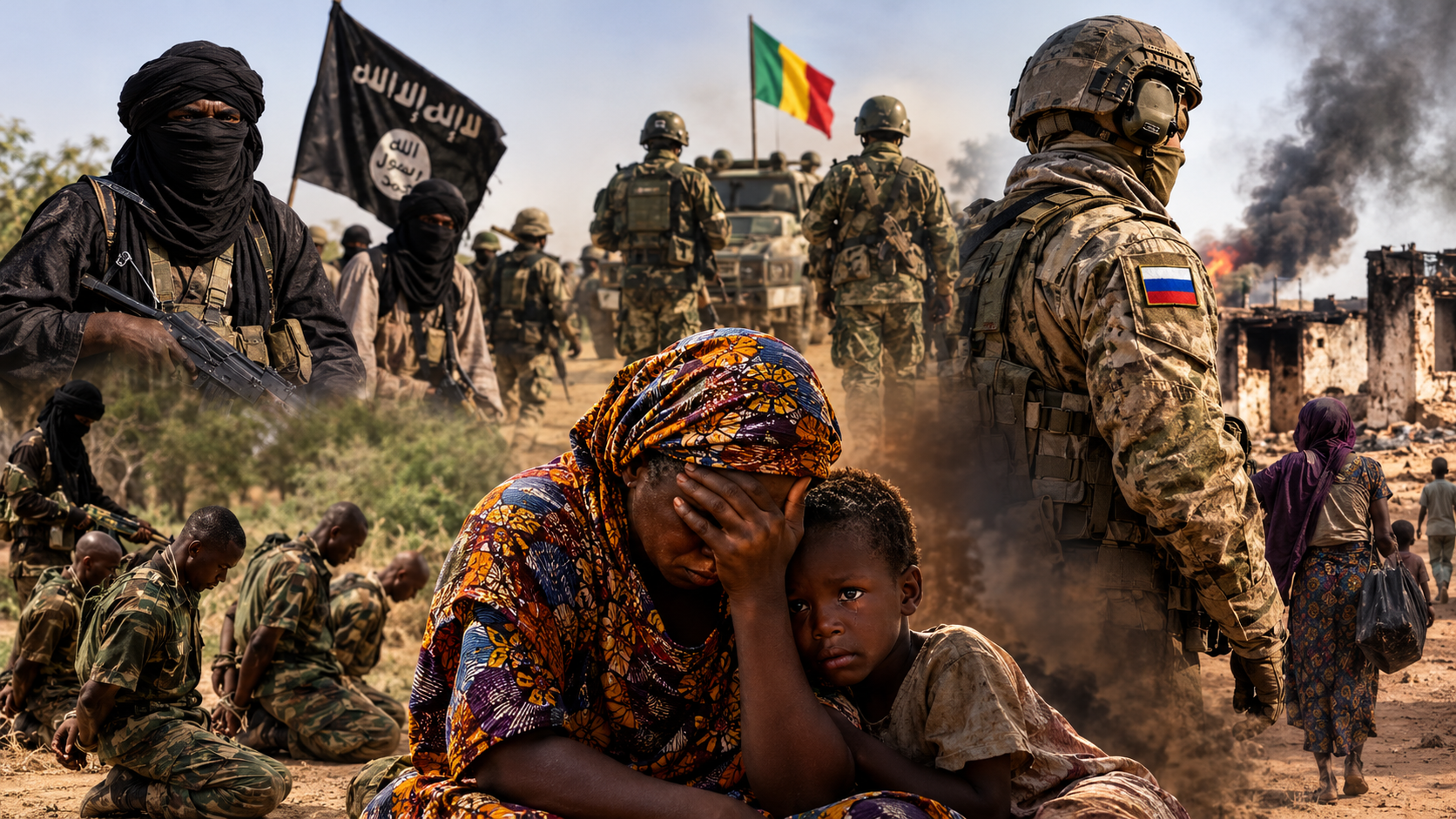
As the Group for the Support of Islam and Muslims (JNIM) intensifies its deadly strikes on Malian soldiers, a disturbing parallel crisis is unfolding: civilians are increasingly falling victim to alleged abuses by government forces, with Africa Corps providing critical military backing. This dual tragedy raises urgent questions about Mali’s security strategy, the protection of civilians, and the true cost of foreign military partnerships.
Why civilians bear the heaviest burden in Mali’s security crisis
Communities across Mali are caught in a brutal crossfire. While jihadist groups like JNIM execute soldiers in brazen attacks, civilians face an equally dangerous threat: military operations that are supposed to safeguard them. Reports indicate that government forces, supported by Africa Corps, have been linked to civilian casualties, adding another layer of suffering to an already fragile situation.
The human toll is devastating. Villages displaced by conflict now confront the fear of violence not only from armed groups but also from those tasked with their protection. This paradox exposes a critical failure in Mali’s security framework one that prioritizes territorial control over civilian safety.
Military failures and the erosion of trust in Mali’s security forces
Soldiers themselves are not immune to the violence. JNIM’s targeted attacks have decimated military ranks, forcing Bamako to rely heavily on foreign partners like Africa Corps to sustain its counterterrorism efforts. Yet, this dependency comes with a dangerous trade-off: as military operations grow more aggressive, so does the risk of collateral damage against civilians.
Human rights monitors have documented cases where military actions, even when aimed at jihadist strongholds, result in civilian fatalities. These incidents are not isolated aberrations; they reveal systemic flaws in military conduct and accountability. When soldiers are dying and civilians are dying, who is truly being protected?
The role of Africa Corps in Mali’s human rights dilemma
The partnership between Mali and Africa Corps has reshaped the country’s security landscape. While Bamako frames this collaboration as essential to regaining control over insurgent-held territories, the increasing incidence of civilian casualties under joint operations raises serious ethical and legal concerns.
International law mandates that all parties in a conflict including foreign forces must adhere to humanitarian standards. Yet, as accusations of civilian harm mount, questions persist: Are these operations conducted with sufficient care to minimize civilian casualties? Are there mechanisms in place to investigate violations and hold perpetrators accountable? The answers remain unclear, casting a shadow over the legitimacy of these military partnerships.
Beyond military operations: what does real civilian protection look like?
Mali’s security strategy cannot be measured solely by the number of military offensives launched or the territories reclaimed. True success lies in the ability of the state to protect its people from jihadist violence, from military overreach, and from the broader instability that fuels displacement and despair.
This demands more than just condemning JNIM’s attacks. It requires a fundamental shift in how Mali’s security forces operate. Military tactics must prioritize civilian safety over aggressive confrontation. Communities must have access to justice for abuses, whether committed by jihadists or government-aligned forces. And international partners, including Africa Corps, must ensure their involvement does not inadvertently contribute to civilian harm.
The path forward is fraught with challenges, but the stakes could not be higher. Will Mali’s leadership confront these failures head-on, or will ongoing abuses continue to undermine the very goal of security? For the people caught in the middle, the answer could mean the difference between survival and further devastation.
Accountability as the cornerstone of Mali’s fragile stability
Without accountability, no military strategy can claim legitimacy. The cycle of violence in Mali will persist as long as impunity reigns. Civilian deaths must be investigated with transparency, perpetrators must face consequences, and lessons must be learned to prevent future harm.
Only then can Mali hope to restore trust in its institutions and deliver on its promise of security for all. Until then, the question remains: How many more civilians must pay the price for a fight that claims to protect them?
By Henri Nkeng — Journalist