
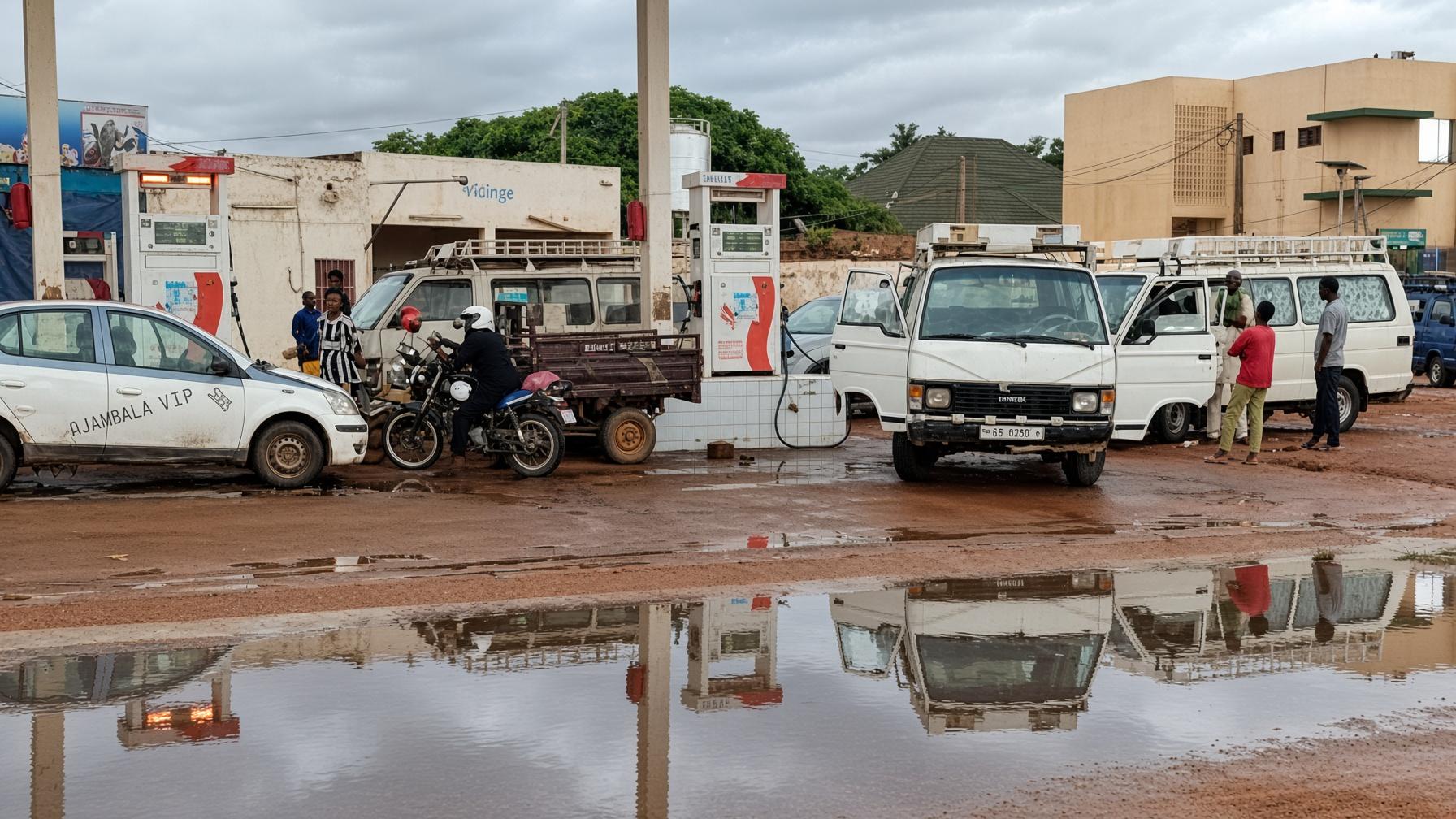
Niamey, Niger’s bustling capital, is now ground zero for an unfolding fuel catastrophe. What was once a simple stop at a gas station has spiraled into a daily marathon of frustration, with drivers queuing for hours at stations running on fumes. Government efforts to ease the chaos—such as sporadic lists of operational fuel outlets—have only intensified the scramble, funneling crowds into a shrinking number of pumps and turning desperate motorists into a seething crowd.
For Niamey, this isn’t just an inconvenience—it’s a full-blown economic paralysis. Fuel underpins everything from daily commutes to supply chains and small businesses. When the pumps run dry, livelihoods evaporate, and the ripple effects are already spreading across the city like wildfire. Public transport routes are collapsing under the strain, while fares skyrocket beyond what working families can afford. Meanwhile, opportunistic sellers in the shadows hawk watered-down fuel at predatory prices, leaving wallets—and engines—damaged in their wake.
Why the shortage isn’t just bad luck—it’s a systemic collapse
The Soraz refinery in Zinder, Nigeria’s answer to Niger’s energy independence, has failed to deliver even the most basic fuel needs. Internal Ministry of Petroleum documents, leaked in late 2026, exposed a gaping disparity: a shortfall of 196.62 million liters of gasoline and 52.60 million liters of diesel over the first eight months of the year. These damning admissions reveal that Niamey’s crisis isn’t a sudden shock—it’s a symptom of years of failed planning, where warnings were ignored and solutions delayed.
The domino effect began in mid-2026 when Nigeria eliminated fuel subsidies, cutting off one of Niamey’s last affordable supply routes. While this move was no surprise, Niger’s government remained paralyzed. Despite its potential to process 20,000 barrels daily, the Soraz plant is engineered primarily for diesel, leaving gasoline woefully undersupplied. Trapped in a scramble for emergency imports, Niger now hemorrhages funds, further destabilizing an already precarious energy ecosystem.
Half-measures that fuel the fire
The official playbook—limiting purchases and releasing patchy station lists—isn’t a strategy; it’s a confession of defeat. These stopgaps don’t fix the shortage—they relocate it, forcing citizens into a revolving door of frustration. Each time a shipment arrives, drivers rush to claim their share, only to be left empty-handed as supplies vanish within hours.
Transparency has evaporated. When Nigeriens demand answers on stock levels and distribution schedules, officials retreat into silence, fanning the flames of rumor and panic. Whispers of corruption and mismanagement spread unchecked, while the Minister of Petroleum dismisses allegations without evidence or accountability. This culture of secrecy has eroded public trust, leaving residents feeling abandoned in their time of need.
The real victims: ordinary lives hanging in the balance
The true cost of this crisis isn’t measured in headlines—it’s paid in wasted days, crushing debt, and shuttered dreams. Commuters sacrifice entire workweeks in line, motorcyclists take on cripplementing loans to pay black-market rates, and local vendors watch their profits evaporate. If the shortage persists, soaring transport costs will ignite a broader inflation crisis, pushing essential goods out of reach for thousands of families.
The rise of unregulated fuel markets isn’t a bandage—it’s a warning. By outsourcing distribution to rogue operators, the government has left its people defenseless against both financial exploitation and mechanical ruin. In a city where energy is the backbone of survival, this abdication of duty isn’t just inefficient—it’s a betrayal of public trust.