
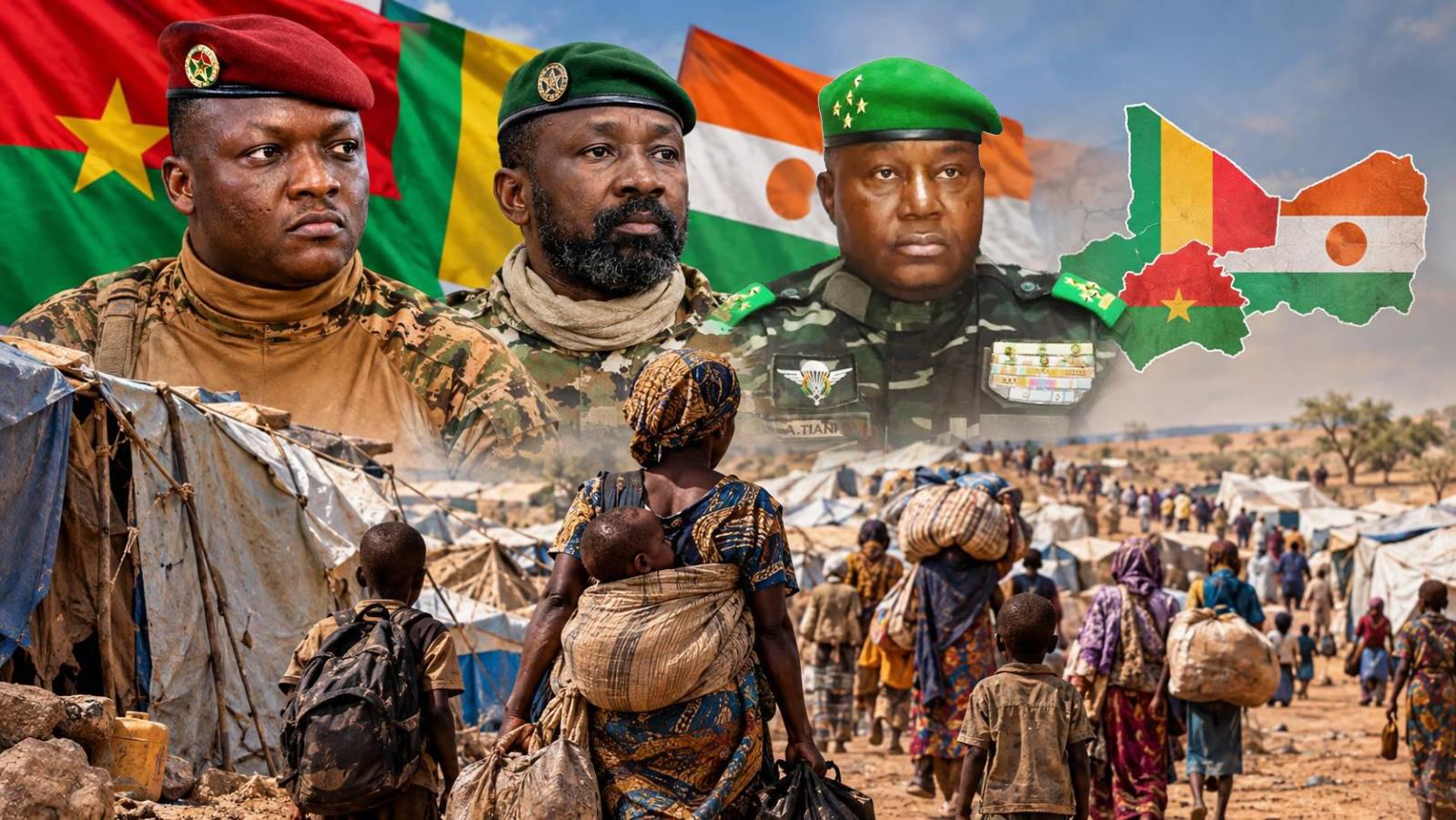
The Sahel region is facing an unprecedented humanitarian crisis, with forced displacement numbers surging across Burkina Faso, Mali, and Niger. According to the United Nations High Commissioner for Refugees (UNHCR), nearly 4 million people have been uprooted from their homes and livelihoods a near doubling of the crisis since 2020, a year that marked a pivotal moment with the first military takeover in Mali.
From promises of sovereignty to the harsh reality of displacement
Since the military-led transitions in these nations, governments have repeatedly vowed to restore security, reclaim territorial control, and assert sovereignty. Yet the staggering rise in displaced populations raises a critical question: how can the escalation of violence and displacement be reconciled with the stated objectives of these regimes?
Behind the official rhetoric of progress and resilience lies a stark contrast. Millions of families have been torn from their communities, losing not only their homes but also access to basic services, economic stability, and social structures. The human toll extends beyond statistics it encompasses children deprived of education, adults struggling to rebuild their lives, and entire generations facing an uncertain future.
Evaluating governance through the lens of human outcomes
The military alliances and coalitions in the Sahel have framed their interventions as essential to national survival. However, the deteriorating conditions for displaced populations demand a closer examination of these claims. Are the strategies being employed truly addressing the root causes of violence, or are they exacerbating existing vulnerabilities?
The crisis underscores a fundamental dilemma: how can governance be considered legitimate when it fails to ensure the safety and dignity of its people? The disconnect between political narratives and on-the-ground realities risks undermining trust in institutions and deepening societal fractures.
Beyond rhetoric: the urgent need for tangible solutions
While military operations and political declarations dominate public discourse, the displaced populations in Burkina Faso, Mali, and Niger continue to grapple with immediate challenges. Access to shelter, healthcare, food security, and education remains precarious for many. The humanitarian response, though vital, struggles to keep pace with the scale of displacement.
Key challenges faced by displaced communities
Loss of livelihoods due to abandoned agricultural lands and disrupted trade routes
Limited access to essential services, including healthcare and clean water
Psychological trauma and social fragmentation among uprooted families
Ongoing threats from armed groups, despite military campaigns
Accountability and the path forward
The surge in displacement is not merely a humanitarian issue it is a test of governance, accountability, and the state’s capacity to protect its citizens. For the military-led governments of the Sahel, the true measure of success will lie in concrete improvements to the lives of those affected by conflict and displacement.
Until displaced populations can return home safely or rebuild their lives in stable conditions, the effectiveness of their policies will remain under scrutiny. The international community, too, must hold these governments to account, ensuring that strategic objectives do not overshadow the imperative of human welfare.
In a region where sovereignty is often equated with militarized control, the crisis of displacement challenges the very foundations of these claims. The coming years will determine whether the Sahel’s leadership can translate its promises into tangible security or whether the region will continue to be defined by its inability to protect those most in need.
By Henri Nkeng — Journaliste / Rédacteur