
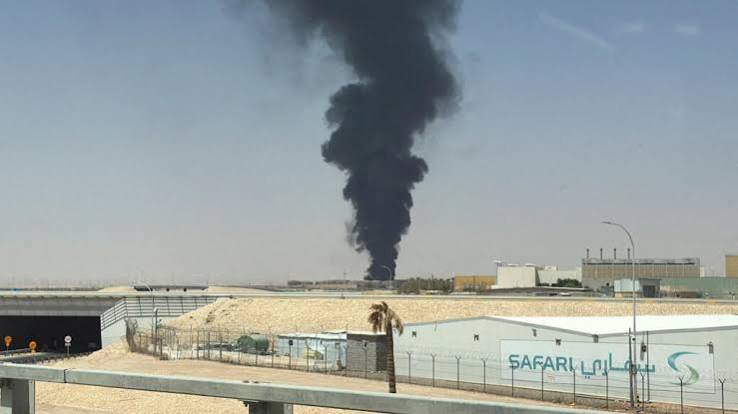
The King Khalid International Airport in Riyadh became the latest battleground in a rapidly escalating conflict after a brazen attack claimed by Houthi forces from Yemen. On October 10, a barrage of missiles and drones targeted the airport, leaving 13 dead and 308 injured, according to Saudi authorities. Just 24 hours later, another projectile struck Terminal 4, igniting a fire and claiming one life while injuring 11 others.
Houthi claims of responsibility and regional escalation
The Houthi military spokesperson, Yahya Saree, declared that the attack was a deliberate strike against Riyadh’s airport, along with additional assaults on Dammam’s airport and critical Saudi oil facilities. The group issued a stark warning to commercial airlines, urging them to avoid Saudi airspace entirely to prevent further incidents.
Saudi officials confirmed that while some incoming projectiles were intercepted by air defense systems, at least one missile breached the perimeter, striking a passenger concourse and triggering a blaze. In response, authorities temporarily suspended all airport operations to assess damage and conduct security reviews.
Why the Houthis are escalating their campaign
The Houthi offensive comes amid intensified fighting in Yemen, where Saudi-backed government forces have made significant advances in recent months. The group has framed its attacks as retaliation for Riyadh’s military intervention in Yemen, where coalition airstrikes have repeatedly targeted Houthi-controlled areas.
For Saudi Arabia, these strikes represent more than just a security breach—they signal a direct threat to national stability. The coalition leadership condemned the attack, while security forces rapidly mobilized to reinforce protection around key infrastructure, including airports and strategic installations.
Travel disruptions and safety concerns mount
The airport closure and subsequent security checks have caused widespread travel disruptions, with numerous flights delayed or canceled. Authorities and diplomatic missions have advised passengers to confirm flight statuses before heading to the airport, citing evolving security conditions.
The incident raises serious questions about the long-term viability of Saudi Arabia’s air defense capabilities. With Houthi forces continuing to refine their missile and drone tactics, the potential for further strikes against civilian and economic targets looms large. International observers warn that without immediate de-escalation, the conflict could spread beyond Yemen’s borders, further destabilizing the region.
What travelers need to know about the current situation
- Passengers are urged to monitor official advisories for real-time updates on flight statuses and airport accessibility.
- Airspace restrictions may be expanded, potentially affecting regional flight routes.
- Security protocols at Riyadh and other Saudi airports have been significantly tightened, leading to extended processing times.
Will Saudi Arabia’s defenses hold against future threats?
The latest attack has exposed vulnerabilities in Saudi Arabia’s missile defense systems, prompting calls for urgent upgrades. Military analysts suggest that the Houthis’ increasingly precise weaponry demands a strategic reassessment of how the kingdom safeguards its critical infrastructure. As regional tensions persist, the stakes have never been higher for Riyadh to secure its skies—and its future.