
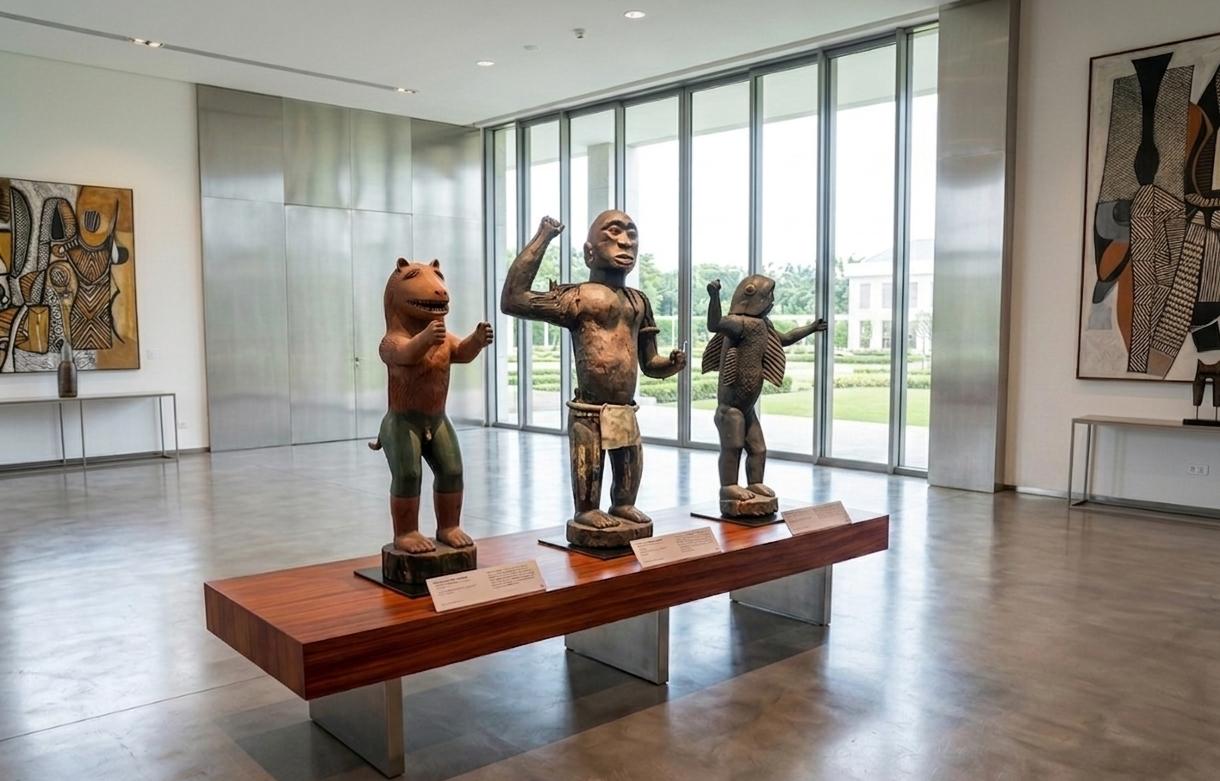
As the world’s eyes remain fixed on the evolving dialogue between former colonial powers and African nations, one question grows increasingly urgent: what does it take for a country to reclaim not just its artifacts, but its own historical narrative?
Why Cotonou’s new cultural claim could reshape relations with France
The Beninese government has escalated its long-running campaign for the return of cultural heritage by formally requesting the French state hand over 35 additional historical artifacts and documents currently held in French institutions. This bold move, spearheaded by Finance Minister Romuald Wadagni on behalf of President Patrice Talon’s administration, signals a strategic shift from symbolic reclamation to systemic restoration of national memory.
Unlike previous demands centered on royal treasures, this new list expands the scope to include sacred ritual objects, royal insignia, and colonial-era administrative records—each linked to key pre-colonial kingdoms such as Dahomey, Porto-Novo, and Abomey. The request is not an isolated gesture; it reflects a broader continental trend, positioning Benin at the forefront of a global movement that questions the legitimacy of colonial-era artifact retention.
From storage vaults to national narrative: the deeper stakes behind the claim
For decades, these 35 items—including bronze plaques, beaded regalia, and transcribed oral histories—have been preserved outside their land of origin, often in conditions that prioritized European curatorial standards over contextual relevance. Now, their potential return carries implications far beyond object retrieval:
- Historical justice: Many items were taken during the 1892 French military conquest of the Dahomey Kingdom, an event still commemorated in Beninese oral tradition as a moment of rupture.
- Cultural sovereignty: The demand challenges the narrative of European museums as primary custodians of African history, asserting Benin’s right to define and disseminate its own past.
- Educational empowerment: Returned artifacts will be used in school curricula, allowing younger generations to connect with pre-colonial achievements and resist colonial distortion in historical education.
- Tourism and identity: Benin plans to integrate restored treasures into thematic routes linking Abomey’s royal palaces, Porto-Novo’s Vodun Museum, and Ouidah’s Slave Route Memorial—transforming heritage into a driver of national pride and economic growth.
More than objects: building the infrastructure to heal and inspire
Returning 35 artifacts is only part of the challenge. Benin has already invested in modernizing its museum network, including the new Musée de l’Épopée des Amazones et des Rois du Danxomè in Abomey, designed to contextualize returned treasures within narratives of female warrior valor and royal governance. Meanwhile, Porto-Novo’s planned Musée International du Vodun will reframe a spiritual tradition often caricatured abroad into a source of living cultural pride. In Ouidah, projects focused on slavery memory aim to confront one of the most painful chapters of transatlantic history while inviting global dialogue.
Each site now faces twin imperatives: conservation and narrative reconstruction. Advanced climate control systems, digital archives, and multilingual interpretation panels will ensure these objects are not just displayed, but understood. Training programs for curators, historians, and restorers are being scaled up to prevent knowledge loss and enable Benin to manage its own patrimony.
Can heritage become a pathway to economic independence?
This broader strategy positions culture not as a luxury, but as a developmental lever. The government envisions a cultural tourism circuit linking royal sites, Vodun festivals, and coastal memory trails—zones already drawing visitors from across Africa and the diaspora. Early estimates suggest such a network could generate hundreds of millions of CFA francs annually through hospitality, artisanal craft sales, guided tours, and cultural events like the annual Vodun Day festival.
To sustain this, Benin is negotiating partnerships with international experts in museology and sustainable heritage tourism—without ceding authority over interpretation or ownership. The goal is clear: turn restitution from a political statement into a sustainable engine for local employment and national income.
Will France comply? The legal and diplomatic test ahead
The request follows France’s 2018 report by Felwine Sarr and Bénédicte Savoy, which recommended the restitution of thousands of sub-Saharan artifacts. While France has returned 26 royal treasures to Benin since 2021, the current 35-item claim enters uncharted territory by targeting documents, maps, and ritual objects—categories not yet covered by bilateral agreements. Legal experts suggest the process may require new legislation or intergovernmental frameworks, potentially setting a precedent for other African nations pursuing similar claims.
Diplomatic observers note that France’s response will signal whether Paris is willing to move beyond symbolic gestures and engage in structural partnership. Meanwhile, Benin is preparing alternative scenarios, including international arbitration and public advocacy campaigns targeting French civil society.
What comes after the return?
Even if all 35 artifacts are repatriated, their long-term impact will depend on how Benin uses them to reconnect with its past and project its future. The government has pledged to make these objects accessible—not just visible—through traveling exhibits, digital platforms, and community-based storytelling. Schools will integrate them into history classes, with student-led research projects analyzing their craftsmanship, symbolism, and colonial-era displacement.
Above all, this initiative is a declaration: Benin is no longer waiting for outsiders to tell its story. By reclaiming its patrimony and reimagining its museums, the country is asserting the right to narrate itself—on its own terms.
Restitution as renaissance: a nation rewrites its cultural future
The drive to repatriate 35 cultural treasures is more than a diplomatic maneuver—it is a cultural reawakening. Each object returned is a step toward healing the fractures of colonial erasure. Each museum built becomes a beacon of national pride. And each tourist who walks the restored pathways of Dahomey’s past is a participant in Benin’s journey toward self-determination. The question now is not whether France will respond, but how Benin will transform these returned artifacts into the foundation of a renewed national identity—and a model for Africa’s cultural sovereignty.